Concept for Indigenous museum project unveiled
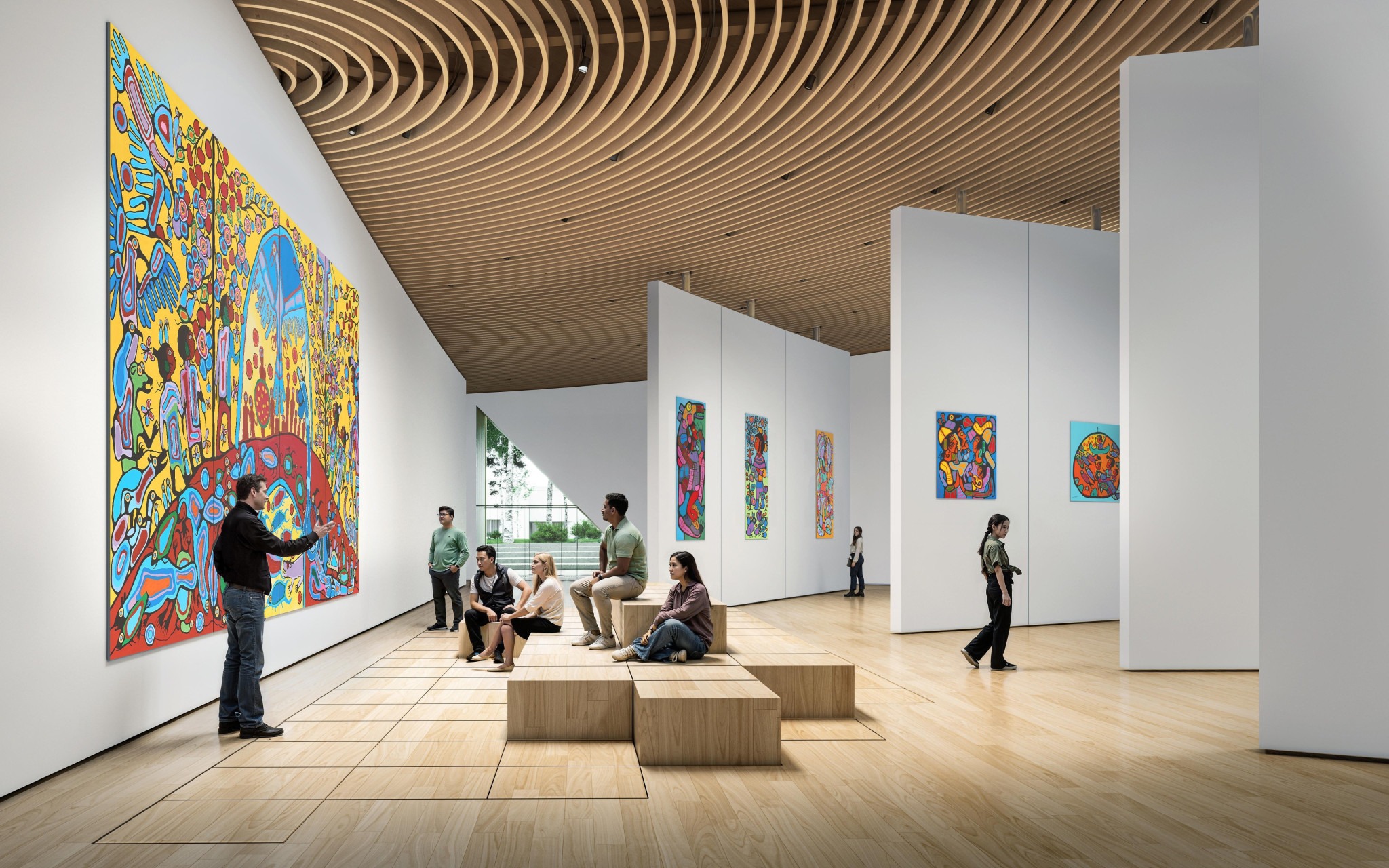
A new museum for Indigenous art will combine mass timber construction, flexible gallery space, and environmental systems designed to reduce emissions.
The concept for the Museum of Aboriginal Peoples’ Art and Artifacts (MOAPAA) on the Portage College campus in Lac La Biche, Alta., was recently unveiled. The museum will house the world’s largest collection of works by the Professional Native Indian Artists Inc. (PNIAI), a First Nations artists’ collective formed in Winnipeg in 1973.
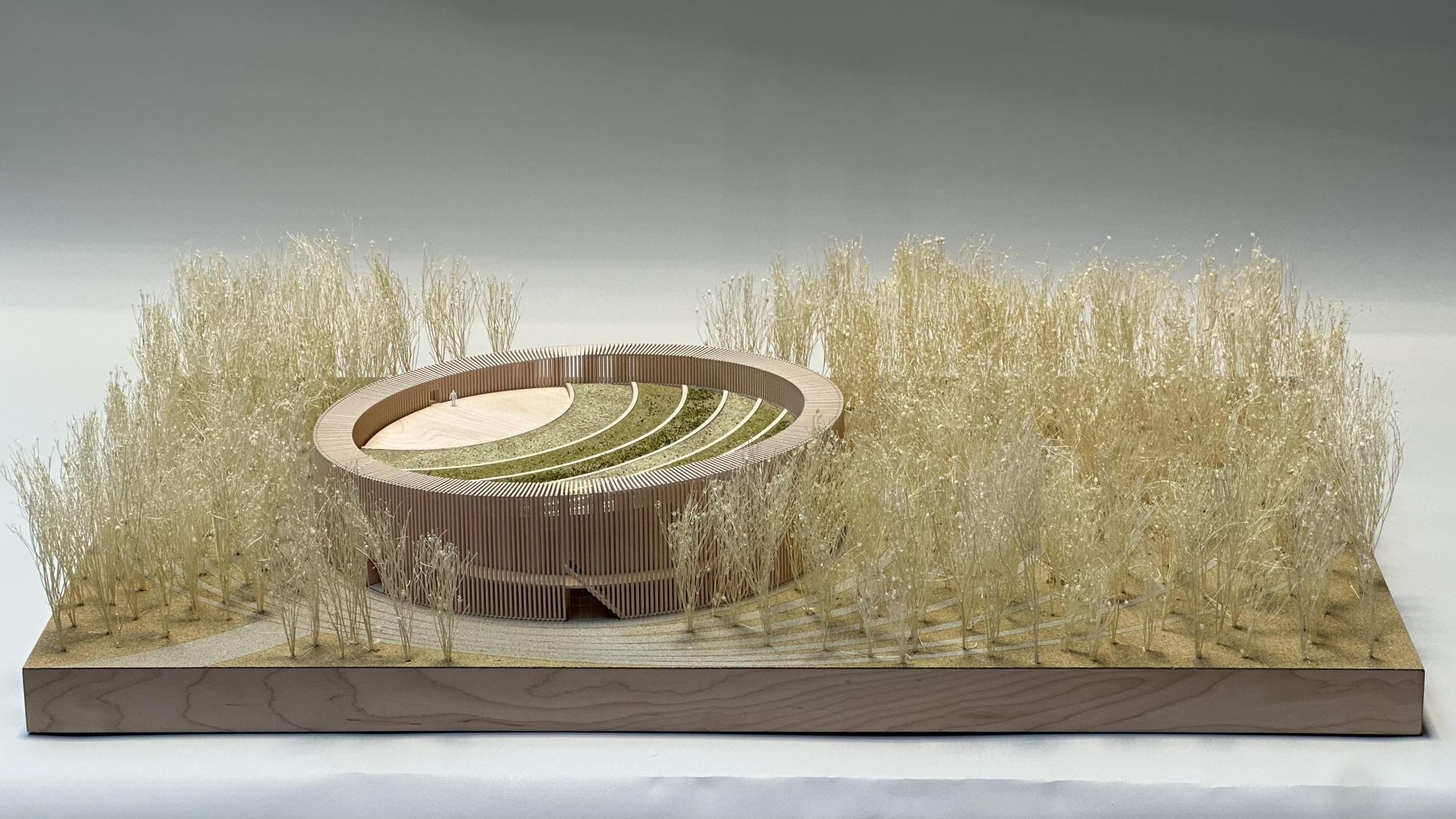
Designed by SPECTACLE Bureau for Architecture and Urbanism Inc., the building will use a superstructure made predominantly from locally and sustainably sourced mass timber.
A signature exterior feature is the kinetic wood screen with vertical slats that hinge at the top. The slats will move with the wind, providing shade and creating a sheltered route for visitors.
A ramp behind the screen leads to a roof garden planted with prairie meadow and ceremonial species, including sage, sweetgrass, and prairie flowers. A wooden deck will provide gathering space for up to 60 people.
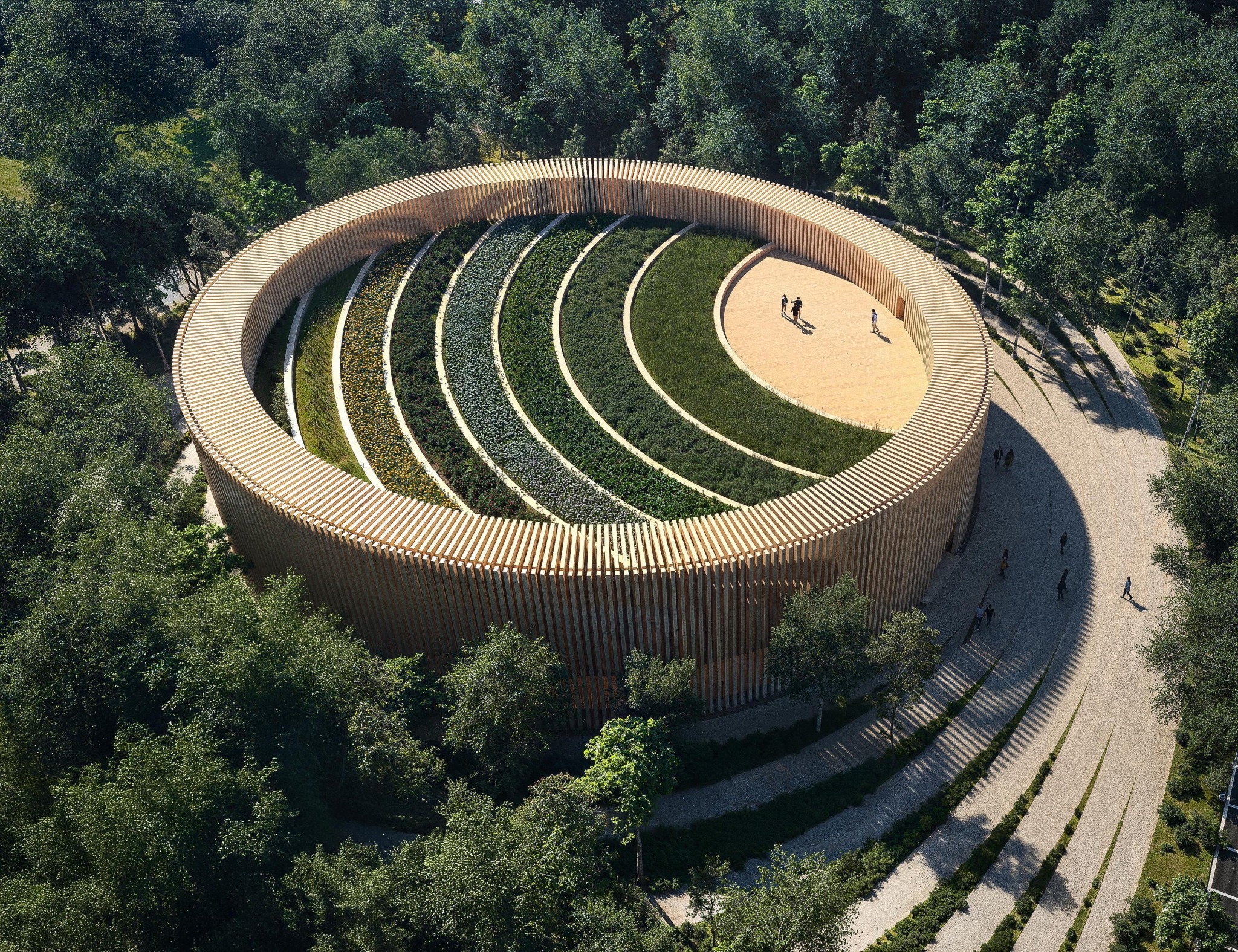
The site will also include newly planted Trembling Aspen trees as part of an effort to restore local biodiversity.
Flexible layout design
Inside, the museum will avoid a fixed gallery layout. A retractable platform system at the centre of the exhibition area will switch between raked auditorium seating, benches, and sculptural plinths. It can also retract into the floor to create an open exhibition space.
Central and rotating walls allow reconfiguration of galleries. The auditorium will extend into the foyer, while eliminating a conventional reception desk.
The building will be fully electric and incorporate heat recovery, ground-source heat exchangers, and radiant heating. These systems maintain stable conditions for the collection while reducing operational emissions.
The collection vault will receive additional protection. It is designed to withstand a catastrophic forest fire even if the building’s main superstructure is lost.
Curved roof and ceiling elements will vary the interior height, while curved retaining walls will support the prairie garden roof. An exterior ramp will connect the building and the landscape.
The museum will be located on the traditional lands of First Nations peoples, owners of Treaty 6, and in the homeland of Métis people.
“As a curator, I view art and life as beyond the lens of champagne receptions and white box museums in concrete and steel towers,” notes Joseph M. Sánchez, chief museum curator of the MOAPAA and PNIAI co-founder. “Ideas of commercial success are exchanged for truthful dialogue. Art is not an object. Great art seeks spiritual communication.”
“This free-standing museum adds to the Indigenous artistry already on display in the hallways of Portage College,” says Ruby Sweetman, Portage College Elder. “I think more exposure will only draw more inspiration and more education about Indigenous arts and culture.”
Sign up for our weekly newsletter
Construction Canada weekly newsletters give the latest AEC industry news for those who build, design, engineer, specify, renovate or operate in the built environment.
Popular Articles
-
1
-
2
-
3
-
4
-
5
Read the Latest Issue