A practical guide to commercial roof sealants
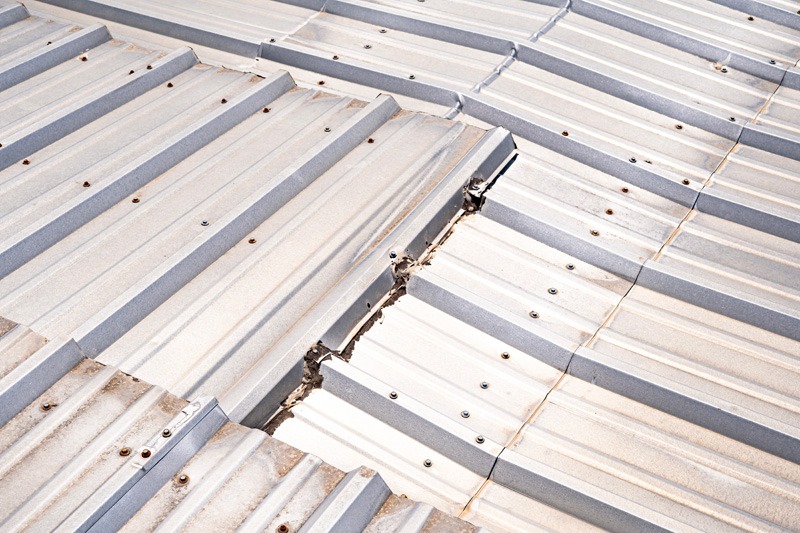
It is easy to evaluate a commercial roofing budget and focus almost entirely on the high-dollar items, the acres of membranes, and pallets of insulation boards that dominate the job site. However, while these are major physical components of the system, the true reliability of a commercial roof system often rests on a component often thought of as merely a filler—the sealants.
Sealants step in precisely where the roofing membranes and flashing materials reach their limits. From flashing terminations and expansion joints subjected to daily thermal cycles to complex mechanical penetrations, sealants fill the critical gaps that standard materials cannot bridge. On low-slope commercial roofing systems, where rapid water shedding often cannot be relied upon, these materials provide the final seal protecting the building’s interior.
Ultimately, choosing the wrong sealant chemistry or neglecting joint preparation can compromise an otherwise pristine roof system, often resulting in leaks and failures that shorten its lifespan. Beyond leaks, warranty exposure, premature repairs, and interior damage, overall lifecycle costs are all potential issues that could arise from a single sealant failure.
With such complex chemistries at play, this guide serves as encouragement for further research into the role of sealants in the industry.
Sealant selection
Selecting the correct commercial roofing sealant begins at the molecular level. A sealant’s chemical backbone dictates its resistance to ultraviolet (UV) radiation, thermal movement limits, tear strength, and long-term durability under environmental stress.
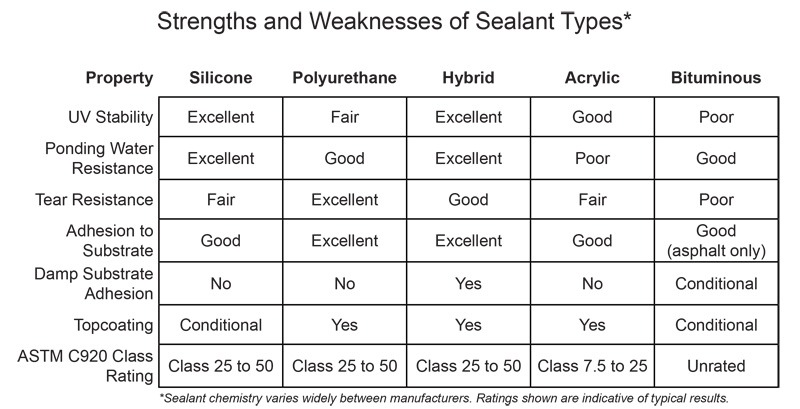
Commercial sealants are categorized into five primary chemical families, each engineered with distinct trade-offs that make them suitable for specific building envelopes. The five families are: silicone, polyurethane, hybrid, acrylic, and bituminous. No single sealant is the “best.” But even the highest-grade or most expensive sealant can fail if it is incompatible with the substrate it is protecting.
Commercial roof assemblies often must reconcile adjacent materials with drastically different coefficients of thermal expansion, surface energies, and chemical formulations. Achieving a durable building envelope requires matching the sealant chemistry to specific jobsite conditions.
Silicone sealants
Silicone sealants feature an inorganic silicon-oxygen (Si–O) polymer backbone. Because the chemical bond energy of the Si–O bond is higher than the energy of solar UV radiation, silicones resist breakdown, chalking, and embrittlement under prolonged exposure to sunlight.
Silicone sealants maintain flexibility and elongation performance across extreme temperature ranges, typically -40 to 149 C (-40 to 300 F). Because of their hydrophobic nature, silicones also resist degradation under ponding water conditions.
This feature makes both silicone sealants and silicone coatings the industry standard for ponding water conditions that cannot be fixed by other means. Another benefit is their capability to handle high movement, which is also considerable, typically rated as high as a Class 100/50 under ASTM C920, Standard Specification for Elastomeric Joint Sealants.
However, there are also limitations. Silicone sealants are more prone to mechanical damage in high-traffic areas because their inherent resistance to tearing and abrasion is relatively low. In addition, standard silicones bleed siloxane oils into porous substrates, leading to dirt pickup and preventing adhesion of subsequent non-silicone products.
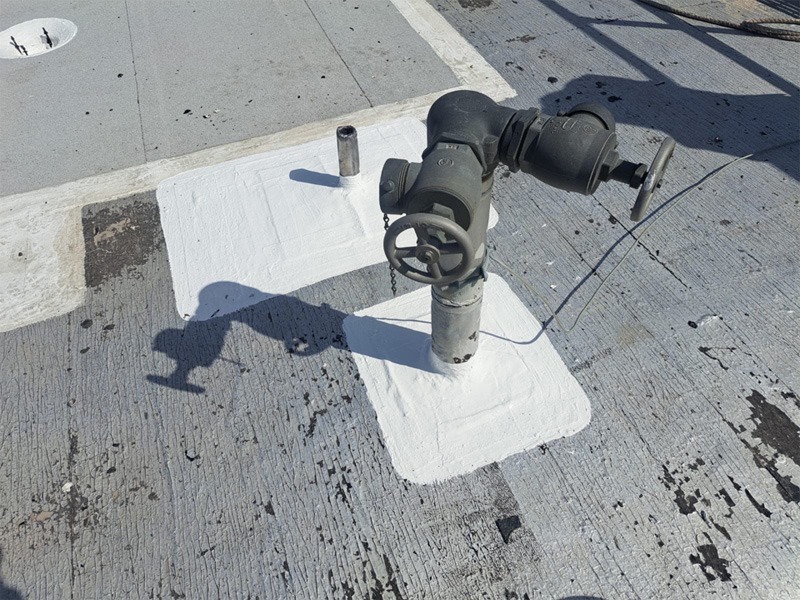
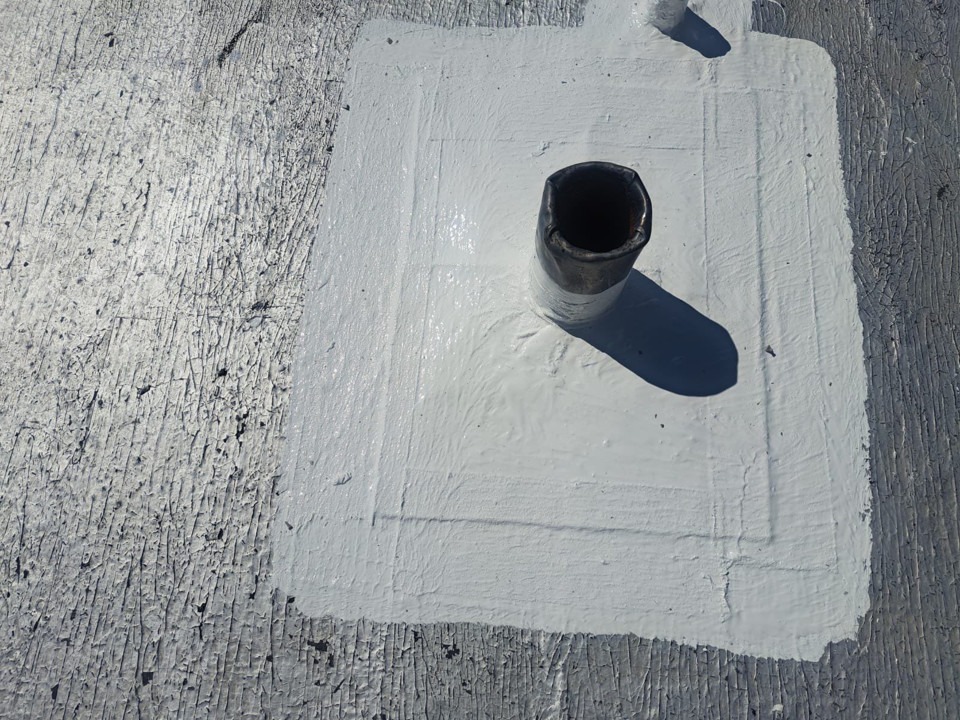
The primary applications for silicone sealants are where the sealant is somewhat protected from mechanical damage or where silicone will be the primary material in use going forward. These uses include penetration flashings, curb terminations, wet-seal glazing, and restoration coatings over weathered single-ply or metal roofs.
Polyurethane (PU) sealants
Polyurethane sealants rely on organic carbon-chain chemistry linked by urethane bonds. This organic structure delivers superior resistance to mechanical puncture and abrasion, exceptional handling of dynamic shear, and adhesion strength across most common construction substrates. Polyurethane sealants exhibit exceptional adhesion to concrete, masonry, brick, wood, and metal without requiring surface primers. Once fully cured, they are typically paintable with elastomeric topcoats and paints.
However, non-stabilized aromatic polyurethane is highly susceptible to UV exposure, resulting in surface chalking, micro-cracking, and a loss of elasticity over time. The addition of UV stabilizers helps, but will increase costs. Prolonged exposure of a roof to standing water can soften the sealant matrix, leading to hydrolytic cleavage.
Primary applications for polyurethane sealants are where resistance to movement is required and where standing water is to be avoided, including expansion joints, parapet wall coping joints, and other raised flashing details.
Hybrid formulations
Hybrid chemistry sealants combine the mechanical toughness of polyurethane with the inorganic weatherability of silicone. Typically, even on damp surfaces, hybrid sealants adhere reliably without primers, where traditional sealants fail.
In most cases, they contain lower levels of volatile organic compounds (VOCs) and solvents, eliminating off-gassing and bubbling during the curing process. Movement capability is balanced, usually between Class 25 and Class 50, resulting in a sealant with strong tear resistance and non-chalking UV stability.
No product is perfect, and hybrids have their limitations as well. Compared to traditional sealants, the material unit cost is typically much higher. As they are sensitive to ambient moisture, their shelf life may vary drastically as well.
Primary applications for hybrid sealants include emergency roof repairs, transitions, or roofs with multiple substrates, and projects that must be installed in damp weather conditions.
Acrylic sealants
Acrylic sealants are water-based or solvent-borne dispersions of acrylic polymers. They cure primarily through simple evaporation rather than through a chemical process.
In and out of the roofing world, acrylic sealants are among the most widely used. They are typically economical and simple to tool, and most formulations clean up with water.
Acrylic sealants are generally compatible with other sealant chemistries, but only when acrylic is installed first. Many acrylic sealants also feature high solar reflectivity. Their primary limiting factor is high cure shrinkage. Volumetric loss during evaporation can be 15 to 30 per cent, creating stress at the bond line.
Acrylic sealants are also susceptible to temperature and moisture limits, requiring installation temperatures above 4 C (40 F), low humidity, and no rain in the forecast. The water-based formulations are particularly weak in ponding water applications and should not be used where this is likely.
Acrylic sealants are most appropriate for use in seams or transitions with low movement, non-ponding area roof repairs, repairs where high reflectivity is needed, or as a complement to an acrylic coating system.
Bituminous and asphaltic sealants
Bituminous sealants consist of refined asphalt blended with mineral fillers, fibres, and hydrocarbon solvents. They represent the legacy standard for asphaltic roofing assemblies and are often used for their low cost and high level of compatibility. They can be used with both traditional asphalt built-up roofing and modified bitumen roofing.
While popular with those working with asphalt, these bituminous sealants are severely limited in use compared to the others discussed here. Their volatile oils evaporate under heat and UV exposure, making the material hard, brittle, and prone to cracking as early as two years after installation.
Bituminous sealants are chemically incompatible with both single-ply membranes and silicone coatings, eliminating their use in some of the most common roofing systems. Primary applications of bituminous sealants include maintenance and repairs on asphalt roofing systems.
Special considerations in substrate compatibility
Single-ply membranes, such as polyvinyl chloride (PVC), thermoplastic polyolefin (TPO), and ethylene propylene diene monomer (EPDM), are currently commonly used in the modern commercial low-slope roofing market. They are chemically very different from bituminous roofing systems and require special consideration when selecting compatible materials.
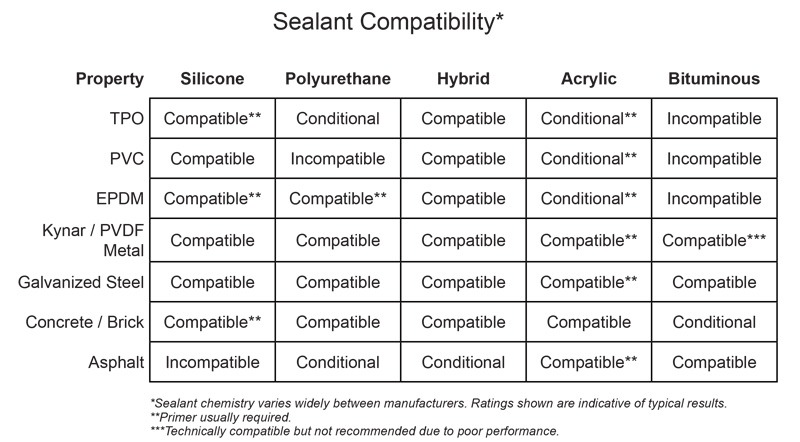
Due to the specificity of materials chemistry and the variability in formulations, manufacturers generally encourage the use of proprietary hybrid sealants designed for the most common scenarios in single-ply roofing systems. While sometimes seen as a sales ploy, it can be crucial to the roofing system when subtle changes in membrane chemistry can yield massive changes in how they react with various sealants.
Primer use is also extremely important, since most single-ply membranes are more resistant to adhesion than older, more bituminous roofing materials. EPDM typically requires solvent wiping and dedicated solvent-borne primers before applying almost any type of sealant.
Additionally, sealants installed on single-ply roofs without proper preparation, such as cleaning and priming, often experience rapid adhesive failure during initial thermal cycles.
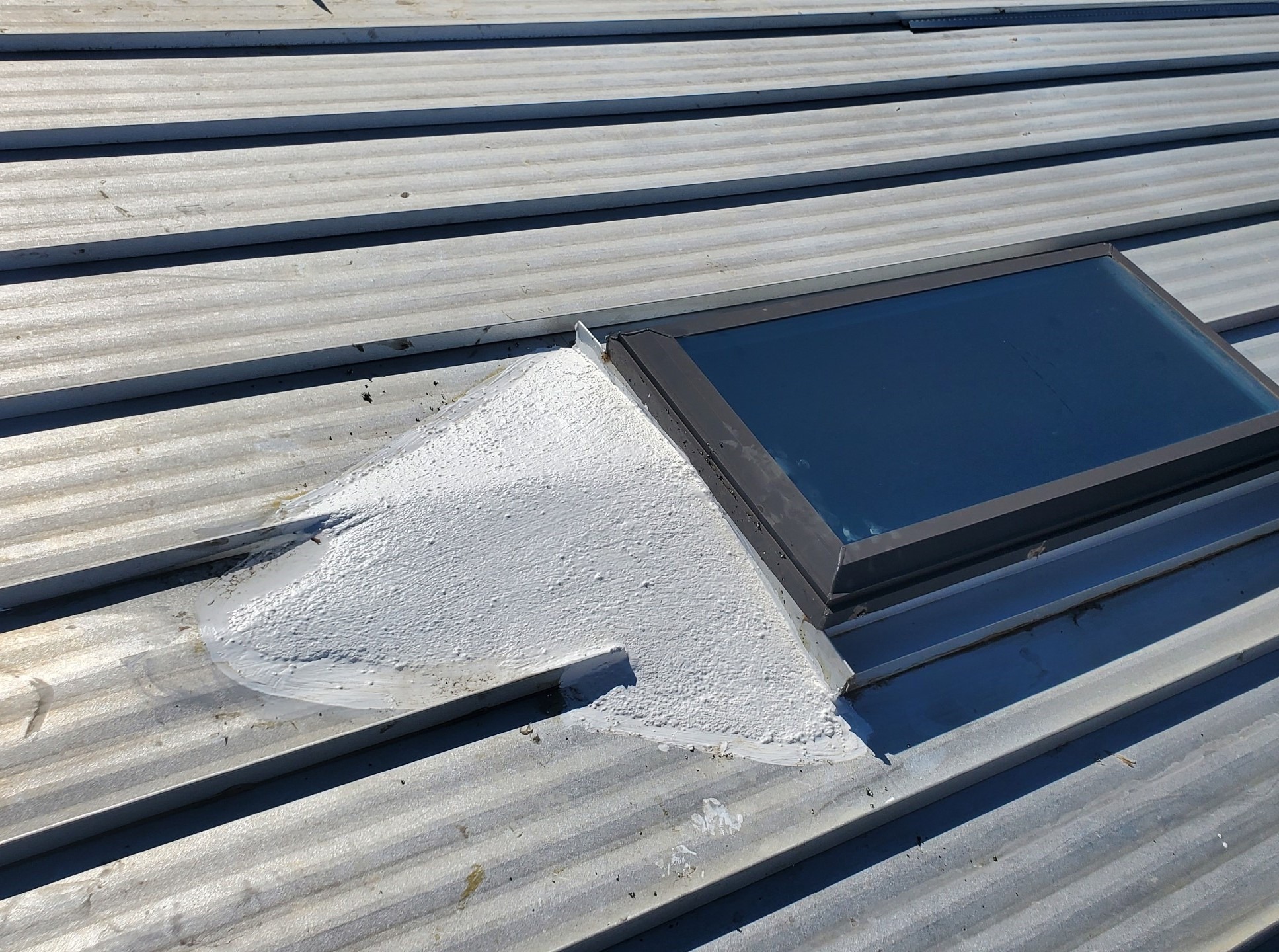
Because they exhibit significant thermal movement and unique surface chemistries, metal roofing substrates also require special considerations for sealants. Coated metals, especially high-performance fluoropolymer coatings, resist dirt and chemical adhesion.
In turn, they become equally resistant to sealant adhesion.
Thorough solvent cleaning using a two-cloth method is typically recommended before installing neutral-cure or hybrid primers. Bare galvanized steel, aluminum, or copper benefit the most from neutral-cure silicones. Acetoxy-cure silicones should be avoided, as they can rapidly corrode the metal substrate, leading to catastrophic bond failure and rust staining.
Concrete or masonry parapet walls also present unique challenges with their porous, highly alkaline, and hydrodynamic surfaces. Due to its high pH (typically 12 to 13), cured concrete can rapidly degrade water-based acrylics and poor-quality polyurethane sealants. Its weaker surface layers require high-pressure air blasting, wire brushing, or mechanical grinding, followed by solvent-free primers to seal porous surfaces before sealants can be applied.
Joint design and geometry
A sealant’s movement capability is expressed as the maximum percentage of both expansion and compression that the cured sealant is able to withstand before failure occurs (either adhesive or cohesive). “Movement” below can be either expansion or contraction in the joint width. While most classes are fairly symmetrical in their movement capability, note that Class 100/50 bears an asymmetric movement rating.
Class 12.5: ±12.5% movement
Class 25: ±25% movement
Class 35: ±35% movement
Class 50: ±50% movement
Class 100/50: +100% expansion and 50% compression capability
ASTM C1193, Standard Guide for Use of Joint Sealants serves as a standard guideline for which classes of sealants work best in different scenarios. Class 12.5 and 25 are standard for perimeter control joints and low-movement field lap seams. While the products are not uncommon in the market, Class 35 was only introduced in 2014 into the ASTM C920 standard and tends to be less commonly seen in specifications. Class 50 is preferred for commercial expansion joints and dissimilar substrate interfaces that are subject to heavy thermal cycling. Class 100/50, the strongest classification, is used for situations that require the highest stress under dynamic conditions.
ASTM C920, Standard Specification for Elastomeric Joint Sealants also classifies sealants by the Type, Grade, and Use.
The Type classification describes how the sealant is supplied and whether it requires mixing in the field. Type S is a single-component material that requires no mixing, typically pre-packaged in cartridges, sausage packs, or pails for direct application. Type S materials eliminate human error in mixing, though curing in the package can often be an issue when stored improperly or only partially used. Type M is a multi-component material that must be mechanically mixed immediately prior to application. Type M materials benefit from a more uniform cure rate, though it is vitally important that the field mixing is done correctly. Improper mixing can compromise the entire application, resulting in non-uniformity in cure (soft and/or hard spots), as well as differences in physical properties compared to the properly mixed material.
The Grade classification defines how a sealant flows and how much sag resistance it has. There are two Grades: Grade P and Grade NS. Grade P
is considered pourable or self-levelling. These products are designed to flow easily and rarely require more than minimal tooling. Pourable type sealers are typically used in expansion joints, pitch pockets, or other horizontal flashing applications. Grade NS is considered non-sag or “caulk grade.” These sealants will not sag or run when applied to vertical or overhead joints and are typically used in vertical applications, such as termination bar, counterflashings, and pipe flashings.
The Use classification separates sealants into three primary uses. Use T (traffic) designates a harder, more abrasion resistant sealant, typically used in areas subject to foot or vehicular traffic. Use NT (non-traffic) prioritizes flexibility over hardness and is the more common of the three classifications used in commercial roofing. Use I (immersion) sealants are becoming more common with hybrid technology. These sealants are capable of withstanding continuous immersion either in water or in specific liquid chemicals (Class 1 vs Class 2).
Going further, the Use classification also defines the reference materials used to test sealant adhesion. Bonding without adhesive failure to a particular substrate earns a sealant the Use designation for that material. These include Use M (mortar), Use G (glass), Use A (aluminum), and Use O (other—used for specific, non-standard substrates).
When specifying a particular sealant to be used in a commercial roofing project, a specifier should adhere to industry standards, based on the ASTM C920 classifications. For more comprehensive information on formatting, please see the CSI MasterFormat Section 07 92 00—Joint Sealants or Section 07 50 00—Membrane Roofing.
Format: ASTM C920, Type [S/M], Grade [P/NS], Class [12.5, 25, 35, 50, 100/50], Use [Exposure], Use [Substrates]
Example: ASTM C920, Type S, Grade NS, Class 50, Use NT, M, A, O (TPO membrane and PVDF / Kynar coated metal)
When calculating joint width requirements, specifiers must account for the coefficient of the substrate’s thermal expansion, the expected temperature differential, the panel length, and the sealant movement class. Accounting for construction tolerances and installation temperature offsets is another safety factor.
A common misconception is that “more is better,” leading the installer to fill deep joints with sealant. As a joint stretches, internal tensile stress concentrates heavily at the deepest cross-section. Excessively deep sealant joints create high internal stresses that quickly exceed the cohesive strength, leading to failure.
To ensure uniform stress distribution during elongation and compression, it is best to follow the industry-standard depth-to-width ratio rules, as defined in ASTM C1193, Standard Guide for Use of Joint Sealants:
- Joint widths under 6 mm (0.25 in.) are not recommended for dynamic joints.
- Widths from 6 to 13 mm (0.25 to 0.5 in.) require a 1:1 ratio where the depth of the joint is equal to the width, with a strict minimum depth of
6 mm (0.25 in.). - Widths from 13 to 38 mm (0.5 to 1.5 in.) require a 2:1 ratio, where the depth of the joint is equal to half of the width.
- For any joints wider than 38 mm (1.5 in.), the maximum depth is capped at 13 mm (0.5 in.).
Adhering to these ratios will ensure there is sufficient surface area for substrate adhesion while preventing excessive internal stress during expansion.
Three-sided adhesion, often wrongly considered an extra layer of protection, must be avoided. For a sealant joint to function as designed, the sealant must deform freely in two directions.
When the sealant adheres to three rigid surfaces, it cannot neck down or flex, creating a restriction that concentrates shear stress at the bottom corners of the bead. This can lead to adhesive failure (pulling from the substrate) or cohesive failure (tearing of the sealant).
Three-sided adhesion can be prevented by installing a non-adhering backer rod or bond-breaker tape at the base of the joint cavity before sealant application.
ASTM C1330, Standard Specification for Cylindrical Sealant Backing for Use with Cold Liquid-Applied Sealants, designates three basic types of backer rods, describing the nature of the internal cells and outer skin: Type C (closed cell), Type O (open cell), and Type B (bicellular).
Type C backer rod has a non-porous outer skin and closed internal cells, making it non-absorbent, rigid, and water impermeable. This type of backer rod is typically sized 20–25 per cent larger than the joint width. It is suitable for horizontal joints, gutter joints, or roof transitions where the backer rod needs to resist deflection under tooling pressure and provide a secondary barrier to water migration.
Type O backer rod has a discontinuous outer skin and open cells, making it more porous. This structure makes it highly compressible and vapour-permeable, often sized 40–50 per cent larger than the joint width. Type O backer rods are most commonly used with moisture-curing sealants (polyurethanes and silicones), vertical expansion joints, and for joint widths that may be too irregular for a firmer backer rod.
Type B backer rod is a hybrid of the first two types. It offers both the water-resistance of closed cell materials and the compressibility and flexibility of open cell. Typically sized 25–30 per cent larger than the joint width, Type B backer rod is used in applications where both outgassing resistance and water resistance are desired.
It can withstand significant thermal expansion and contraction and is preferred in more dynamic transitions and joints.
Surface preparation considerations
A sealant cannot adhere to a loose or contaminated surface. Every substrate requires specific mechanical cleaning before chemical cleaning.
Porous substrates, such as concrete, masonry, and brick, must be cleaned down to sound material using wire brushing, grinding, or oil-free abrasive blasting. All residual concrete form-release agents, laitance, and curing compounds must be mechanically removed, after which dry, oil-free compressed air should be used to clear dust from deep pore walls.
Non-porous substrates, such as metal, glass, or single-ply membranes, require mechanical abrasion if oxidation is present. This should be followed by strict solvent cleaning to remove protective oils, plasticizers, and ambient atmospheric film. Especially for single-ply membranes, special consideration must be given to the manufacturer’s instructions on surface preparation.
To avoid simply spreading surface contaminants rather than cleaning, the industry standard ASTM C1193, Standard Guide for Use of Joint Sealants, mandates the two-cloth method. This involves saturating a clean, lint-free cloth with solvent by pouring it directly onto the cloth (not dipping). The wet cloth is then used to vigorously wipe the joint surface, dissolving surface oils and grease. A second clean, dry, and lint-free cloth should be used to wipe away any remaining contaminants before the solvent evaporates. If dirt or residue appears on the cloth after wiping, repeat the process from the beginning until the second rag remains completely clean.
Environmental considerations
Applying sealants outside strict thermal and moisture windows can cause premature adhesive failure and surface blistering during cure. Technical data sheets and manufacturer’s instructions should always be carefully reviewed before installation.
In addition, a few general environmental rules have been established in the industry.
If the surface temperature approaches or falls below the dew point, a microscopic, invisible film of condensation can form on the substrate, preventing chemical wetting and contact with the substrate. Sealant application should occur only when the substrate surface temperatures are at least 3 C (5 F) above the calculated dew point.
Both extremely low and high temperatures can affect how sealants cure. In general, sealants should be applied within an ambient temperature range of 4 to 32 C (40 to 90 F). If the installation begins at a temperature at the lower end of the range, the contractor should be confident that the temperature will rise throughout the day. Similarly, if the installation begins at a higher temperature, ensure that the temperature will fall as the day progresses.
Low temperatures can lead to drastically slow cure times, especially for moisture-cured materials. Frost can also form inside porous joint walls. High temperatures accelerate skinning times, leading to poor tooling and potential outgassing.
Tooling and application
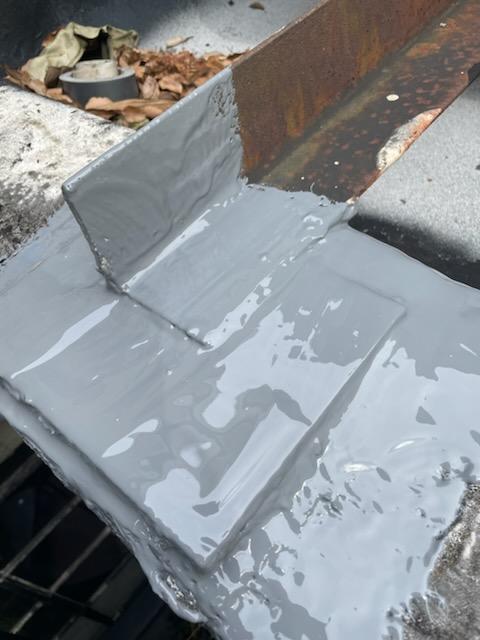
Tooling is the process of pressing wet sealant into the joint cavity immediately after dispensing. Proper tooling serves two vital structural functions: forcing the sealant into close contact with the joint sidewalls to eliminate voids, and shaping the outer surface into a smooth, water-shedding bead. “Wet tooling,” using soapy water, solvents, or liquid detergents on raw sealants, should be heavily avoided and can lead to joint failure. Unless the manufacturer specifically recommends otherwise due to job-specific circumstances, dry tooling must always be performed.
ASTM C1521 adhesion testing
To verify that field-surface preparation and primer applications meet project performance specifications, quality control (QC) inspectors perform destructive field pull testing in accordance with ASTM C1521, Standard Practice for Evaluating Adhesion of Installed Weatherproofing Sealant Joints. This test’s methodology is beyond the scope of this article, but it should be noted that adhesion testing on site-constructed mock-ups prior to actual sealant application is generally recommended as a standard industry best practice.
Theoretical conditions in a laboratory can vary drastically from real-world field conditions, and many of these changes can directly affect sealant performance. With proper planning and preparation, an adhesion test can prevent major failures down the road.
Sealant failure
When water breaches a commercial building envelope, the investigation often traces the root cause to joint sealant degradation. Distinguishing among physical, chemical, and mechanical failure modes is essential for determining liability, performing functional repairs, and preventing recurrence throughout the roof system.
Adhesive failure, typically indicated by the sealant bead peeling cleanly from the sidewall, is most often caused by surface contamination, invisible or unnoticed condensation, lack of required primer, or chemical incompatibility.
Cohesive failure occurs when the sealant material remains firmly adhered to both joint sidewalls, but the centre of the sealant bead exhibits a split or jagged tear. Primary root causes of cohesive failure include poor joint geometry (excessive joint depth relative to joint width), three-sided adhesion, under-engineered movement rating, and UV photo-oxidation.
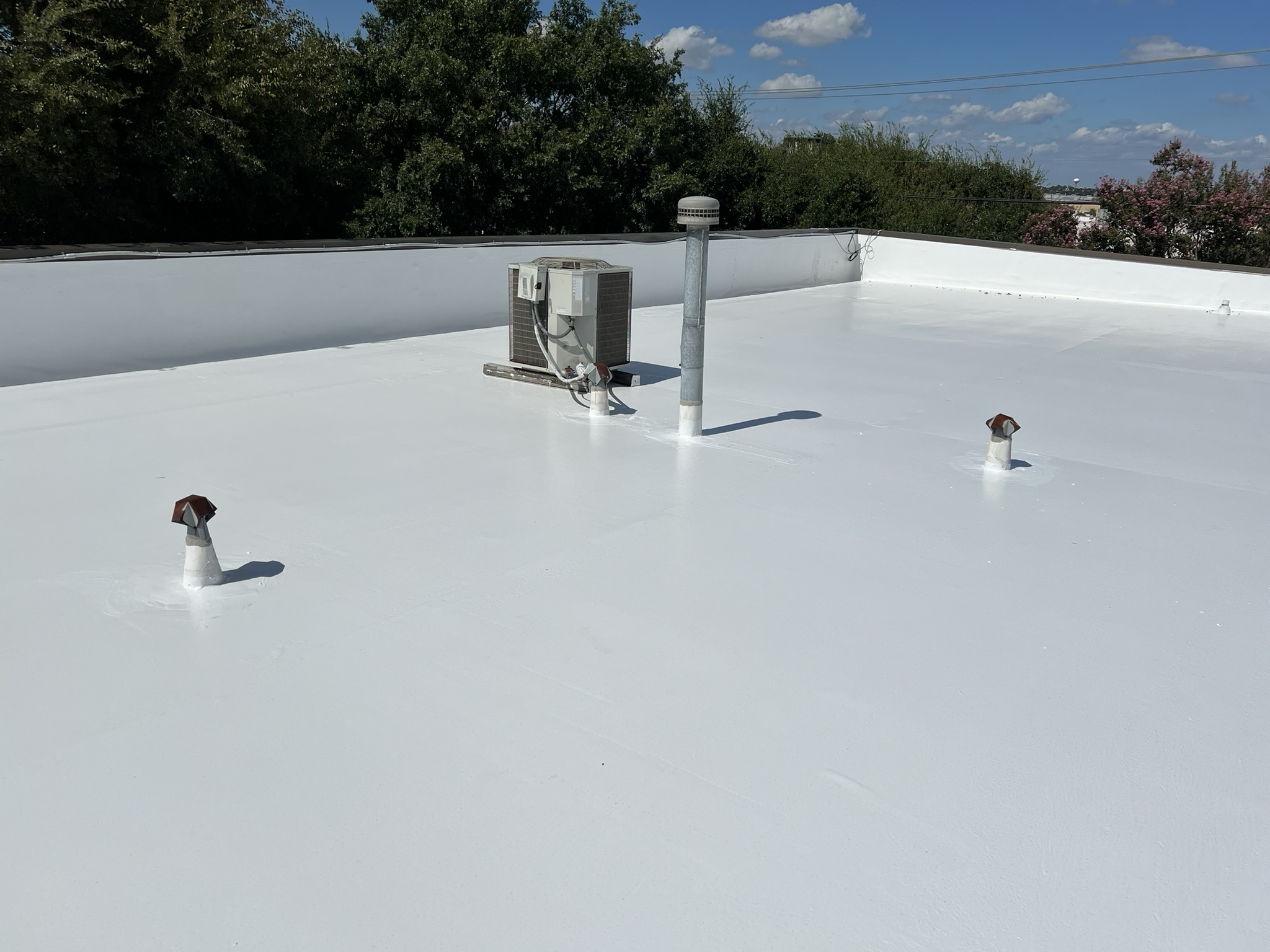
Substrate failures can be observed when the sealant remains intact while the adjacent substrate is softened, discolored, rusted, or structurally disintegrated. These failures are often the result of acidic corrosion, plasticizer migration due to incompatible sealants on PVC, or solvent softening, especially common in TPO and EPDM membranes.
Blistering, bubbling, and outgassing, while not always outwardly visible, can be observed when slicing the sealant, revealing a Swiss-cheese appearance with small hollow chambers or voids within the cured sealant. Substrate outgassing is commonly seen in porous concrete when sealants are applied during rising ambient temperatures. Closed-cell backer rods, punctured with screwdrivers or dull blades, can also release trapped gas into wet sealants.
Another common cause, in the case of single-component polyurethane sealants, is installation during hot, humid weather and/or in excessively thick beads. In these circumstances, the rapid reaction can generate carbon dioxide gas faster than it can diffuse, creating internal voids.
All of these failures are avoidable with planning and preparation.
Conclusion
While sealants represent a tiny fraction of the overall capital costs of a commercial roofing installation, they bear a disproportionate burden in maintaining the building envelope’s integrity. An incorrectly specified chemistry, an overlooked dew point, or an improper depth-to-width ratio can compromise not just the roofing system itself but also an entire building’s insulation and interior finishes. Achieving long-term waterproofing performance requires discipline at every stage, from specifications to installation to field QC.
Author

With 20 years of experience across various sectors of the commercial roofing industry, Jessica Lacerda is currently the product manager at BITEC. She takes pride in helping shape the product line to meet the needs of current and future roofing contractors and distributors. She drives the portfolio forward by managing comprehensive technical documentation, pricing strategies, and dependable commercial solutions. Lacerda can be reached at jlacerda@bitec.com.
Webinars

Radon Protection from the Ground Up: Building with Spray Foam Insulation | Huntsman Webinar
Sign up for our weekly newsletter
Construction Canada weekly newsletters give the latest AEC industry news for those who build, design, engineer, specify, renovate or operate in the built environment.
Popular Articles
-
1
-
2
-
3
-
4
-
5
Read the Latest Issue
Demo-Casts