
Exclusive: Exploring the shift in industrial office building design
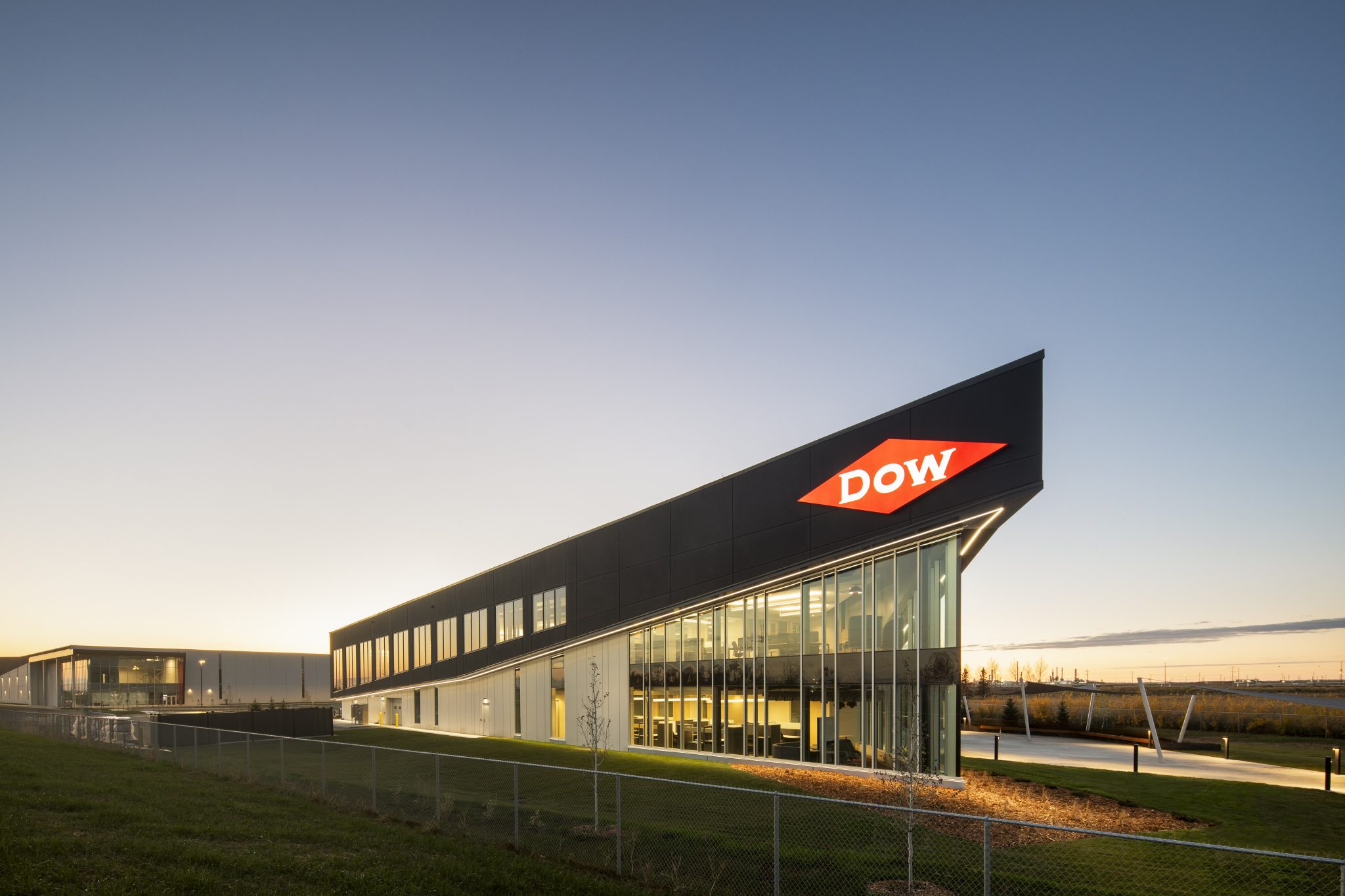
Dow’s Diamond Centre reflects a broader shift in industrial design—where petrochemical campuses are no longer purely functional, but reimagined as branded, people-centred environments that signal innovation, sustainability, and long-term investment.
In this follow-up story of the Dow Diamond Centre, Construction Canada spoke to Lemay’s expert about the industrial workplace transformation.
What was Dow’s rationale for creating a branded architectural landmark within an active petrochemical campus, and how does this reflect broader trends in industrial workplace design?
In partnership with Dow and York Construction, the Lemay project team identified three main ideas that influenced the design of the Diamond Centre and the related maintenance, repair, and operations (MRO) facilities:
- Gateway—Centrally located within the existing site, the new facility occupies a strategic position that frames key view corridors and provides seamless access to adjacent infrastructure. Its placement reinforces the site’s transition toward next‑generation, low‑carbon technologies.
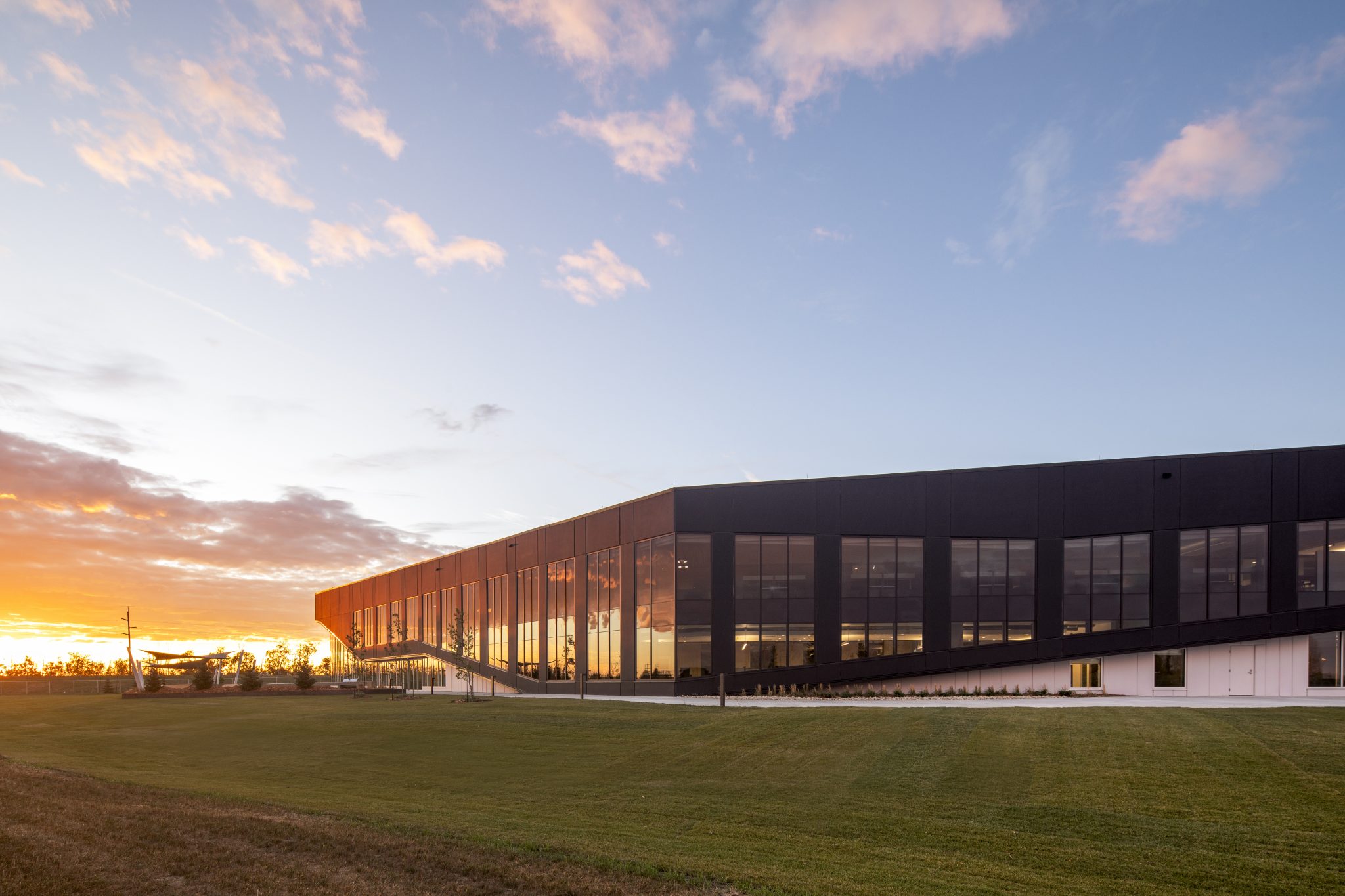
- Beacon—Fronting Highway 15, the Diamond Centre establishes a bold, visible presence that signals Dow’s commitment to decarbonization and growth. The massing inverts the relationship between earth and sky, while the dynamic roofline is accentuated by a colour palette that creates a distinctive, floating form.
- Hub—More than a landmark, the facility serves as the social and operational heart of Dow’s Alberta operations. It consolidates key functions related to staff training, collaboration, and wellness, reinforcing Dow’s investment in creating modern, people‑centred industrial workplaces.
How is the project positioned within the Fort Saskatchewan and greater Edmonton region, and what role does it play in signalling long-term investment in Alberta’s industrial sector?
Dow’s site is strategically located within Alberta’s Industrial Heartland, one of Canada’s most globally competitive industrial regions and a national hub for low‑carbon manufacturing, hydrogen development, and carbon‑capture innovation.
What site remediation, geotechnical, or infrastructure upgrades were required to support the new administrative and MRO facilities?
Although the Diamond Centre and MRO facilities were built on a 1961 brownfield site, early geotechnical testing confirmed that no soil contamination required remediation. This allowed the project team to proceed efficiently and focus efforts on integrating new infrastructure within an active industrial site.
What specific energy performance targets were established and how are they being measured?
The project employed several strategies to improve building performance in practical ways. Englobe Engineering was contracted for mechanical, electrical, and energy modelling, with Lemay’s internal sustainability team providing strategic guidance for the project.
The Diamond Centre and MRO buildings were designed to meet practical energy‑performance goals established jointly by Dow, Lemay, York Construction, and Englobe Engineering. Targets and strategies include:
- Energy and GHG performance—Designed for a 25 per cent reduction in greenhouse gas emissions and a 36 per cent reduction in annual operational energy costs compared to ASHRAE 90.1 baseline requirements.
- Daylighting and lighting efficiency—Optimized daylight access in workspaces to reduce artificial lighting demand and high‑efficiency LED fixtures paired with daylight sensors to minimize energy use.
- Heat‑island reduction—Expanded soft landscaping across the site and centralized parking to reduce paved surface area and mitigate heat‑island effects.
- Refrigerant and HVAC strategy—Use of HVAC systems with no CPC‑based refrigerants.
- Water and landscape performance—Revegetation of the 10-ha (25-acre) site using drought‑tolerant native plantings with zero irrigation requirements to reduce water consumption and support local biodiversity; and restoration of a pond next to the main entry.
- Construction waste and materials—Comprehensive construction waste‑diversion program and use of low‑VOC finishes and recycled‑content materials to support indoor environmental quality.
- Active mobility and wellness—Bicycle parking, staff fitness facilities, and showers to support active transportation and promote employee wellbeing.
Sign up for our weekly newsletter
Construction Canada weekly newsletters give the latest AEC industry news for those who build, design, engineer, specify, renovate or operate in the built environment.
Popular Articles
-
1
-
2
-
3
-
4
-
5
Read the Latest Issue

- Message from the president | Message de la présidente: Looking back, moving forward
- CSC Edmonton Presents 2026 Golf Tournament
- CSC luncheon invitation
- Two Methods of Collaborative Construction Delivery: Construction Management and Integrated Project
- Reducing a Billion Dollar Problem in Construction Through Correct Moisture Testing of Concrete