Toronto Port Lands project adds more housing density
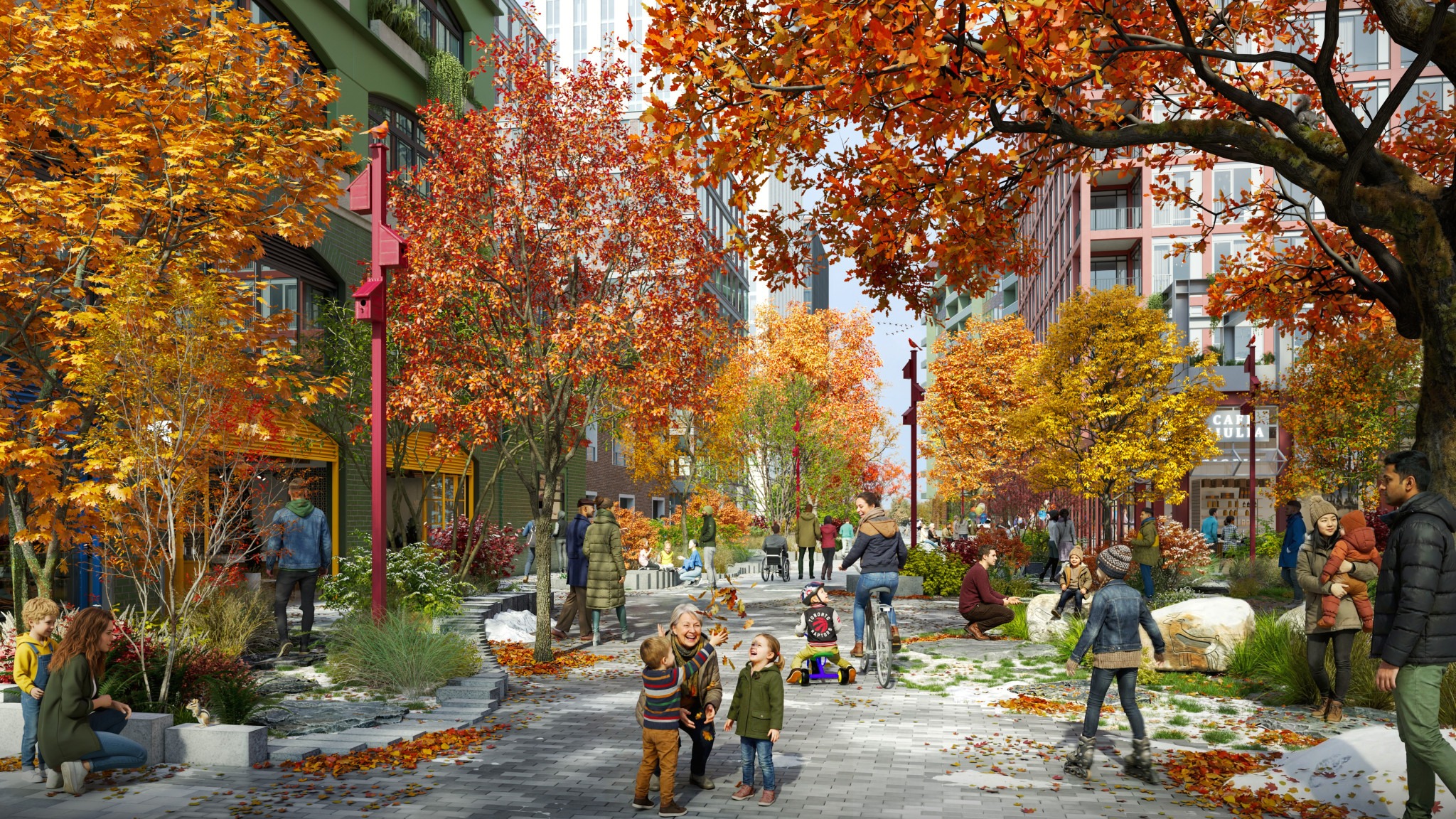
Updated development plans for the artificial island where the Don River meets Lake Ontario will add 12,000 new homes, including 3,000 affordable units. An integrated design team led by SLA and GHD, including Allies and Morrison, recently unveiled a demonstration plan for Ookwemin Minising, formerly Villiers Island, in Toronto’s Port Lands.
The new plan boosts overall density by 27 percent compared to the version approved by the Toronto city council in 2024.
A media release says that the streets will function as infrastructure, managing stormwater, reducing urban heat and supporting biodiversity.
“This project demonstrates how infrastructure and public space can work as one integrated system,” said Chris Hunter, GHD chief executive officer for the Americas.
“By designing streets and public spaces first, we create the conditions for a truly great neighbourhood, one where nature, culture, and everyday life are deeply intertwined,” says Rasmus Astrup, design principal and senior partner at SLA.
Developed in close collaboration with Indigenous co-designers Trophic Design, the design integrates Indigenous knowledge, storytelling, and spatial practices.
The mixed-use development will span 10.9 ha (27 acres) and support approximately 21,000 residents and 2,900 jobs. The first residents will move into Ookwemin Minising in the early 2030s.
Sign up for our weekly newsletter
Construction Canada weekly newsletters give the latest AEC industry news for those who build, design, engineer, specify, renovate or operate in the built environment.
Read the Latest Issue