Tackling thermal bridging with sprayfoam insulation
Thermal bridging is one of the most persistent and overlooked challenges in modern construction, particularly within wall and ceiling assemblies where framing components interrupt insulation layers. Even the most carefully planned insulation strategy can underperform when conductive materials create direct pathways for heat flow through the building envelope. The result? Increased energy bills, diminished occupant comfort, and, in some cases, moisture issues that can compromise building durability.
As energy codes and performance standards become more stringent, builders, designers, and specifiers are under growing pressure to address thermal bridging early in the design phase. Fortunately, advanced insulation solutions, particularly spray polyurethane foam (SPF), are helping construction professionals meet these demands by delivering continuous thermal, air, and moisture protection in a single application. As the industry shifts toward more holistic enclosure strategies, understanding how insulation types interact with entire assemblies has never been more important.
Understanding thermal bridging
Thermal bridging occurs when a highly conductive material bypasses or interrupts the insulation layer, allowing heat or cold to move more easily between the interior and exterior of a building. Common culprits include:
- Framing members such as wood studs, steel studs, and roof trusses
- Slab edges and foundation connections
- Balconies, canopies, and overhangs that penetrate the building envelope
- Mechanical and electrical penetrations through walls and roofs
Walls and ceilings often contain dense networks of framing members, making them especially vulnerable to thermal bridging when insulation continuity is interrupted. This vulnerability is amplified by the fact that materials such as steel and wood conduct heat much more readily than insulation; these components create “short circuits” in the thermal barrier. Even if only a small portion of the envelope is bridged, the overall effective R-value can drop significantly.
The implications for building performance
While thermal bridging is often discussed in the context of energy loss, its impact extends far beyond higher utility bills. One of the most noticeable consequences is reduced thermal comfort. Cold spots in winter or warm zones in summer are telltale signs of bridging, creating temperature inconsistencies that make spaces uncomfortable for occupants and more difficult to efficiently condition.
Thermal bridging also introduces moisture risks. By creating localized areas where interior surface temperatures drop below the dew point, it encourages condensation. Over time, this can lead to mould growth, corrosion, and the gradual degradation of materials. These repeated cycles of condensation and drying do not just affect appearance—they compromise the durability of the building envelope, shortening the service life of materials and leading to costly repairs.
Another challenge created by thermal bridging is the increased strain it places on heating and cooling equipment. When walls and ceilings allow uncontrolled heat flow, mechanical systems must work harder and run longer to maintain set temperatures, leading to reduced equipment life and higher operational costs over time.
In addition, thermal bridging poses significant challenges for code compliance. With energy codes such as the International Energy Conservation Code (IECC), ASHRAE 90.1, and Canada’s National Energy Code of Canada for Buildings (NECB) pushing for improved envelope performance, leaving bridging unaddressed can make it difficult, or even impossible, to meet required performance targets. Ultimately, managing thermal bridging is not just about saving energy; it is also critical for occupant comfort, building durability, and regulatory compliance.
Why sprayfoam insulation is an effective solution
Sprayfoam insulation is a highly effective choice for high-performance building envelope design because, when properly designed, it addresses thermal bridging. By minimizing conductive pathways and providing both thermal and structural benefits, sprayfoam offers a comprehensive solution for energy efficiency and durability. This becomes especially important in high-performance wall and ceiling assemblies, where even small gaps or inconsistencies in insulation layers can significantly affect energy modelling results and real-world performance.
There are two main types of SPF: open-cell and closed-cell. Both share the same core advantages: continuous thermal coverage, strong adhesion to irregular substrates, and the ability to seal around penetrations. However, they differ in density, rigidity, and moisture behaviour.
Open-cell SPF is lighter and more flexible, allowing it to expand and fill cavities effectively while providing good acoustic absorption. Its higher vapour permeability makes it appropriate for interior applications, where wall thickness limitations are less stringent. In such cases, a separate vapour retarder can be incorporated if necessary.
Closed-cell SPF, by contrast, is denser and more rigid. It provides a higher R-value per inch, adds structural strength to assemblies, and has low water permeability, allowing it to act as a vapour retarder in many applications.
Whether used in exterior walls, interior partition walls, cathedral ceilings, or flat roof-ceiling assemblies, SPF creates a continuous insulation (c.i.) layer that significantly reduces the impact of framing-related bridges.
Since both open- and closed-cell SPF can form effective air barriers when installed to the tested minimum thickness, each can help stabilize indoor temperatures and reduce heat loss. However, in thin-profile assemblies or cold-climate construction, closed-cell SPF is often favoured. Its high R-value per inch allows designers to meet energy targets without increasing wall thickness, while its built-in moisture resistance helps prevent condensation at thermal bridges.
Moisture resistance adds another layer of protection. Closed-cell spray foam has low water permeability and, in many assemblies, can serve as a vapour barrier. By controlling moisture migration, it minimizes the risk of condensation at thermal bridges and helps protect the building’s structure from potential damage.
Beyond its insulating and sealing capabilities, closed-cell spray foam also enhances structural integrity. When applied, it adds rigidity to walls, roofs, and other assemblies, increasing their resistance to deformation over time. This combination of thermal efficiency, moisture control, and added strength makes spray foam insulation an appealing option for builders and designers who prioritize both performance and resilience in their projects.
Assembly methods to meet new energy efficiency requirements
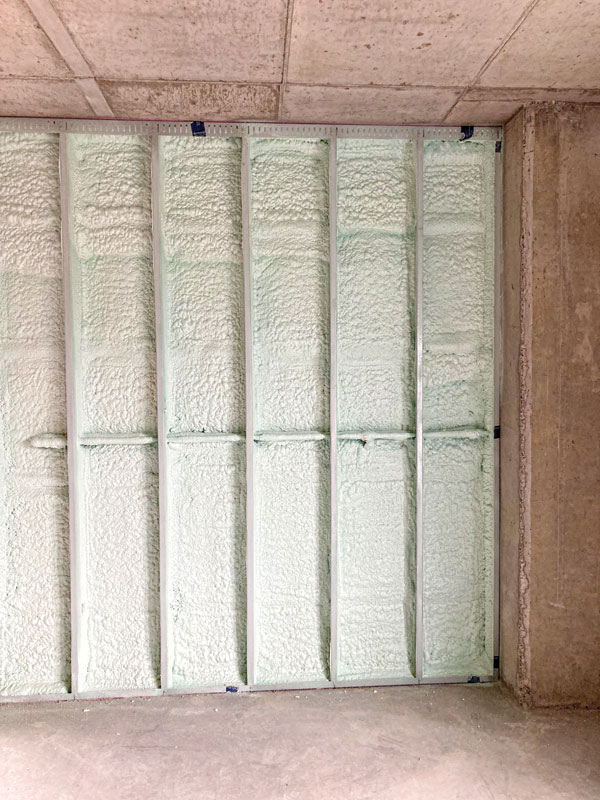
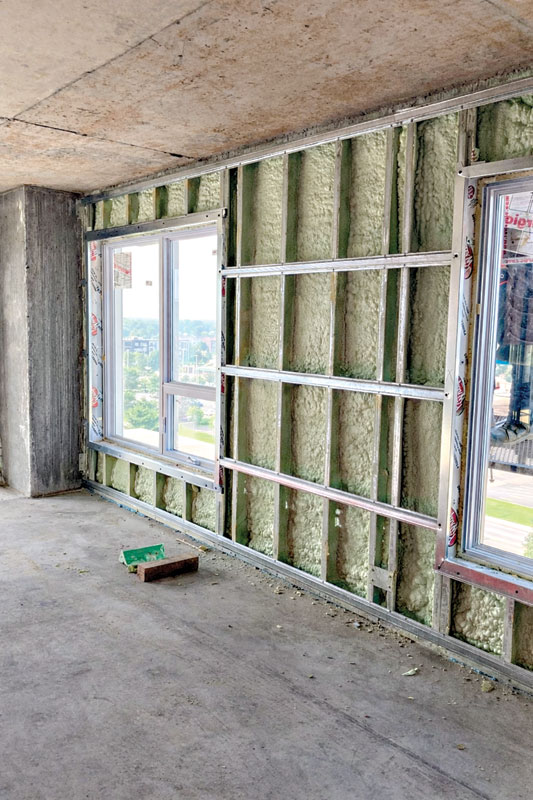
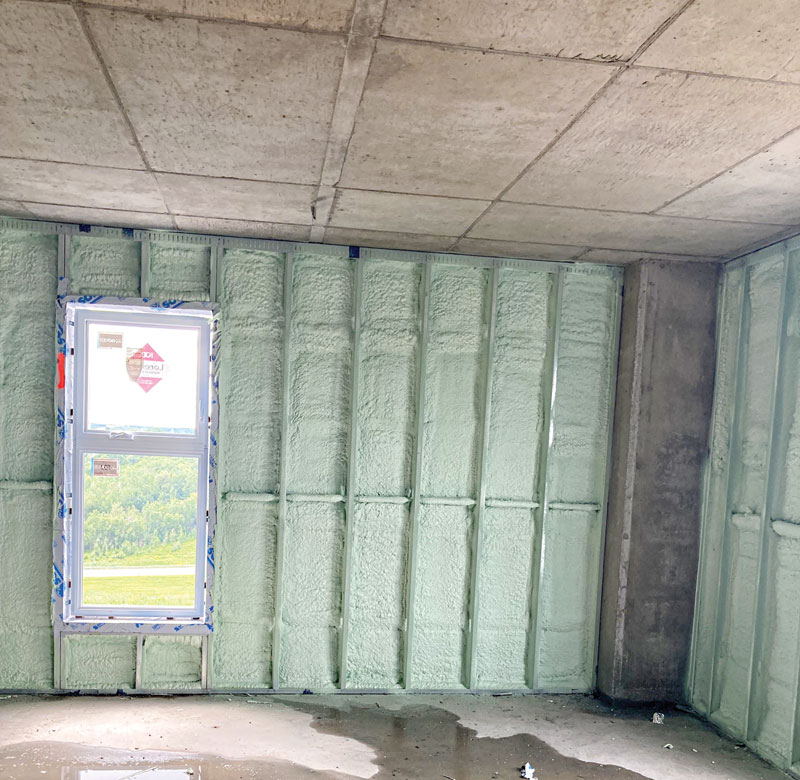
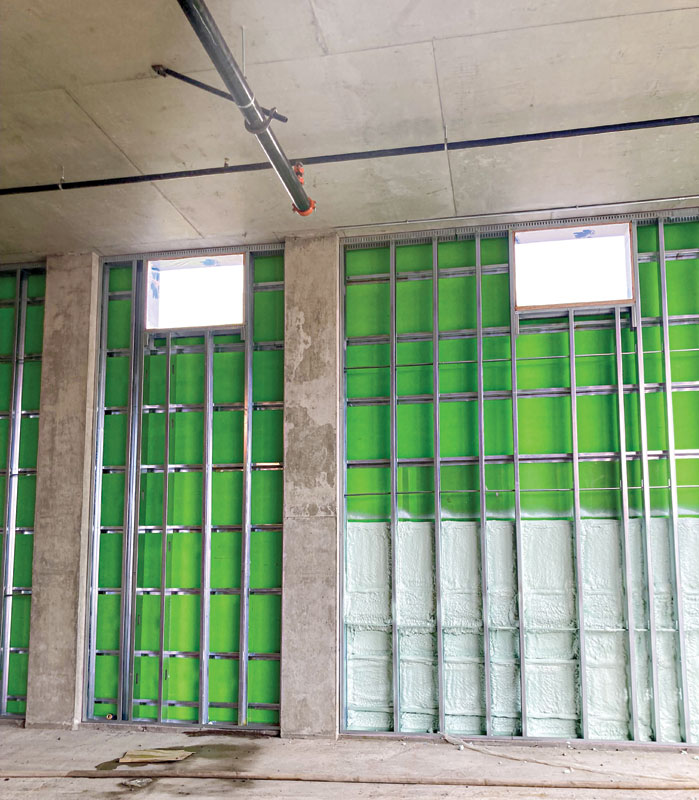
There are some assembly methods available to the building community that offer innovative solutions to both thermal bridging and the increasingly stringent energy-efficiency standards. By installing very specific sprayfoam products from the interior, this type of system seamlessly fills the gaps between the exterior sheathing and the wall studs, bridging what would traditionally be cold paths through the structure. What makes this approach especially effective is its integrated functionality: only a single application of sprayfoam from the interior provides insulation, air barrier, and vapour barrier simultaneously, eliminating the need for three separate layers applied both from exterior and interior.
When applied from the interior, sprayfoam integrates easily into stud walls, rim joists, and roof/ceiling cavities, allowing contractors to enhance performance without altering standard wall or ceiling designs. This not only bolsters thermal resistance and airtightness but also enables a much thinner wall profile, helping architects and builders meet new energy-savings mandates without compromising performance or increasing wall thickness.
Operational efficiency and reliability are also key advantages. Since the sprayfoam is applied entirely from inside the building, weather conditions, wind, and extreme cold (down to -20 C [-4 F]) no longer impede progress. There is no need for scaffolding, hydraulic lifts, or exterior staging for the installation of insulation. The result is significantly accelerated construction timelines, enhanced jobsite safety, and reduced labour and equipment costs.
Further, avoiding exterior compartmentalization per Article 3.1.11.2 of the National Building Code of Canada (NBC) or the Commission de la construction du Québec (CCQ) and meeting the required fire tests simplifies code compliance while improving heating performance during cold-weather construction. All these facets make some of these modern-day assemblies not only a high-performance but also a cost-effective solution, particularly in meeting evolving energy codes and efficiency expectations.
Important construction and life-cycle considerations
In all wall and ceiling assemblies, structural elements and buildings within walls—including mechanical, electrical, and plumbing systems—must be fully completed, inspected, and signed off. Sprayfoam, specifically, bonds tightly to substrates and can fully fill cavities, making changes afterward potentially costlier, more complex, and more time-consuming.
That said, while this is an important consideration, the extent of this constraint can vary depending on the assembly design and construction sequencing. There are cases where systems do not need to be fully embedded within the foam, and extensive rework can be avoided when addressed early in the design and planning stages.
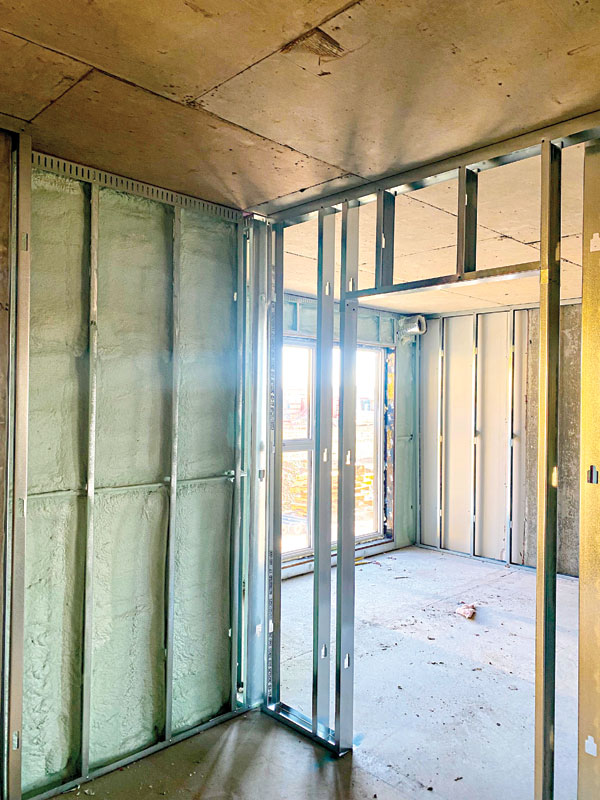
For example, electrical wiring can often be installed before or after insulation, depending on the assembly. In exterior-insulated systems, building services remain accessible from the interior by design. Meanwhile, in interior applications, the higher R-value per inch of sprayfoam can allow for partial cavity insulation, leaving sufficient space within the stud cavity to accommodate wiring runs.
As with any assembly, early consideration of construction sequencing is essential. For instance, in a 152 mm (6 in.) stud cavity insulated within 89 mm (3.5 in.) of sprayfoam, the remaining space can be intentionally allocated for electrical routing. When planned, this supports both constructability and future accessibility. It is also worth noting that electrical retrofit practices typically do not involve removing and rerouting existing wiring, but rather installing new wiring while existing conductors are abandoned in place.
Similar considerations apply to ventilation and plumbing systems. Ventilation ducts are ideally installed prior to sprayfoam application, but they can also be installed afterward, with perimeter sealing used to maintain continuity of the air barrier. Plumbing, which is typically located on the warm side of insulation to reduce the risk of freezing, is therefore often kept accessible rather than embedded within the insulated layer. In cases where plumbing must be located near or within insulated assemblies, simple measures—such as isolating components with a protective layer—can prevent adhesion and maintain serviceability.
Ultimately, these considerations highlight the importance of early co-ordination among design teams and trades. Regardless of insulation type, poorly sequenced construction or lack of trade co-ordination can lead to complications. When assemblies are thoughtfully planned, sprayfoam insulation can be integrated without compromising long-term maintenance, while still delivering its performance benefits.
Design strategies for reducing thermal bridging
While sprayfoam can dramatically reduce bridging, best results come from combining it with other smart design choices such as:
- Using exterior insulation to move the primary thermal layer outside structural framing
- Eliminating or redesigning envelope penetrations such as continuous steel structures and balcony slabs
- Incorporating thermally broken connections for fasteners, cladding systems, and structural supports
- Sealing mechanical and electrical penetrations with SPF to prevent both air leakage and conductive heat loss
In hybrid assemblies, sprayfoam can work in tandem with other types of insulation or other materials to deliver code-compliant performance and optimized cost-efficiency. This versatility is especially valuable in wall and ceiling assemblies, where hybrid insulation systems are increasingly used to balance cost, performance, and code requirements.
Meeting the demands of modern codes and clients
Building owners, architects, and builders increasingly recognize that investing in a high-performance envelope delivers long-term value. Reduced operational costs, greater occupant comfort, and increased durability are compelling benefits, and, in many cases, meeting today’s codes is only possible when thermal bridging is addressed head-on.
By providing continuous thermal coverage, airtightness, and moisture control in a single step, sprayfoam insulation offers a practical, proven approach to this challenge. Whether used as part of a fully exterior-insulated wall assembly or as a targeted solution in framing cavities and connection points, SPF helps ensure buildings perform as designed for decades to come.
As the performance expectations for modern wall and ceiling assemblies continue to rise, SPF provides a practical path to meeting—and exceeding—those demands.
Author

Mickel Maalouf is the sustainable building science manager at Huntsman Building Solutions. Maalouf specializes in building envelopes, energy efficiency, and building code compliance. He supports LEED projects and drives sustainable development initiatives to help meet today’s environmental challenges.
Sign up for our weekly newsletter
Construction Canada weekly newsletters give the latest AEC industry news for those who build, design, engineer, specify, renovate or operate in the built environment.
Products & Services

Read the Latest Issue