How a former industrial site became a community space
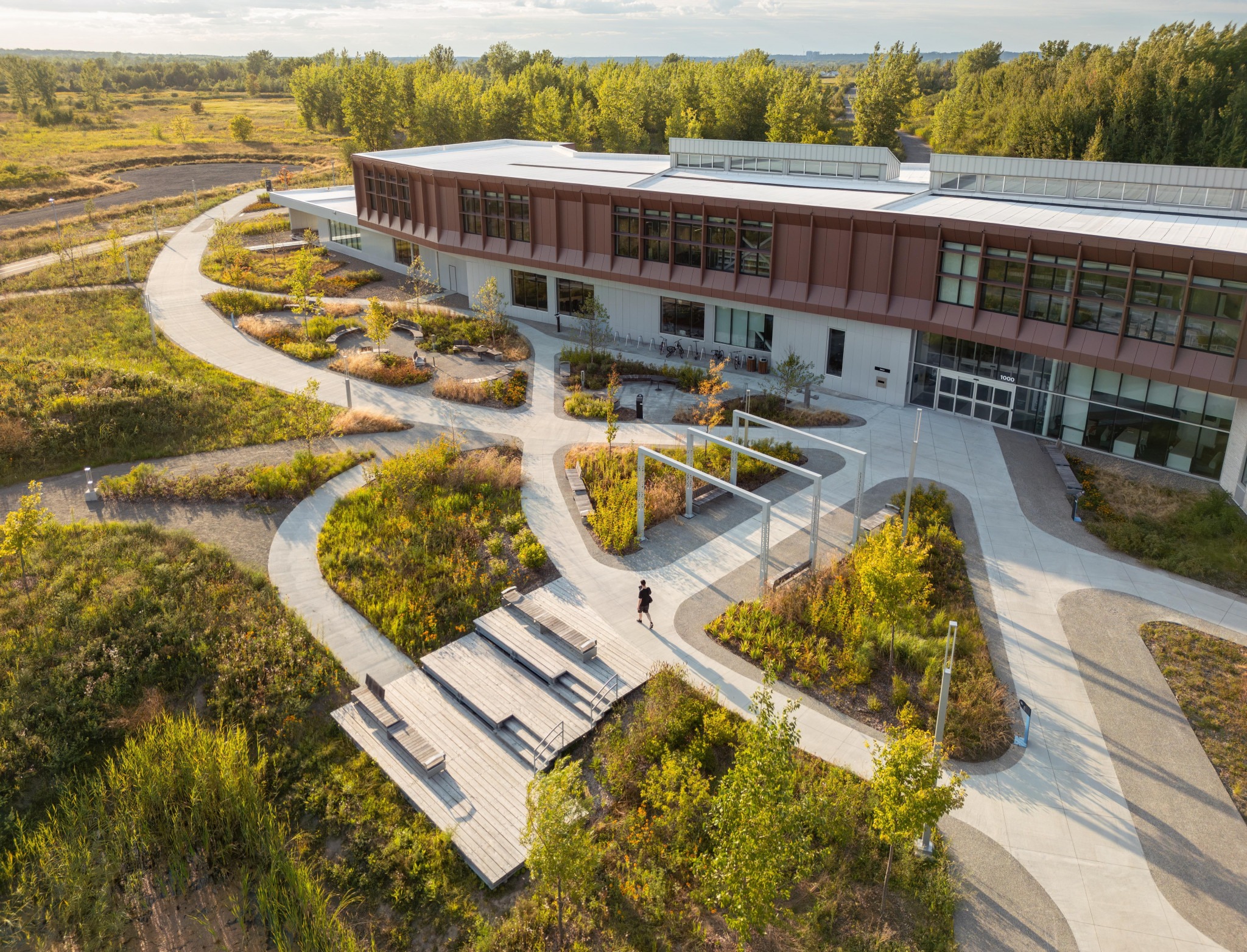
A 5.2-ha (13-acre) site in Laval, Que., is testimony to the reactivation of the ecological potential of former industrial sites, while also remedying a long-standing lack of local amenities.
Espace citoyen des Confluents, located at the intersection of Saint-François and Duvernay-Est in Laval, stands on land that was once forested, converted to agricultural use, and then home to a petrochemical plant during the 1970s and 80s. Despite the City of Laval’s decontamination and soil reactivation efforts, the site remained a degraded brownfield. Decades of regeneration efforts, helped by fertile clay soils, proximity to wetlands, and the natural capacity for water retention, reinvigorated the landscape.
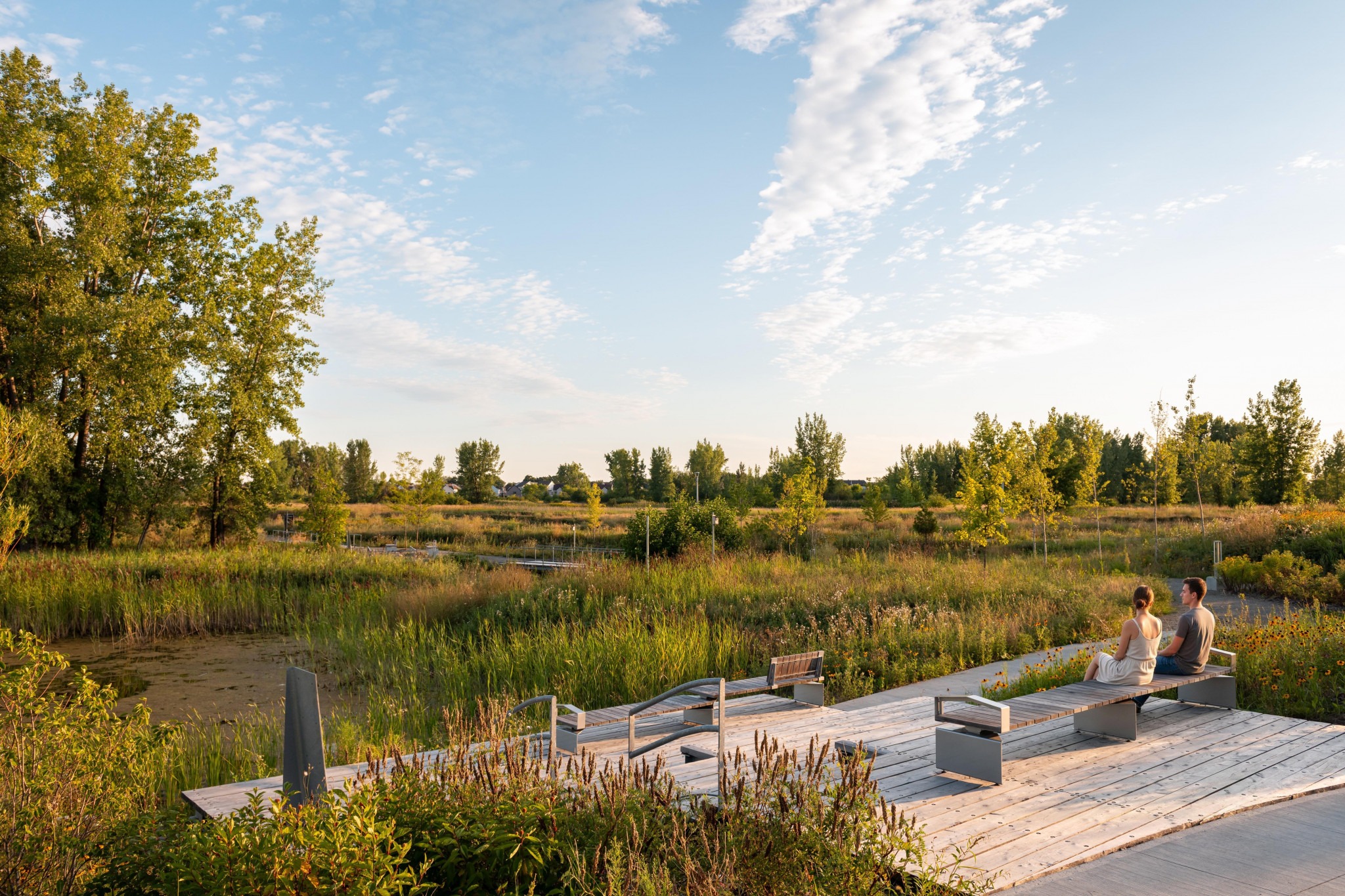
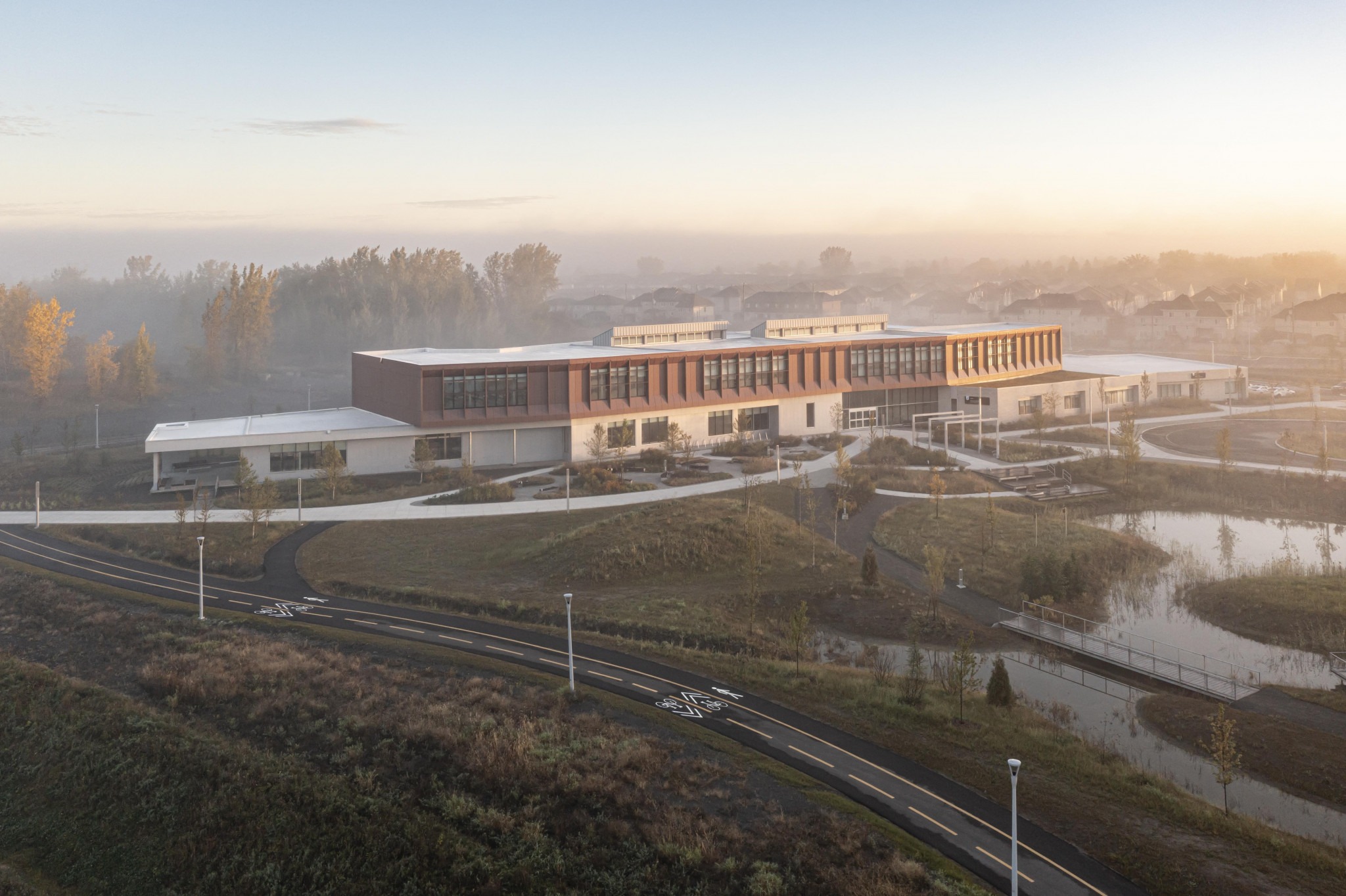
Since 2024, the site has been home to a civic complex that hosts a library, cultural spaces, and municipal services. The complex’s design recreates the conditions for regeneration, allowing nature to shape community life, according to a media release.
The project was overseen by the landscaper Projet Paysage and the architecture firm Cardin Julien, who envisioned the site as a place for gathering, social connection, and engagement with nature.
With a Leadership in Energy and Environmental Design (LEED) v4 Gold certification, the media release says the project demonstrates how integrated design can create civic hubs that unite environmental performance and spatial quality.
Espace citoyen des Confluents is part of the City of Laval’s 2035 Strategic vision, contributing to the redevelopment of a long-isolated area, strengthening connections with surrounding neighbourhoods.
Sign up for our weekly newsletter
Construction Canada weekly newsletters give the latest AEC industry news for those who build, design, engineer, specify, renovate or operate in the built environment.
Read the Latest Issue