Study explores modular mass timber to speed housing delivery
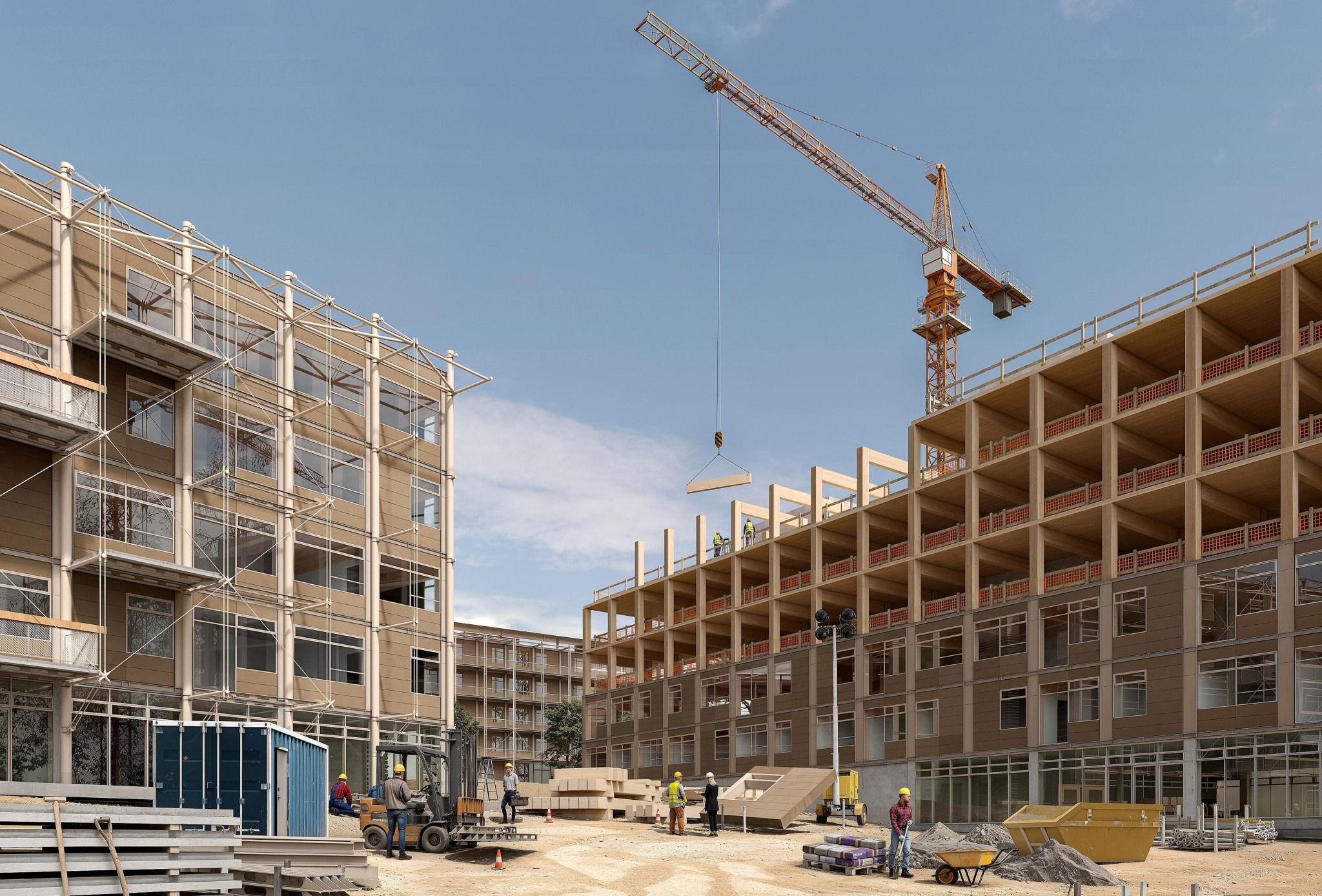
A study led by Perkins&Will suggests modular mass timber could help Canada accelerate housing delivery while reducing environmental impacts and strengthening domestic construction capacity.
The study proposes a housing system that combines modular design, off-site manufacturing, and engineered timber components. The proposed system streamlines design, approvals, and construction. It uses a standardized structural grid and co-ordinated building systems to support different unit types, building designs, and site conditions.
The study says prefabricated mass timber can shorten construction timelines by shifting more construction into controlled manufacturing facilities. This improves quality control, reduces on-site labour requirements, and creates more predictable project delivery.
The research also highlights the sustainability benefits of mass timber. According to the study, engineered timber, a renewable, low-carbon material, can reduce the need for conventional materials, including concrete, steel, and gypsum. The study suggests a modular mass timber system could lower housing’s embodied carbon while helping Canada meet its climate goals.

Perkins&Will developed the study with industry and academic partners through the DIGITAL Housing Growth Innovation program. It was intended to create a scalable construction solution that helps municipalities, project teams, and manufacturers deliver housing more efficiently.
As Canada continues to face housing supply challenges, the study suggests that modular mass timber can help accelerate construction while supporting more sustainable building practices.
“We face a housing crisis across Canada, and the impact of a rapidly changing climate is real. These are issues that demand decisive action,” says Derek Newby, regional director of Perkins&Will practices across Canada. Newby added that the study connects these challenges with the construction industry’s potential to deliver practical solutions.
Sign up for our weekly newsletter
Construction Canada weekly newsletters give the latest AEC industry news for those who build, design, engineer, specify, renovate or operate in the built environment.
Read the Latest Issue

- CSC Hamilton-Niagara: Engineer’s View of Lime-Mortared Masonry with International Expert
- Message from the president | Message de la présidente: CSC First Quarter Update
- CSC Hamilton-Niagara Fun Night: Bowling at Parkway Social
- Oktoberfest 2026 – Vancouver Chapter CSC Trade Fair
- CSC Calgary October Meeting
Demo-Casts