Six BC projects recognized for building electrification achievements
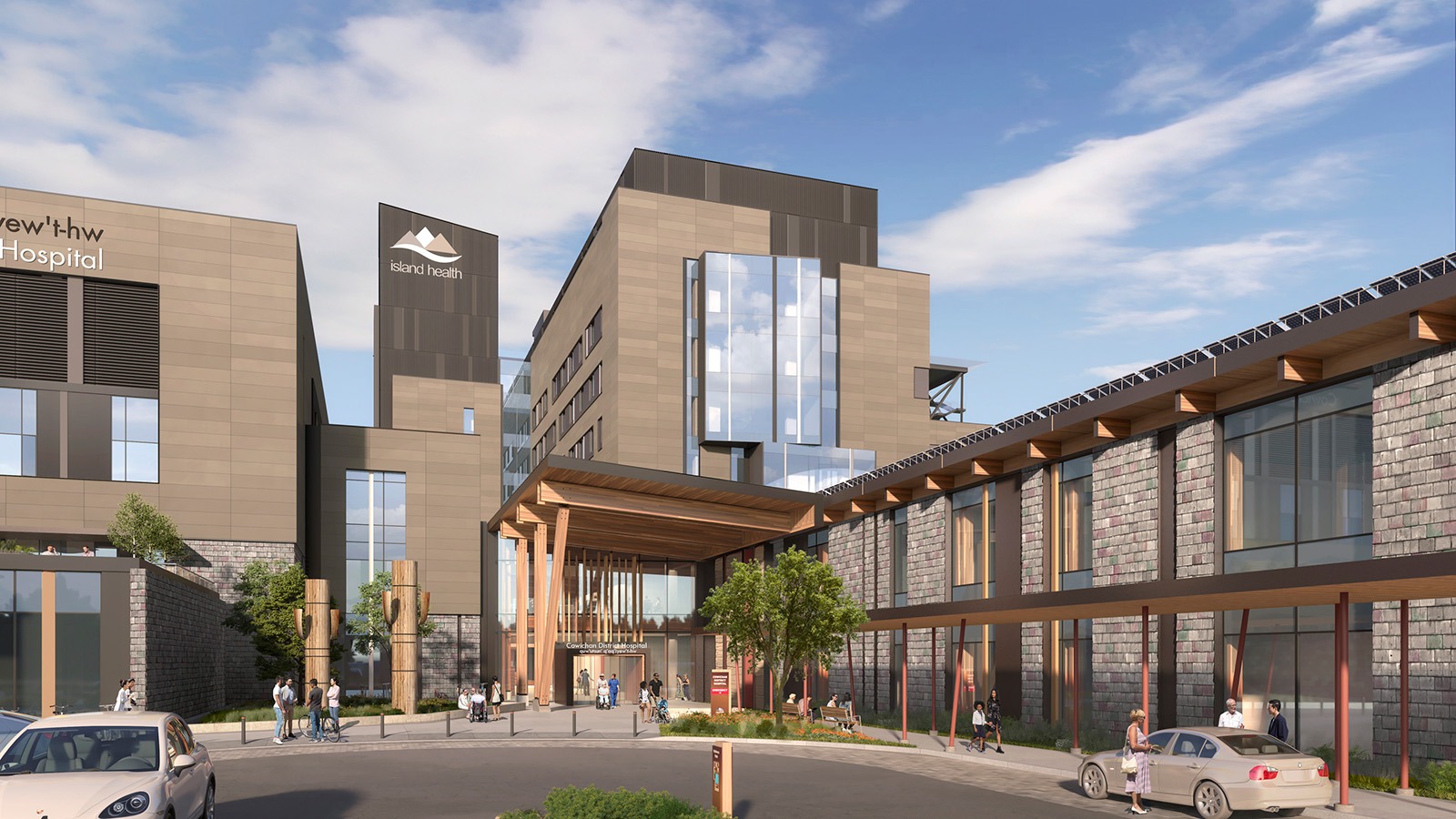
British Columbia’s first all-electric hospital and a downtown Vancouver heat recovery system that could help cut emissions across the commercial building sector were among the projects recognized by the Building to Electrification Coalition (B2E) recently.
Six projects, organizations, and industry leaders were awarded for advancing building electrification in the province.
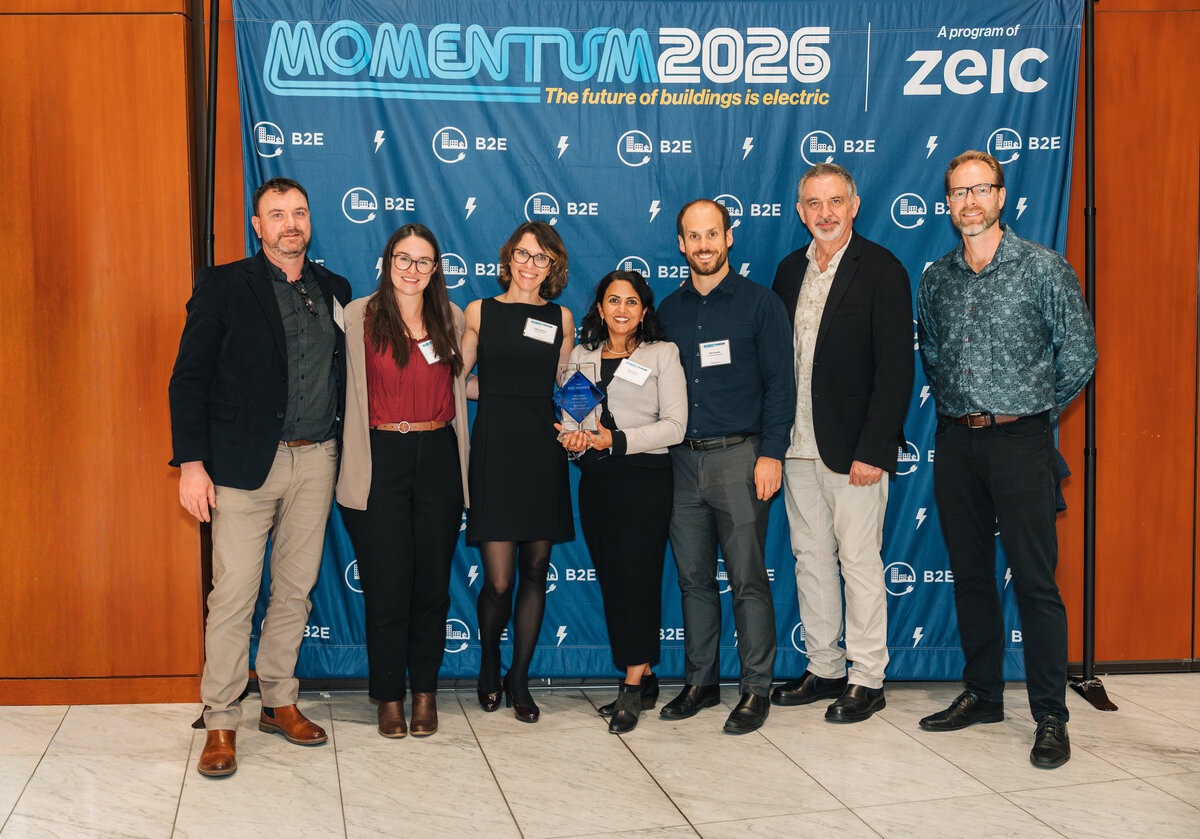
B2E presented the awards at Momentum 2026 on October 21 at the Anvil Centre in New Westminster, BC. The event brought together 200 representatives from design, construction, policy, retrofit, and supply chain sectors to discuss progress and future opportunities.
B2E is a network of 290 organizational members from across BC’s building sector. It operates as a program of the Zero Emissions Innovation Centre (ZEIC).
Most outstanding large new construction: Quw’utsun Valley Hospital — ZGF Architects (Cowichan Valley)
BC’s first all-electric hospital is more than three times the size of the facility it replaced. The project uses heat pumps, electric boilers, and heat recovery to reduce energy consumption by 30 per cent compared with the previous hospital.
The design also reduces emissions and operating costs. It is Canada’s first health facility to meet the Canada Green Building Council’s Zero Carbon Building – Design Standard.
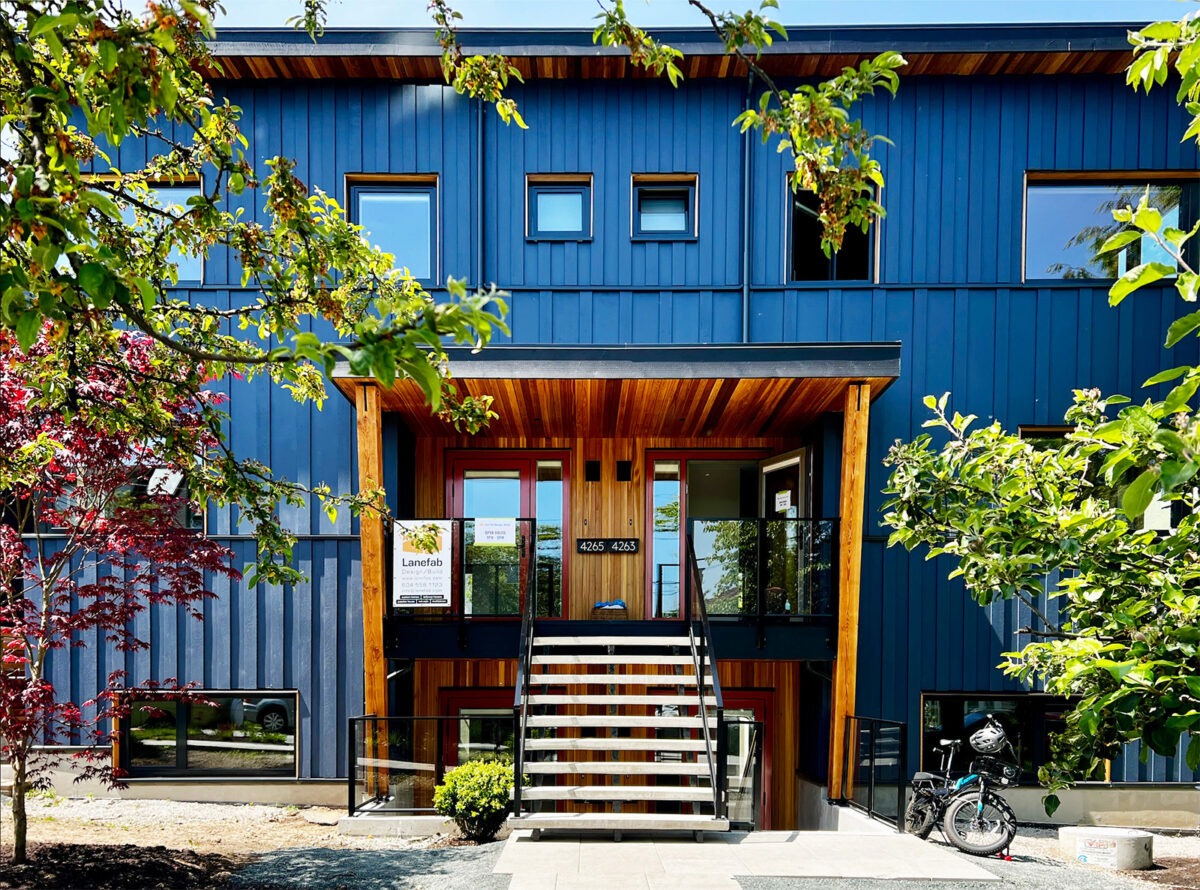
Most outstanding small new construction: Big Blue House — Lanefab Design/Build (Vancouver)
Four homes on one lot demonstrate how higher housing density can work alongside electrification and lower construction costs.
The project combines electric heating, solar panels, and high-performance insulation to achieve Net Zero certification. Its efficient electrical design accommodates all four homes on a 400-amp service, avoiding costly electrical upgrades.
Most outstanding large retrofit: Pacific Centre Heat Recovery Project — FirstLight Energy Solutions (Vancouver)
The heat recovery system at CF Pacific Centre can capture up to 53,000 gigajoules of waste heat annually to heat nearby office towers.
The system could cut greenhouse gas emissions by up to 1,400 tonnes. It also demonstrates the potential to reuse waste heat from existing commercial buildings rather than allowing it to go unused.

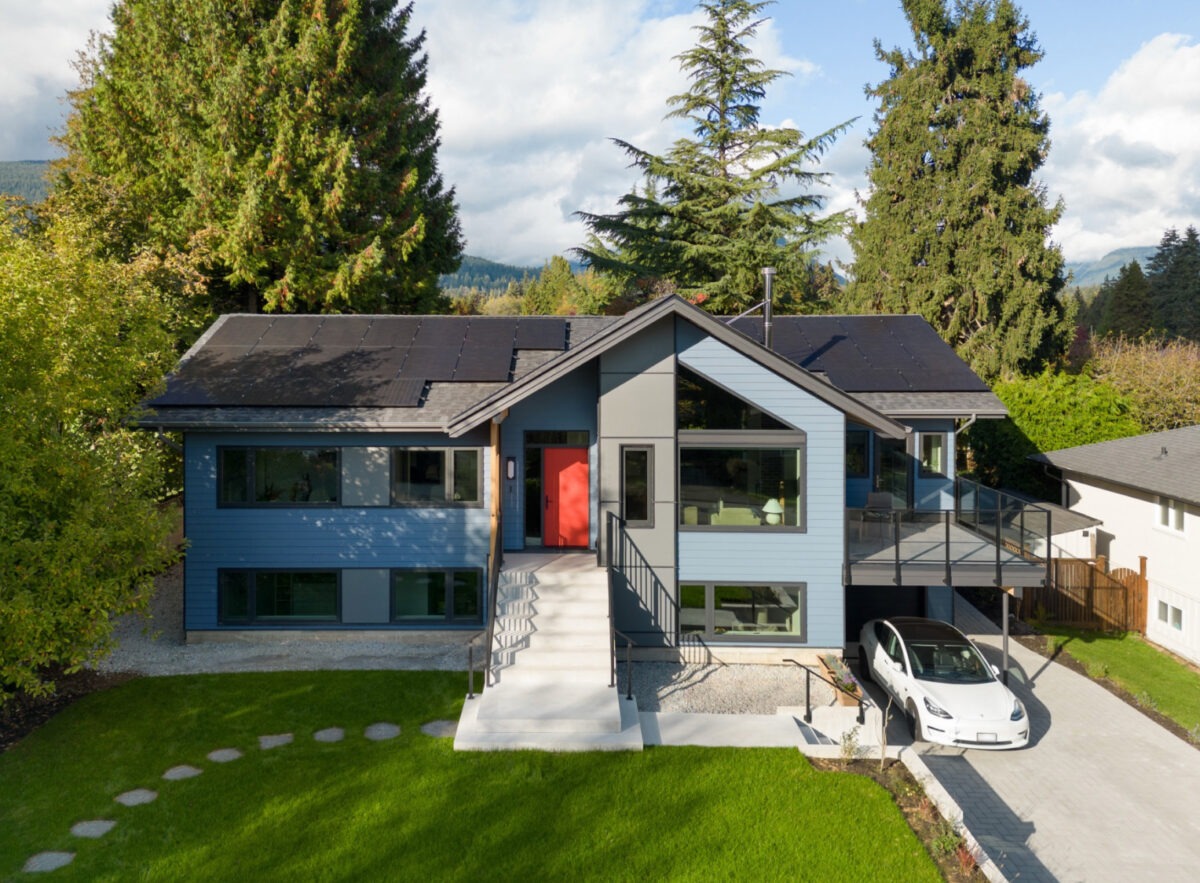
Most outstanding small retrofit: North Van Net Zero — Twin Lions Contracting (North Vancouver)
The North Shore’s first Net Zero-certified renovation shows how existing homes can achieve substantial emissions reductions.
The project retained much of the original structure and added high-performance insulation, electric heat pumps, and 27 solar panels. The home generated 108 per cent of its annual energy needs in its first year and reduced operational emissions by 98 per cent.
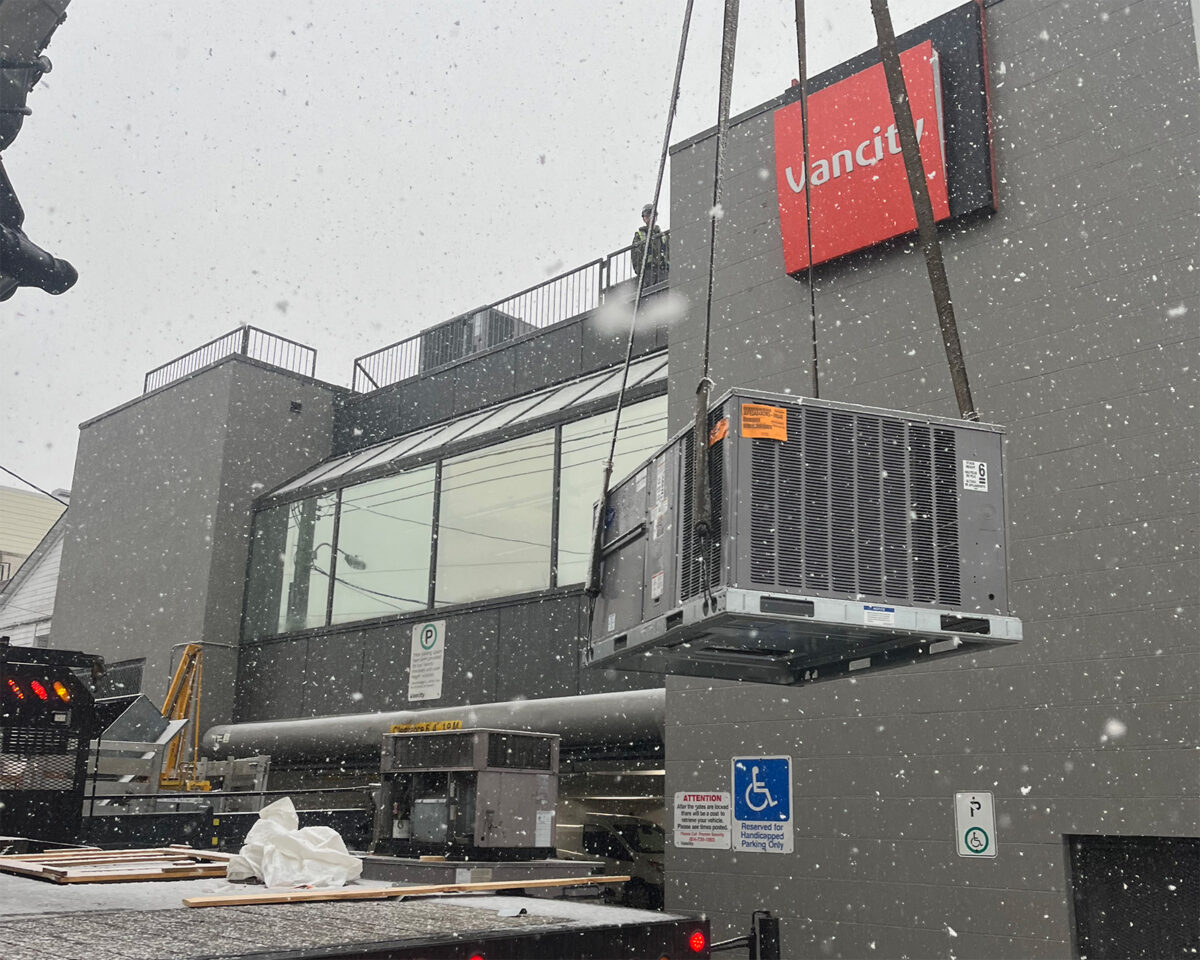
Most impactful strategy for electrification: Vancity’s Operational Electrification Program — Vancity (BC-wide)
Vancity is replacing gas rooftop units with electric heat pumps across its property portfolio. The upgrades also provide cooling at multiple locations.
Since 2024, the organization has electrified seven locations across four Lower Mainland cities, reducing greenhouse gas emissions by 15%. Its Surrey Guildford branch recorded an 85 per cent reduction.
The program demonstrates how organizations can electrify leased buildings and manage upgrades across complex property portfolios.
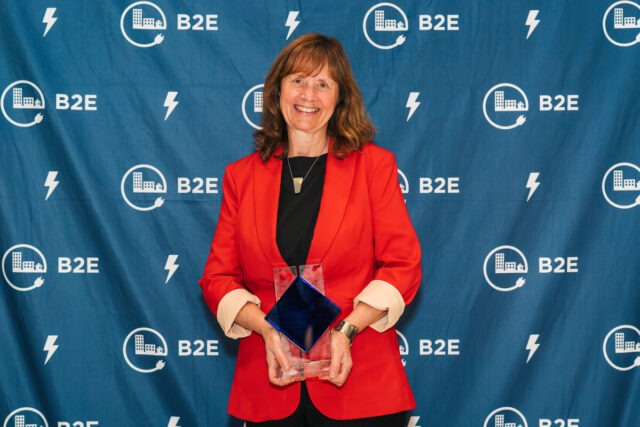
Electrification champion: Shauna Sylvester — Founder and lead convenor, Urban Climate Leadership (BC-wide)
B2E Coalition members voted Shauna Sylvester the Electrification Champion for her work advancing building electrification through partnerships, advocacy, and economic development.
Sylvester also leads the Keep it Cool Initiative, a proposed BC strategy to equip 5,000 low-rise multi-unit residential buildings with energy-efficient heat pumps.
The initiative aims to improve indoor comfort and resilience to extreme temperatures while reducing emissions and pressure on the electricity grid.
Webinars

Radon Protection from the Ground Up: Building with Spray Foam Insulation | Huntsman Webinar
Sign up for our weekly newsletter
Construction Canada weekly newsletters give the latest AEC industry news for those who build, design, engineer, specify, renovate or operate in the built environment.
Popular Articles
-
1
-
2
-
3
-
4
-
5
Read the Latest Issue

- CSC Vancouver Chapter November Luncheon
- 2026 Connections Cafe: Architectural & Design Community Registration
- CSC Hamilton-Niagara: Engineer’s View of Lime-Mortared Masonry with International Expert
- Message from the president | Message de la présidente: CSC First Quarter Update
- CSC Hamilton-Niagara Fun Night: Bowling at Parkway Social
Demo-Casts