The sustainability gap: Carbon tools promise clarity; construction reality disagrees

Much like value engineering (better known as de-value engineering), sustainability has become one of those overused words that means everything and nothing at the same time. It is mentioned in the early phases of design, highlighted in proposals and owners’ requirements, and in some cases, it does not reappear until near the end of the project, wearing a panicked and malicious expression. Somewhere between the initial concept sketches and the final tender package, sustainability either gets integrated into the building from the start or is quietly swept under the rug due to “scheduling,” “budget reasons,” and/or “lack of effort.”
For architects and designers, the pressure to meet realistic sustainability targets is high. Carbon targets and operational energy use are now increasingly tied to building design, approval processes, procurement, and funding. Clients and building owners are now asking pointed sustainability questions about goals. Local municipalities are tightening their “green” requirements or at least trying to. Professional consultants are showing up to meetings with performance spreadsheets. With all this “new” information and requirements, the architect still needs to connect and align all expectations into a coherent, buildable solution that does not blow the budget or schedule out of proportion.
Enter stage right… carbon tools. The design industry now features more carbon calculators, dashboards, plugins, frameworks, and checklists. Some of these tools are genuinely useful; however, some are only academic exercises where common sense could have improved the overall outcome. In the author’s experience, many practitioners feel like these tools were created by application designers who have never had the chance to watch a contractor trying to meet a construction schedule in Sault Ste. Marie, Ont., during the Bon Soo winter festival.
The real question for architects is not whether they should use these sustainability tools, but rather which ones actually help, when to use them, and how to keep sustainability practical to meet the realities of construction. Do not overcomplicate it.
From ‘green’ to ‘carbon’: A subtle but important shift
For decades, sustainability within the architectural community existed in a comfortable, safe environment where checklists and payments to organizations determined how sustainable a building was. Energy efficiency, daylighting, water use, and recycled content are important aspects of sustainability, but they do not provide the full picture. Carbon, in the form of embodied and operational emissions, has shifted the conversation and influenced how buildings are designed more efficiently and effectively.
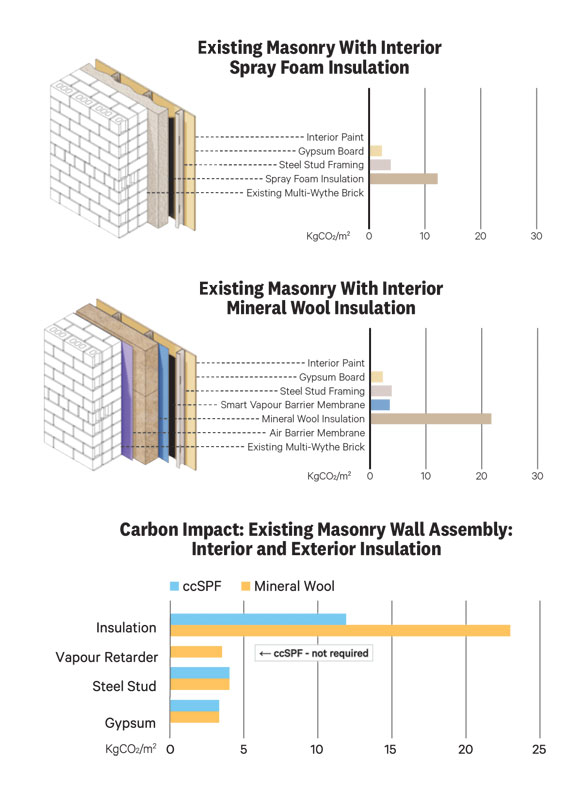
Embodied carbon is a different challenge. Its impact on the building’s footprint and environment occurs even before the building is occupied; the effects of carbon are locked in the moment the raw materials are extracted, manufactured, and delivered to the site. Embodied carbon for materials such as concrete, steel, insulation, cladding, and finishes varies greatly. Therefore, these decisions matter early, and once they are made, there is no way to undo that carbon footprint.
This is where carbon tools can have a significant impact on the project. The whole carbon tool ecosystem can feel like the Wild West. There are excellent tools out there, but there is also a lot of noise.
Typical tools for carbon calculation fall into a few specific categories:
- Whole-building life-cycle assessment (LCA) tools
- Early-stage conceptual estimators
- Material-specific or Environmental Product Declaration (EPD)-based calculators
- Code- and policy-driven benchmarking frameworks
Each of these tools has a role, but the trouble begins when they are used at the wrong time, or worse, as a substitute for actual design thinking. Early-stage tools are excellent for massing studies and high-level decisions. These tools can indicate whether a concrete tower will exceed the carbon targets long before anyone has detailed a slab edge… but they are very blunt instruments. The tools cannot understand building science, constructability, supply chains, or local trade practices.
Detailed LCA tools are useful, but they require accurate and relevant inputs. Garbage in, garbage out applies more here than anywhere else. If assemblies are treated as generic placeholders, the resulting output may seem impressive but lacks meaningful value. Inputting realistic systems and components helps ensure that the carbon results accurately reflect the actual project being built.
There are also policy-driven tools that are increasingly influencing how projects are accepted and approved by the office. These tools are no longer optional; they are becoming part of the regulatory compliance landscape, whether architects or building owners like it or not.
One uncomfortable truth about carbon tools’ output is that they are often presented with more confidence than they deserve. The data outputs often appear specific, particularly when they include decimal places that imply scientific certainty (a common tactic is to use large numbers or additional decimal places to make results seem more credible). Carbon modelling is predictive, not prophetic; it is an informed estimate based on assumptions, boundaries, and data that may or may not reflect what actually occurs on site.
Meticulously modelled wall assemblies can often get “field adjusted” with whatever material was available that week, or to save costs. There is already a gap between theory and practice. Carbon tools do not account for supply chain disruptions, winter pours, rushed substitutions, or the fact that the concrete truck showed up late and everyone was ready to go home.
These factors do not render the tools useless; rather, they mean they should be used with humility and adjusted in real time. Think of these tools less like a crystal ball and more like an unreliable weather forecast. While the tools can be helpful for planning and decision-making, they can be dangerous if treated as the absolute truth, and sometimes people sound very confident in project meetings while being completely mistaken.
The architect’s real challenge: Tools versus responsibility
One of the quieter frustrations expressed by architects and designers is this: “We’re being asked to deliver against carbon goals without actually being able to control all the project variables and contractor decisions.” They are not wrong. Architects can specify
low-carbon materials, but procurement and value engineering might substitute them for various reasons. If the specified materials are unavailable, contractors may recommend replacements without considering the carbon. Architects can design efficient and effective assemblies, but construction sequencing may compromise the overall assembly performance. Practitioners can model an impressive carbon story, but site conditions and time frames may force last-minute changes.
Carbon tools do not solve this problem, but they do make responsibility more visible and relevant for future projects. When used properly, these tools allow architects and designers to:
- Clarify the document’s intent
- Compare alternatives transparently
- Engage in informed conversations with clients and contractors
- Push back when substitutions compromise overall performance
Embodied carbon meets building science (finally)
An encouraging trend in the industry is that discussions about carbon are beginning to intersect with building science and in-situ performance rather than existing separately. For many years, assemblies were optimized solely for thermal, air, vapour, and water control (four control layers). Carbon was not considered a significant factor in that important equation, but due to climate change and a better understanding of carbon, more relevant questions are now being asked. Many of these questions posed by architects include:
- Do we really need that much concrete?
- Is the insulation serving as both an air barrier and insulation?
- Can one material replace three layers?
- How does a material’s durability affect the carbon outcome?
To clarify further, this is what is important when it comes to durability. Durability has an impact on recurring embodied carbon. Materials that last longer can reduce the recurring embodied carbon associated with:
- replacement materials transportation
- demolition and disposal
- additional labour and construction activity
It is important to look at the lifespan of materials being used in the design assembly.
Questions like this offer architects a significant opportunity to focus on assembly performance. Assemblies that are simpler, more durable, and incorporate material integration typically perform better from a carbon perspective as well. Fewer materials mean fewer interfaces, which, in theory, reduces failures. Sustainability can also be about avoiding the use of redundant materials.
EPDs and carbon: Essential, imperfect, yet preferable to guesswork
EPDs have become the currency of carbon discussions, and like any currency, they come with fine print. EPDs offer transparency, but they are not all the same; industry versus individual, different assumptions, system boundaries, and manufacturing locations can produce significantly different numbers for what seem to be similar products. Comparing EPD results without understanding the context is like comparing an insulation’s R-value without knowing the product’s thickness.
EPDs used for construction decisions represent a significant advancement in the industry and provide architects with tangible data to inform their work. Carbon tools that incorporate EPD data enable more informed material choices, particularly when those decisions are made early in the building design process. The key is to view EPDs as decision-support tools rather than absolute truths; they should guide judgment, not replace it.
One of the most significant shifts happening quietly in the industry is that carbon is no longer just a topic in design offices. Contractors and building owners are being drawn into the discussion, sometimes willingly, sometimes less so. Low-carbon requirements, whether embodied or operational, are appearing in specifications and project requirements like never before. Reporting obligations are appearing in project contracts, and submittals are being reviewed through a sustainability lens.
Unfortunately, this creates friction among the project parties, but it also presents a great opportunity. When architects use carbon tools to support buildable, realistic solutions, contractors tend to become engaged and deeply involved. When these project-specific carbon targets seem disconnected from reality or, as previously mentioned, become little more than a checkbox, resistance is inevitable. The most environmentally successful projects are those in which these carbon tools and their enforcement are used collaboratively as a shared framework among the owner, architect, and contractor.
Sustainability is a process, not a product
There is often a temptation, especially when creating and reviewing marketing materials, to present sustainability as just a product feature. Many designers seek a quick fix when choosing products. Carbon tools, like overly promotional marketing literature, can unintentionally reinforce that mindset if caution is not exercised.
However, sustainability is not something added at the end of the project. It is a process that begins early in the project, continues through the schematic design and design development phases, and requires ongoing adjustments as constraints and project variables shift.
Carbon tools work best when integrated into that process:
- Early enough to shape form and systems
- Frequently enough to test assumptions
- Transparently enough to foster genuine project conversations
These tools are not meant to make decisions for architects. Instead, they are designed to make the impacts of carbon decisions visible to the project team. These tools are only intended to guide how to reduce the building’s carbon footprint.
Tools can quantify, compare, and benchmark. They cannot:
- Balance aesthetics with performance
- Navigate client politics
- Resolve conflicting consultant priorities
- Design assemblies that actually get built as intended
The risk is not that architects will overuse these carbon tools. They will be asked to implement them without the authority to act on the outcomes.
Looking ahead: Fewer tools, better conversations
The next phase of carbon tools will focus less on flashy software or databases and more on integration and, believe it or not, common sense. Looking ahead, these tools need to concentrate on practical processes such as:
- Fewer standalone platforms
- More embedded workflows
- Better alignment between design, specification, and construction
The goal of these tools is not to identify the perfect carbon accounting, but to build better low-carbon buildings that are more durable, more efficient, more responsible, and more realistic about how they are actually constructed in Canada.
Sustainability and carbon reduction do not require a superhero story. They do not need architects to save the planet one building assembly at a time. Instead, they need clear thinking, good tools, and honest conversations about trade-offs among all parties. When used effectively, carbon tools can help architects do what they have always excelled at: making informed decisions in complex environments.
Notes
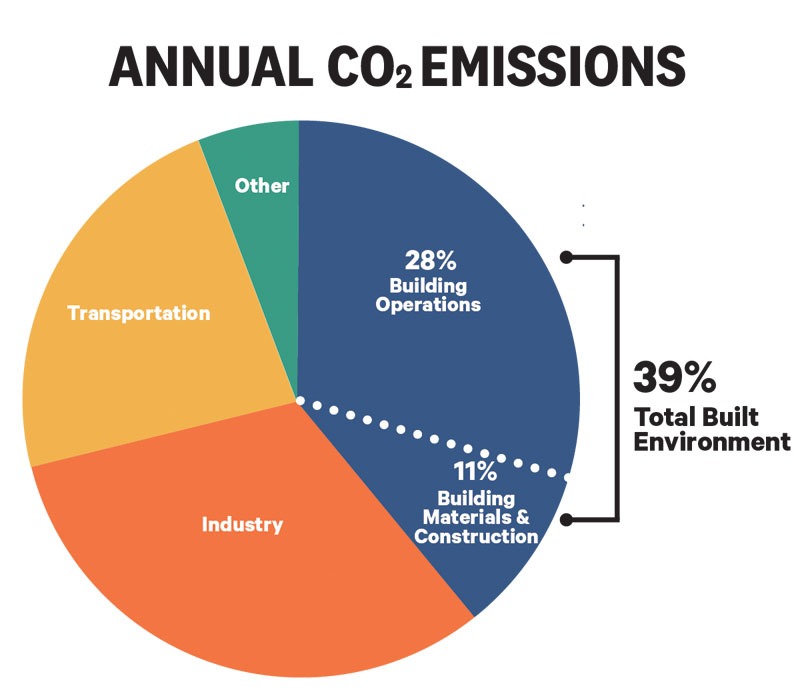
1 Refer to unep.org/RESOURCES/REPORT/GLOBAL-STATUS-REPORTBUILDINGS-ANDCONSTRUCTION
Author

Rockford Boyer, B. Arch. Sc., MBSc, BSS, is an experienced building science leader at Elastochem with more than 20 years of expertise in sustainable building design. He holds an undergraduate degree in civil engineering and architecture and a master’s in building science. He is also a member of Passive House Canada and the Ontario Building Envelope Council (OBEC). He is also a part-time professor at Sheridan College, teaching in the architectural technology program and sharing his knowledge and expertise with future generations of architects and designers.
Sign up for our weekly newsletter
Construction Canada weekly newsletters give the latest AEC industry news for those who build, design, engineer, specify, renovate or operate in the built environment.
Products & Services
Read the Latest Issue