Indigenous-led cultural space receives architecture awards
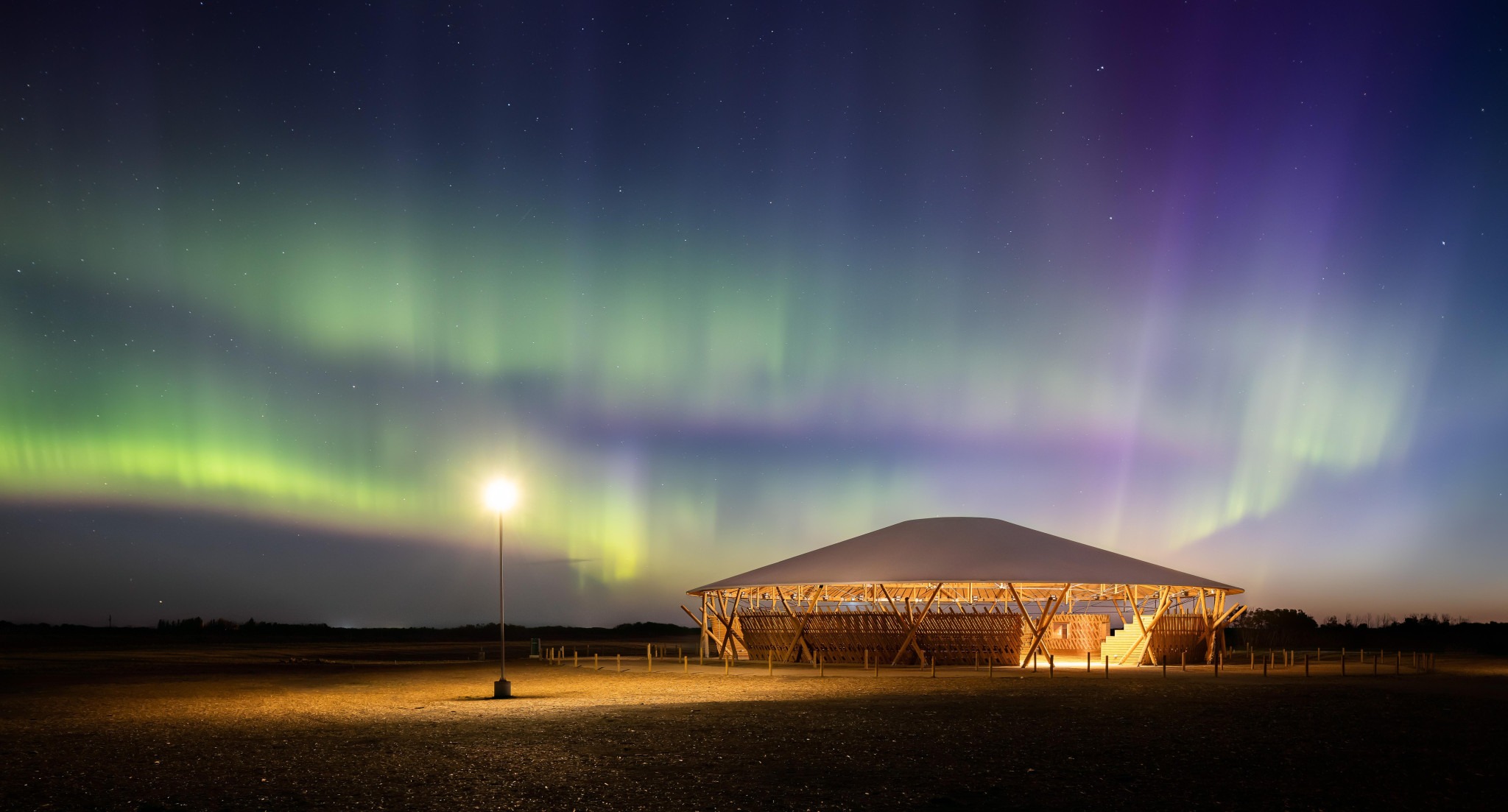
A cultural gathering space on Treaty 4 territory in southern Saskatchewan is gaining national and international attention for integrating Indigenous knowledge with measurable environmental performance.
The Muscowpetung Powwow Arbour has received two major honours. It was named a jury winner in the Architizer A+ Awards in the Architecture for Good category. It also received the 2026 Governor General’s Medal in Architecture, awarded by the Royal Architectural Institute of Canada (RAIC) and the Canada Council for the Arts.
The structure serves as the centrepiece for summer powwow celebrations. A powwow is a social and cultural gathering that includes traditional singing, dancing, drumming, and ceremony among Indigenous communities.
Oxbow Architecture designed the project in collaboration with architect Richard Kroeker. The team worked closely with the Muscowpetung community throughout the process. They held extensive consultations with Elders and knowledge keeper Jeff Cappo.
The design reflects Saulteaux traditions and community priorities and also targets measurable environmental performance. According to the design team, the structure sequesters more carbon over its lifecycle than it produces.
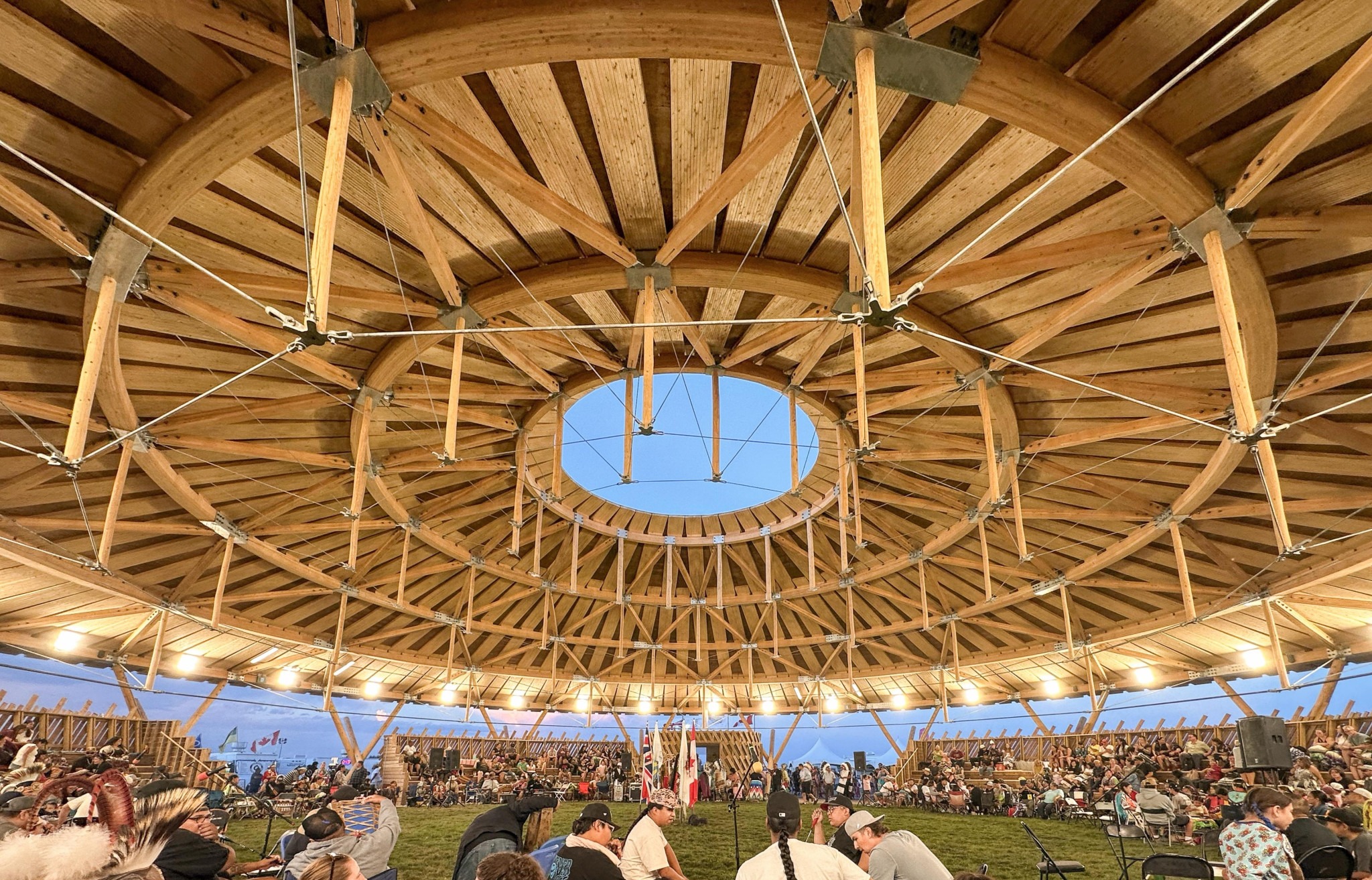
The arbour features a clear-span circular form inspired by traditional lodge structures. Its lightweight roof appears to float above the prairie landscape. The building covers 1,275 m² (13,724 sf) and can accommodate up to 2,500 spectators and 1,000 dancers.
Construction used regionally sourced round timber and local labour. The open central oculus allows daylight into the space and supports vegetation growth beneath the roof structure.
The project also reflects the Saulteaux principle of Mino-pimatisiwin, meaning “living a good life.” The design team says the concept guided both cultural intent and response to climate concerns.
Sign up for our weekly newsletter
Construction Canada weekly newsletters give the latest AEC industry news for those who build, design, engineer, specify, renovate or operate in the built environment.
Read the Latest Issue

- CSC Hamilton-Niagara: Engineer’s View of Lime-Mortared Masonry with International Expert
- Message from the president | Message de la présidente: CSC First Quarter Update
- CSC Hamilton-Niagara Fun Night: Bowling at Parkway Social
- Oktoberfest 2026 – Vancouver Chapter CSC Trade Fair
- CSC Calgary October Meeting
Demo-Casts