Enhancing mechanical construction: Prefabrication, kitting, and offsite assembly
Mechanical construction faces increased pressure to deliver more work amid skilled labor constraints, tighter schedules, and greater demands for collaboration. In domestic water and hydronic distribution applications, those pressures can be especially difficult to manage on multi-storey construction, repipe, and retrofit projects, where consistent co-ordination of piping layouts across multiple levels and units is critical.
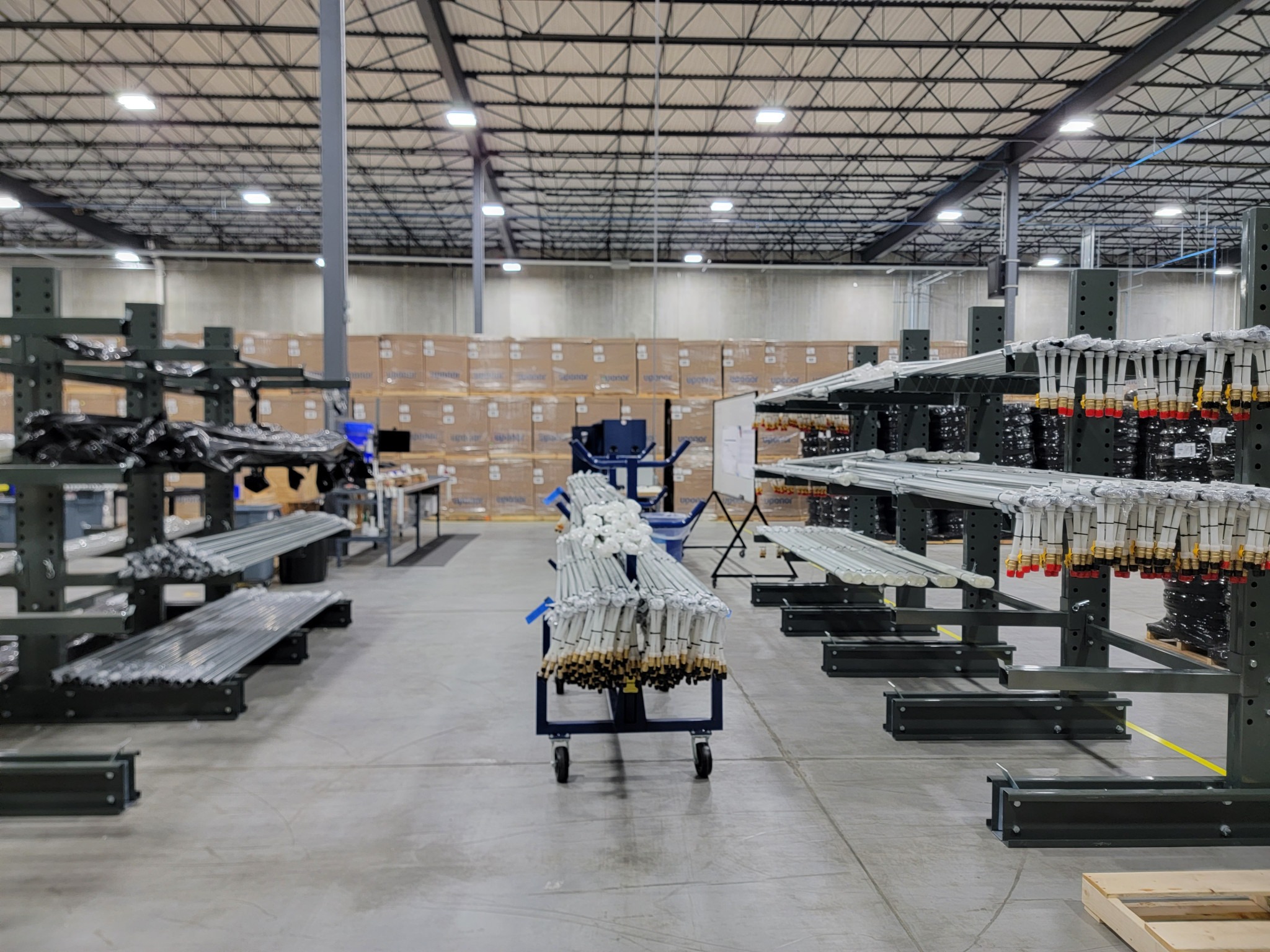
Prefabrication, kitting, and off-site assembly are gaining attention because these solutions allow some repetitive work to be planned and prepared before materials reach the jobsite. Recent Canadian research by Scius Advisory on prefabrication points to productivity challenges, persistent labour shortages, schedule and budget pressures, and even environmental expectations as factors driving increased interest in offsite construction methods.
There are clear advantages for the workforce in controlled assembly environments. These settings often offer safer, more comfortable conditions than those on busy job sites. Tasks can be arranged to use specialized tools, maintain stable work areas, and ensure a more consistent flow of materials. For an aging workforce, reducing unnecessary movement and repetitive strain can enhance productivity and contribute to employee retention.
For mechanical contractors, the value of prefabrication is not only in the fact that work happens away from the jobsite. The value comes from improving the conditions around the work. When crews receive better-organized materials and assemblies that are closer to installation-ready, they can spend less time on avoidable field inefficiencies and more time completing the installation.
Using available labour more effectively
Labour availability remains one of the most significant reasons contractors are evaluating prefabrication and kitting. In 2025, BuildForce Canada released its 2025-2034 Construction and Maintenance Looking Forward National Forecast, which points to sustained labour pressure across the construction sector. The report projects that nearly 269,000 workers, or about 21 per cent of the 2024 construction labour force, will retire by 2034. With overall hiring requirements expected to reach approximately 380,500 workers during the same period, Canada could still face a construction labour shortfall of up to 108,300 workers by the end of 2034.
For mechanical contractors, these projections reinforce the need to use available field labour more effectively and to support recruitment, training, and knowledge sharing. Prefabrication does not eliminate the need for skilled tradespeople. It helps contractors make better use of skilled labour by moving selected repetitive work into a more controlled environment before final installation.
On a conventional jobsite, experienced installers may spend valuable time preparing materials before installation. When that work is repeated across multiple floors, it can divert skilled labour away from field activities that need trade expertise. By planning and partially completing selected work before it reaches the jobsite, prefabrication and kitting help crews arrive with materials and assemblies that are closer to installation-ready.
There is a real advantage for the workforce as well. Controlled assembly environments can provide safer, more comfortable working conditions. Tasks can be organized around specialized tools, stable work areas, and a more consistent flow of materials. For an aging workforce, minimizing unnecessary movement and repetitive strain can boost both productivity and help keep employees on board.
Understanding where these methods fit
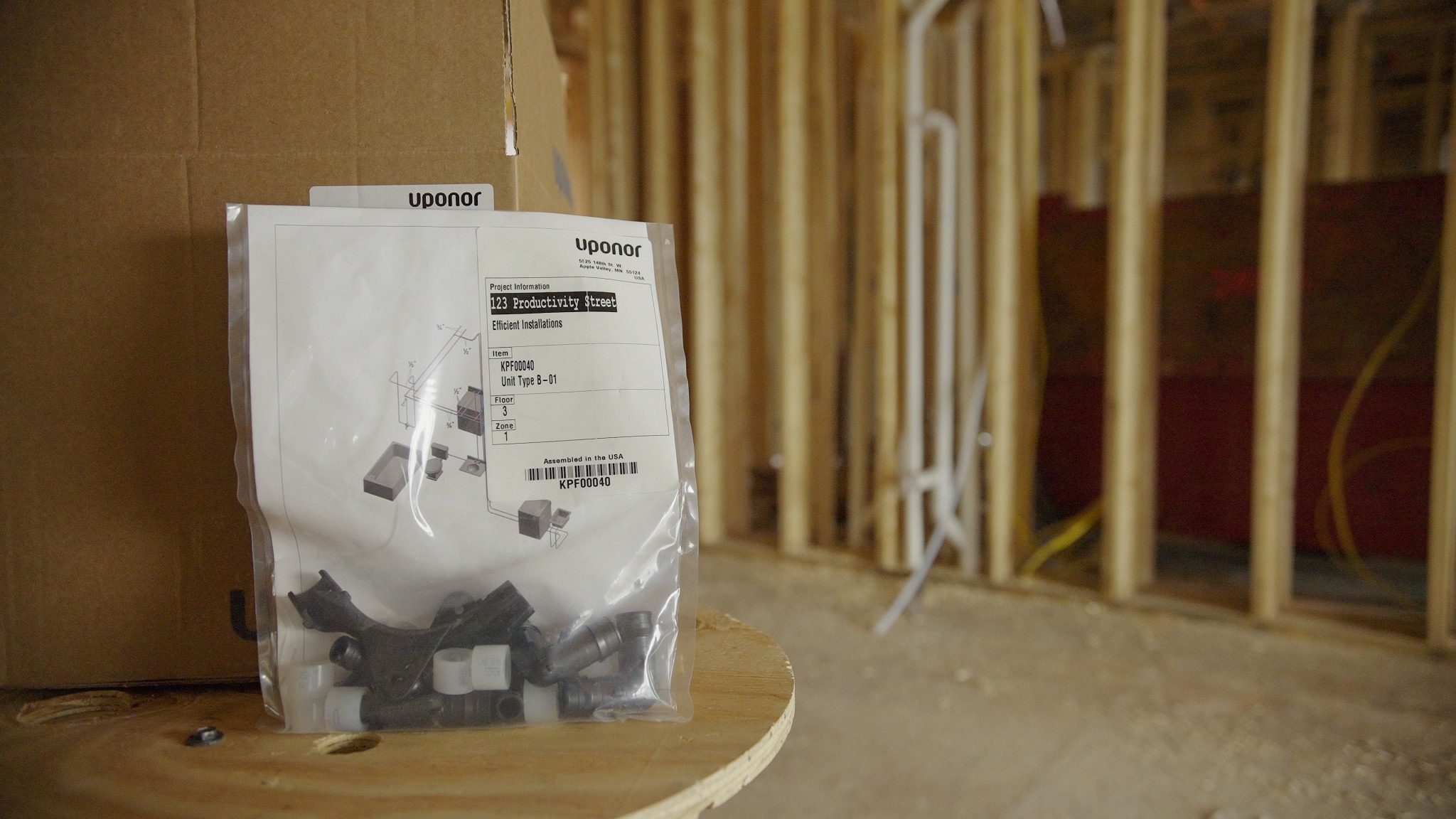
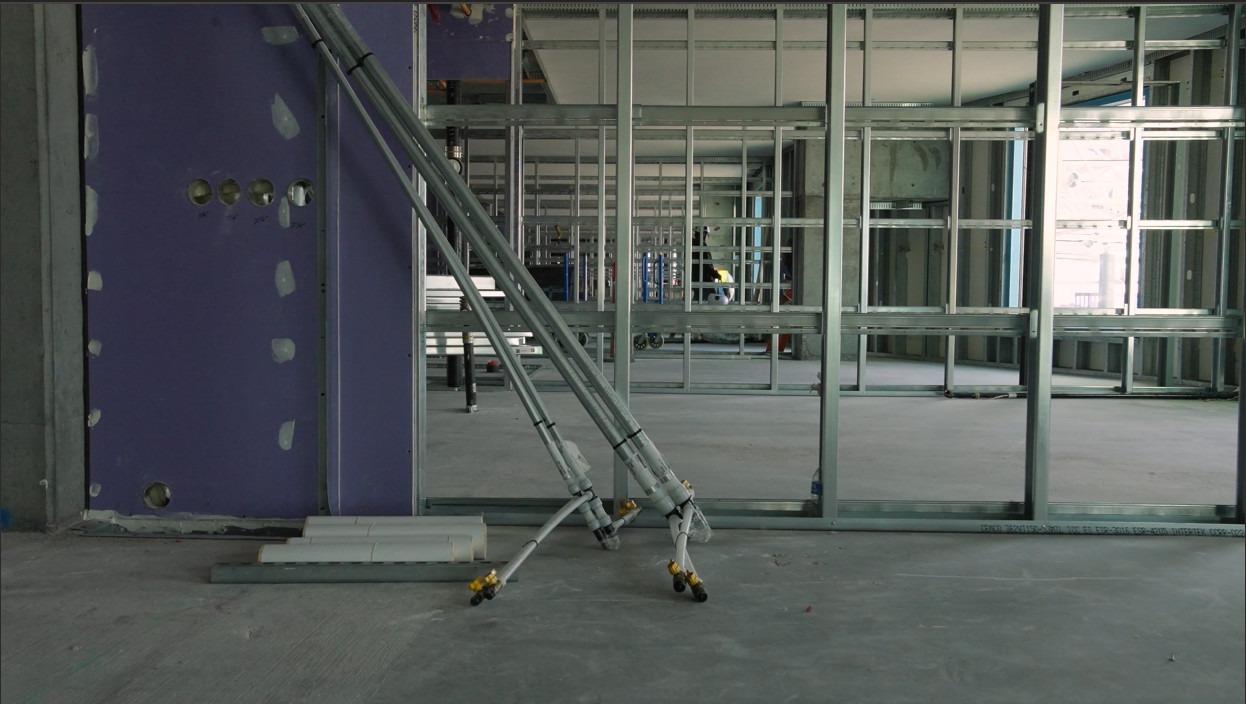
Understanding the roles of kitting and prefabrication is important, as they serve distinct purposes. Kitting involves organizing all the materials required for a specific portion of work, ensuring crews have the right components on hand. Prefabrication takes this further by assembling parts of the system before they arrive at the jobsite. In the context of domestic water and hydronic distribution, this could involve risers or other standardized piping selections. Offsite assembly is a broader strategy that facilitates this process by moving selected work into a controlled environment before the final installation.
The distinction is important because prefabrication is not a single method or product category. Scius Advisory’s Canadian research frames prefabrication as part of a broader industry response to productivity challenges, labour constraints, schedule pressure, and environmental expectations. Scius Advisory has identified 830 companies operating from more than 1,000 facilities across Canada.
The strongest opportunities are usually found in high-repetition areas. Multistorey construction, repiping, and retrofit applications can be appropriate when similar piping layouts occur across multiple floors, units, or areas. In those situations, kitting can help organize materials by room, floor, or work area so crews receive the components and installation information they need together. Prefabrication can also reduce repetitive field assembly.
Decisions on these opportunities should be based on whether they will make installation more efficient for the field crew. Organizing materials by area or scope may provide enough value. In others, partially assembled risers or spools offer greater benefit by reducing repetitive field connections and supporting more consistent installation.
Planning before work reaches the field
Successful prefabrication depends on early co-ordination. If the decision is made too late, the team may try to adapt a field-built approach to an off-site workflow after the design and schedule are already set. This can limit the benefits and make implementation more difficult.
For risers and spools, the design and modeling process begins with customer-provided drawings, such as a 2D riser diagram, that identify the assembly, pipe sizing, and floor-to-floor dimensions. Without those details, manufacturers cannot reliably confirm how the assembly should be built or how it will connect to the field installation.
Field input is also important. Installers and foremen often understand practical installation details that may not be obvious from drawings alone. Bringing that input into the planning process can help teams determine how an assembly should be configured before it is built.
For that reason, prefabrication should be evaluated as part of the construction planning process. It affects how work is prepared, how materials are organized, and how crews complete the final installation once assemblies arrive on site.
Improving material readiness
Material handling is an immediate way kitting and prefabrication can improve field productivity. On a busy jobsite, materials may be delivered in bulk and moved several times before installation. Each takes time and is another opportunity for parts to be misplaced, damaged, or missing when needed.
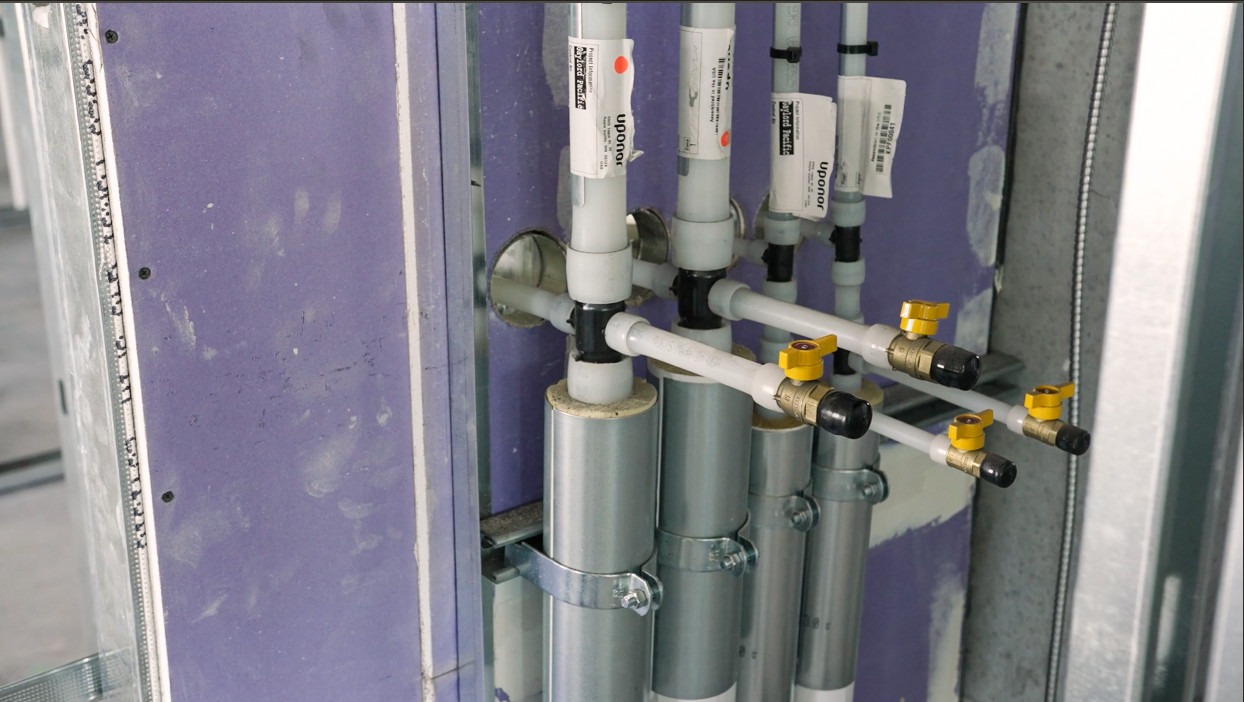
Kitting improves readiness by organizing materials around the installation plan. Co-ordinated packages can be labelled by room, floor, or work area and include only the required components, along with a materials list, plan view, or an isometric drawing. When deliveries are scheduled by level or phase, crews are better informed of what is being installed and where it belongs.
Prefabricated assemblies can further reduce field handling. For example, when a riser or spool arrives partially assembled, the crew no longer has to build every connection in the field. Depending on the application, prefabrication can reduce field connections by up to 75 per cent. That reduction can directly affect labour productivity because each field connection requires time, space, tools, and quality attention.
The goal is not simply speed. The goal is to remove unnecessary steps from the field workflow to allow installation to proceed with fewer interruptions.
Supporting schedule certainty
Schedule certainty is one of the strongest reasons to consider prefabrication and kitting, but it only works when the offsite process is tied directly to the construction schedule. Mechanical contractors cannot decide to prefabricate after the fact and expect the schedule to improve. The work has to be planned around when each floor, phase, or repeated area will be ready for installation.
Planning typically begins with the field need date. From this point, the manufacturer establishes a timeline by working backward (referred to as a pull-plan) to identify when drawings need to be reviewed, when material takeoffs must be finalized, when materials should be ready, and when assembly work should occur. This approach fosters a more streamlined connection between design co-ordination, material preparation, and field installation.
For repetitive mechanical scopes, sequencing can help reduce downtime between work areas. Instead of crews waiting for missing components, working with bulk material, or building each assembly in place, prefabricated sections can be prepared in the order in which the work will be installed.
The technical advantages go beyond just faster delivery; they also enhance control over pre-installation processes. By incorporating drawings, takeoffs, assembly, and field sequencing at an early stage, contractors can create a strong foundation for labour planning, manage material flow effectively, and ensure efficiency during repetitive installation tasks.
Improving consistency and reducing rework
Rework remains a major concern in construction. While prefabrication cannot eliminate rework, it can reduce some of the field conditions that contribute to inconsistency.
An active jobsite is rarely an ideal production environment. Crews may be working around other trades, under schedule pressure, in limited space, or with changing site conditions. In contrast, off-site assembly allows repeated work to be completed in a more controlled environment. That control promotes consistency. Assemblies can be verified before arriving on site, and identical sections can be uniform across areas. This is particularly crucial for multistorey projects, where even minor discrepancies can lead to increased labour across multiple levels.
Quality continues to rely on precise information and effective on-site installation. While prefabrication introduces an additional review stage before materials reach the job site, it is not a substitute for final installation checks or inspections. The greatest quality advantage arises when off-site preparation and on-site execution are aligned.
Reducing waste and improving jobsite conditions
Sustainable construction goals are also influencing how contractors think about prefabrication and kitting. The National Research Council Canada describes advanced prefabrication and digitized construction as ways to improve construction productivity and reduce carbon emissions. When material is prepared for a specific room, floor, or recurring scope, it can be better matched to the required work. That can help reduce excess pipes, loose packaging, and leftover components in active work areas.
Waste can also be easier to manage before material reaches the field. The Government of Canada tracks construction and demolition waste diversion as part of its greening government indicators, with a target of diverting at least 90 per cent of construction, renovation, and demolition (CRD) waste from landfills and an aspirational target of 100 per cent diversion by 2030. Packaging may be sorted more effectively off-site, helping separate recyclable material from landfill waste before it becomes part of the jobsite cleanup burden.
The jobsite benefit is both practical and environmental. Reducing the number of loose components and minimizing excess packaging creates a more organized work area, making it easier for crews to navigate. While this depends on careful planning, packaging, and management, the effective use of kitting and prefabrication can lead to cleaner jobsites and less unnecessary material handling.
Evaluating the right fit
Prefabrication, kitting, and offsite assembly are not universal solutions. They should be evaluated based on the specific project, the mechanical scope, and the reliability of the available information.
A good candidate for prefabrication usually has experience with repetitive work and sufficient advanced co-ordination to support planning. If the scope varies too much from one area to the next, or if the team lacks the information needed to define the work clearly, it may be more difficult to implement effectively.
Contractors should also consider whether a smaller step, such as kitting, may provide enough benefit without requiring full prefabrication. In some cases, simply organizing materials by area or installation sequence can reduce field inefficiency. In other cases, partially assembled risers or spools provide greater value by reducing repetitive field labour and improving consistency.
The key consideration is whether prefabrication benefits the field crew. If the approach clarifies installation, minimizes material handling, enhances consistency, or aligns with the schedule, it is worth exploring. However, if it complicates processes without enhancing field performance, it may not be suitable.
As mechanical contractors face challenges such as skilled labour shortages and tight timelines, approaches such as prefabrication, kitting, and offsite assembly offer viable solutions for improving work planning. These methods are not intended to replace skilled tradespeople or eliminate their judgment in the field. Instead, they serve to equip crews to be better prepared, work more efficiently, and achieve more consistent mechanical installations.
Author
Daniel Worm, CPD, is the value-added services manager at GF Building Flow Solutions Americas (home of the Uponor brand). He has more than 25 years of experience in the construction industry with an emphasis on plumbing application and design. After spending eight years as a general contractor, he joined the company in 2007 as a plumbing designer and has held roles in technical services, product management, commercial segment marketing, and portfolio management. He can be reached at daniel.worm@georgfischer.com.
Webinars

Radon Protection from the Ground Up: Building with Spray Foam Insulation | Huntsman Webinar
Sign up for our weekly newsletter
Construction Canada weekly newsletters give the latest AEC industry news for those who build, design, engineer, specify, renovate or operate in the built environment.
Popular Articles
-
1
-
2
-
3
-
4
-
5
Read the Latest Issue

Demo-Casts