A landscape-led museum design highlights industrial heritage
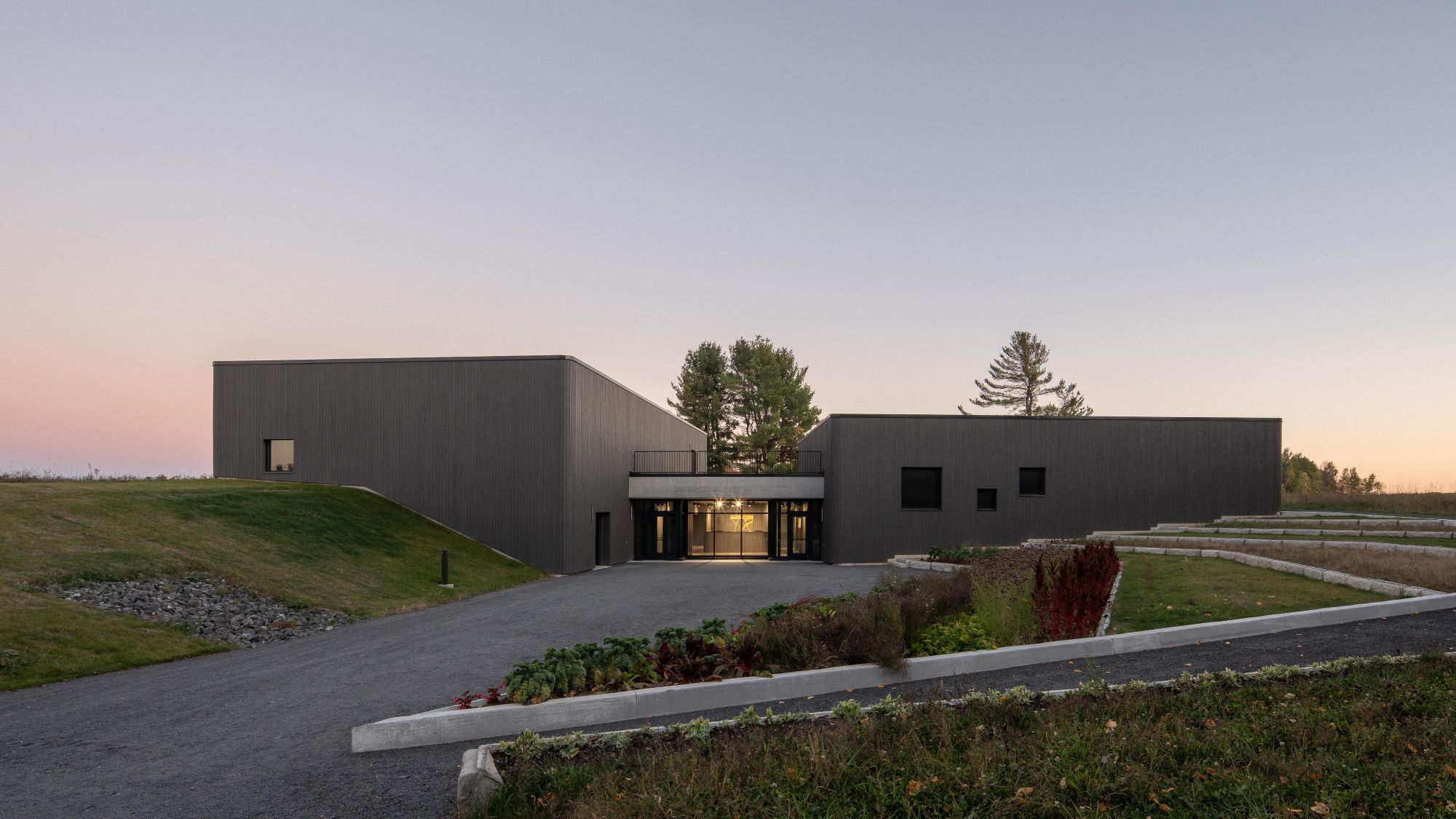
Partly buried in the landscape, two pavilions will house a collection of more than 40,000 cast-iron objects at a new museum in Kingsey Falls, Que. Designed by KANVA, the new Parc Marie-Victorin museum draws on the idea of excavation, with a sunken entrance path, blackened wood cladding, and exposed mass timber. Its design also uses the earth’s thermal mass to help stabilize indoor temperatures and conserve the collection.
The museum will sit within the botanical landscape of Parc Marie-Victorin, where the design responds to the site’s existing gardens, mature conifers, and surrounding agricultural fields.
KANVA proposes two low-profile pavilions that sit partially underground, drawing on the idea of excavation and the discovery of buried materials. Rounded corners and blackened wood cladding will help the buildings blend into the landscape, while referencing the appearance of traditional forge fires.
A network of accessible outdoor pathways will follow the buildings’ contours and connect the new museum to a reconstructed monumental barn that already houses part of the collection. The routes will lead visitors through the site’s mature trees and into a gently sloping central trench, which guides them towards the main entrance.
Timber and climate control features
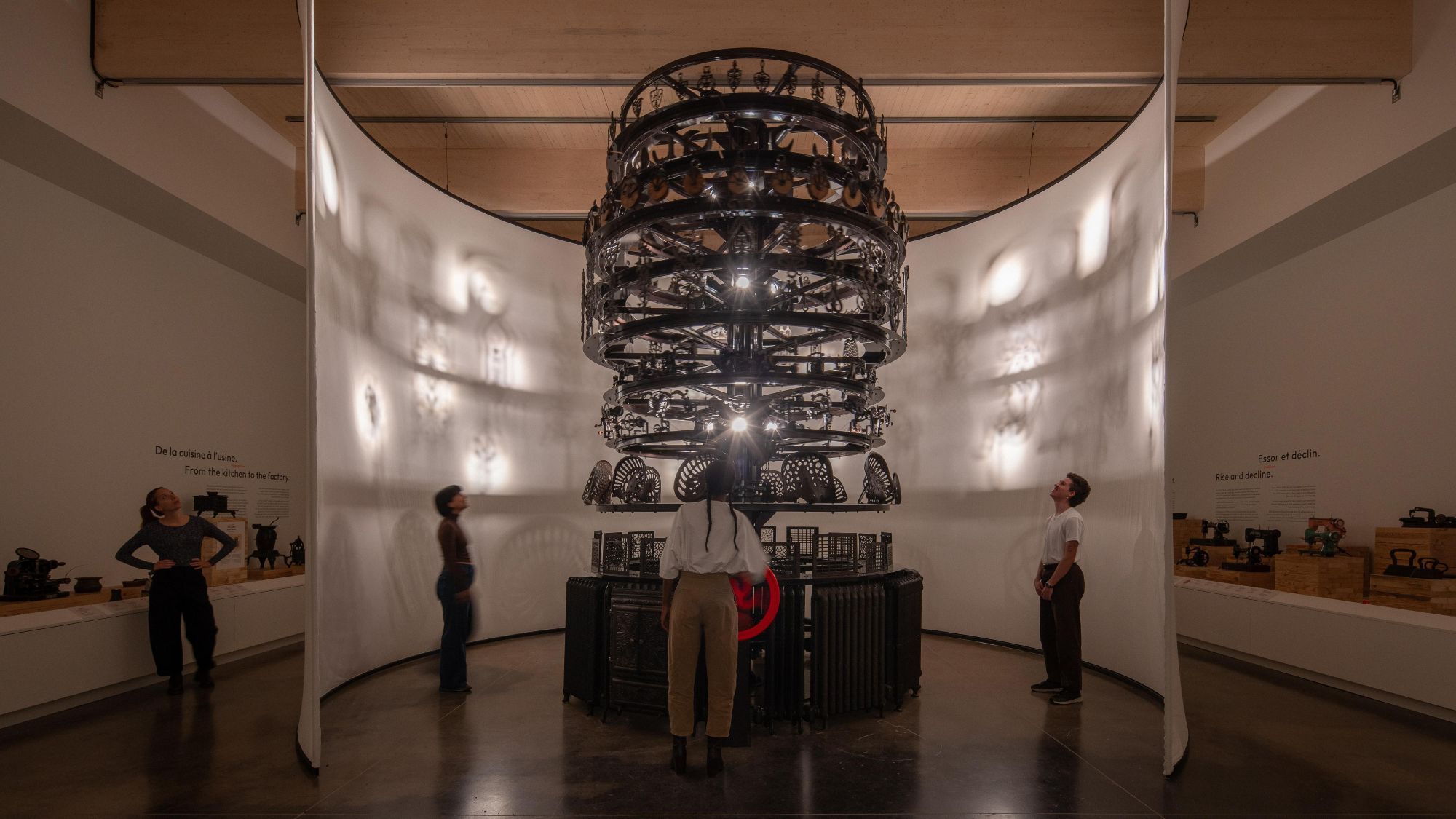
The partially underground main level will contain reception areas, two large museum galleries, and a secondary exhibition hall. Timber structures will define the public exhibition spaces, allowing flexibility for different displays and installations. Concrete will serve the building’s service areas, while exposed glue-laminated timber (glulam) beams and cross-laminated timber (CLT) panels will feature in public areas.
A multipurpose room on the upper level will overlook the galleries, maintain visual connections between staff and visitors, and provide views of the surrounding fields. It will also offer direct access to a green roof.
The building’s environmental strategy relies on its relationship with the ground. Partial burial will use the earth’s thermal mass to moderate indoor temperatures and reduce mechanical heating and cooling loads, an important consideration for artifact conservation.
KANVA also plans to limit glazing and concentrate openings in clerestory windows. The approach is intended to provide diffuse, controlled daylight suited to museum displays. Off-site prefabrication of timber components is expected to improve construction precision and reduce disruption within the established park.
“In an era obsessed with digitization, speed, and efficiency, these objects—born of patience—speak in their own way about time,” said Rami Bebawi, partner architect at KANVA.
Sign up for our weekly newsletter
Construction Canada weekly newsletters give the latest AEC industry news for those who build, design, engineer, specify, renovate or operate in the built environment.
Popular Articles
-
1
-
2
-
3
-
4
-
5
Read the Latest Issue

Demo-Casts