$100M egg campus construction begins in Quebec
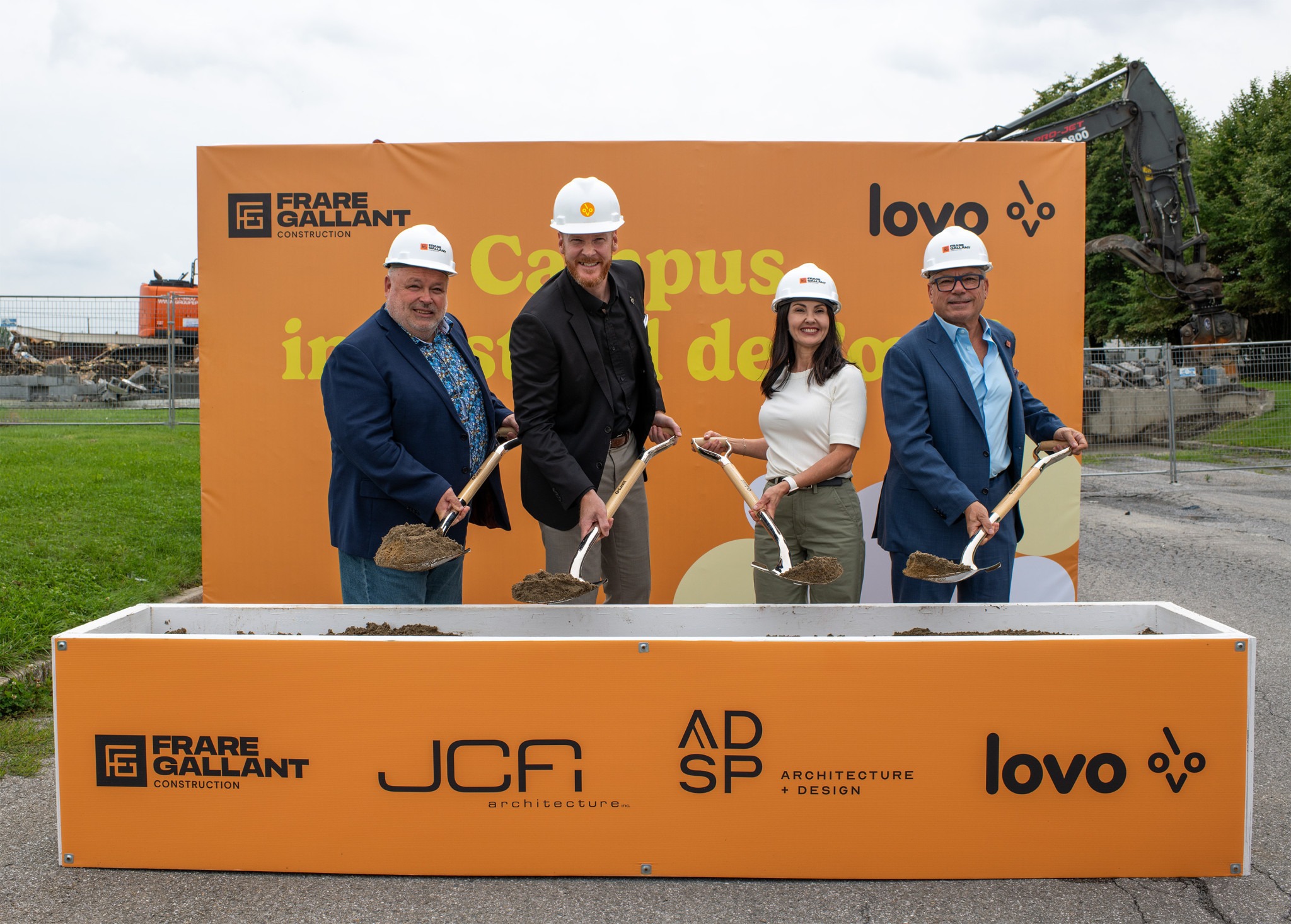
A $100-million campus has broken ground in Saint-Hyacinthe, Que., launching a major expansion focused on egg grading, processing, and food innovation.
Lovo and construction company Frare Gallant have officially launched construction of Lovo’s Industrial Egg Campus.
Lovo, formerly Nutri Group, is one of Canada’s leading egg graders, processors, and distributors. Each year, Lovo grades, processes, and markets over 2.4 billion regular, free-run, organic, specialty, and processed eggs.
The partners recently held a symbolic groundbreaking ceremony at the site, which covers more than 55,741 m2 (600,000 sf) in the Saint-Hyacinthe industrial park, next to Lovo’s existing plant. The project will include a new grading plant spanning more than 18,580 m2 (200,000 sf). That is nearly three times the size of Lovo’s current facilities.
The campus will increase Lovo’s processing capacity and support its growth. It will also create space for new food solutions and research.
“Today, we’re laying the groundwork for a project that will transform the way we innovate and grow,” said Lovo CEO Sébastien Léveillé.
The development will include an egg-focused experimental kitchen, multidisciplinary workshop spaces, secondary and tertiary food-processing facilities, and new administrative offices.
Significant construction activity
Frare Gallant is serving as project partner and general contractor. The company will lead the development and construction of the industrial infrastructure.
“Being chosen to build this campus is a great source of pride for us,” said the company’s president John Frare, adding the facilities will be designed to meet Lovo’s current and future needs.
Construction of the new grading plant is expected to take about two years. Lovo will then gradually expand the campus over the following years as additional components come online.
The project is expected to generate significant construction activity in the Saint-Hyacinthe region and to support the local economy and Québec’s agri-food sector.
Architectural firms ADSP and JCFA have also supported the project since its early design phases.
Sign up for our weekly newsletter
Construction Canada weekly newsletters give the latest AEC industry news for those who build, design, engineer, specify, renovate or operate in the built environment.
Popular Articles
-
1
-
2
-
3
-
4
-
5
Read the Latest Issue


Demo-Casts