Exclusive: Rethinking Canada’s housing future with retrofits
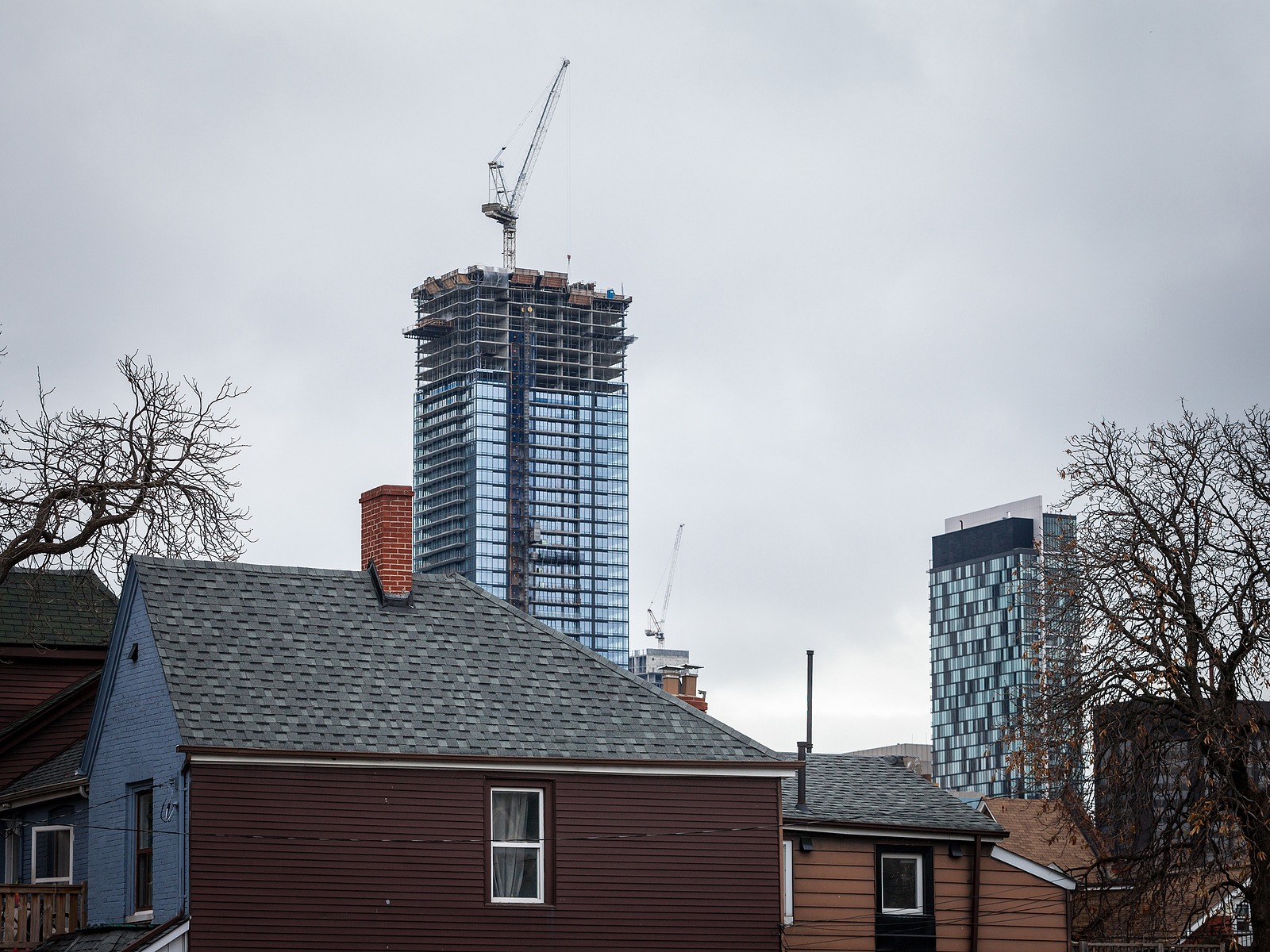
Cranes, scaffolding, and other assorted construction equipment are ubiquitous in Canada’s urban landscapes. The condo boom of the past decade has dramatically altered the skylines of major metropolises.
As high-rise towers increasingly dominate streets, concerns have been raised that neighbourhoods are losing their character. On top of this, there is the climate impact of massive construction projects.
In this light, a recent report by the Canadian Association of Heritage Professionals (CAHP) makes the case for reuse and retrofit projects over new construction projects. The CAHP argues that existing buildings not only deliver faster housing but also cut carbon emissions. The report says existing buildings and adaptive reuse should be treated as integral to meeting Canada’s climate and housing objectives.
Construction Canada spoke with CAHP president Adam Hatch to learn more about the benefits of retrofits. He discusses Canada’s building codes, the complexity of reuse projects, and more.
The report argues that reusing existing buildings can simultaneously advance climate and housing goals. What changes to Canada’s building codes or procurement policies would most accelerate adaptive reuse projects that are currently stalled by structural barriers?
A notable barrier is the misconception that adaptive reuse projects are less energy-efficient than new construction. This misconception stems partly from how “energy efficiency” is typically measured under the National Building Code (NBC) and the National Energy Code for Buildings (NECB), which primarily focus on the energy required to operate a building.
This measurement does not fully account for the energy and emissions associated with sourcing, manufacturing, and transporting materials for new construction, or disposing of a previous building to make way for a new one. These impacts are part of a building’s embodied carbon. When energy performance standards are established under our codes and then translated into procurement requirements, they can give new construction an unfair advantage over the reuse of existing buildings.
British Columbia, Ontario, and Quebec have recognized alterations to existing buildings in their provincial codes. The newly released 2025 NBC includes “Alteration of Existing Buildings” under Part 10, a significant step toward greater clarity and intent regarding existing buildings at the national level.
Our report advocates for embodied carbon to be included in how building performance is evaluated, so we can get a more accurate and complete picture of a building’s emissions. With a more complete definition of performance, it becomes clear that adaptive reuse is often more efficient from a whole-life carbon perspective.
The CAHP report makes the case for adaptive reuse over greenfield development. Apart from regulatory restrictions, does the industry need financial incentives to shift behavior meaningfully?
Absolutely. By their nature, adaptive reuse projects are complex undertakings that require skilled professionals and trades. While our report shows that retrofit costs can often be lower than those for new construction, the perception that reuse projects are inherently more expensive still persists across much of the industry.
Incentives such as tax credits for eligible work, partial fee waivers, grants, low-interest financing, density bonuses, or accelerated approvals to encourage building reuse would absolutely help shift behaviour.
With regard to heritage buildings specifically, Canada has historically lagged behind many peer countries in providing national financial incentives for conservation and reuse of buildings with heritage value. Greater federal support in this area could significantly accelerate building reuse and conservation nationwide.
Retrofits and conversion projects are often more technically complex than ground-up construction. What new skills do contractors, consultants, and tradespeople need if adaptive reuse becomes a larger part of the market?
There are, of course, technical skills related to understanding specific materials, recognizing deterioration patterns, and identifying appropriate remediation methods that can be learned through schools, workshops, and working alongside experienced professionals. This education and training require financial support, and we are hopeful that it could form part of the federal government’s recently announced $6 billion Team Canada Strong program aimed at supporting and training skilled workers.
A good first step is understanding the fundamentals of conserving existing buildings and valuing them as long-term assets. In our sector, our work generally follows Parks Canada’s Standards and Guidelines for the Conservation of Historic Places in Canada, a best-practices reference for conserving places—including buildings—with cultural heritage significance. This pan-Canadian reference establishes a consistent methodology across the country, and many of its core principles can be applied broadly to existing buildings of all kinds.
For instance, one of the core principles is the idea of repairing rather than replacing wherever possible. This is highly relevant not only to heritage professionals but also to contractors, consultants, and tradespeople working on retrofit and adaptive reuse projects.
From CAHP’s perspective, what’s the biggest misconception within the construction industry about working with existing buildings?
Heritage professionals and the broader construction industry are both highly diverse, operating across many sectors and working with buildings of different scales, ages, and types. As a result, misconceptions can vary. However, one notable and common misconception from our perspective is the assumption that working with existing buildings is inherently more expensive, which our report challenges through the findings of the case studies examined.
Other valid concerns in the construction industry relate to the complexity and risks associated with adaptive reuse projects. As with any complex project, however, many of these risks can be significantly mitigated by assembling the right team of qualified professionals and builders, and by following processes and approaches specifically suited to retrofit and adaptive reuse work.
The report highlights the health, comfort, and quality-of-life benefits tied to upgrading existing buildings. Could messaging on benefits—such as improved air quality, thermal comfort, and resilience—prove more efficient than focusing exclusively on embodied carbon and emissions?
Yes and no, depending on the audience we are speaking to. Benefits such as improved air quality, thermal comfort, and resilience can also be achieved in new construction. The way our current codes are written—and often interpreted by permit officials—makes these outcomes easier to achieve in new construction, even though existing buildings can also achieve them.
Where building conservation and adaptive reuse have a distinct advantage over demolition and new construction is in embodied carbon savings. Waste reduction, minimized emissions associated with material extraction and transportation, and the conservation of existing resources are all important environmental and public health benefits of reuse.
These benefits may not always be immediately visible in the same way as operational performance metrics. Still, they are critical to long-term environmental stewardship and reducing the overall carbon impact of the built environment.
Sign up for our weekly newsletter
Construction Canada weekly newsletters give the latest AEC industry news for those who build, design, engineer, specify, renovate or operate in the built environment.
Popular Articles
-
1
-
2
-
3
-
4
-
5
Read the Latest Issue