Commercial roofing storm resilience: Lessons from installers working in harsh climates
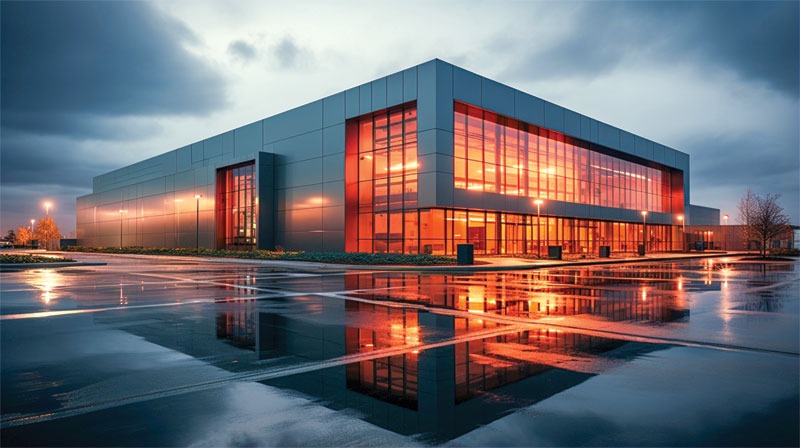
Storm damage is not unusual in commercial roofing; it is a design reality. Preventing storms themselves is impossible, but roofs can be designed and installed to better withstand their impact. The challenges storms bring will always be a consideration for designers, consultants, and contractors when selecting roofing materials for structures. The same applies to the installers of commercial roofing systems.
Designing for storm exposure
Across North America, commercial roofs are increasingly exposed to more frequent and severe weather events, including high winds, heavy rainfall, rapid freeze–thaw cycles, and intense storms. These conditions put significant stress on flat roofing systems, testing the materials, design, detailing, and installation quality. For building owners, storm damage can lead to costly repairs, operational disruptions, and long-term asset deterioration if not addressed proactively.
The key issue is not whether storms occur, but whether the roof system is designed and installed to withstand them.
For commercial roofing professionals, storms act as a continual test, revealing weaknesses in design assumptions, installation practices, material choices, and system co-ordination. Failures attributed to “extreme weather” highlight the importance of careful design, proper fastening, and selecting system components suited to the building’s environment.
In this article, two experienced commercial roofing installers share their insights on how to protect a flat roof from storm damage.
Wind uplift and code requirements

Wind uplift resistance is a critical consideration when designing commercial roofing systems exposed to severe weather. The Canadian Standards Association (CSA) A123.21 guideline provides the standard test method for evaluating the dynamic wind uplift resistance of low-slope membrane roofing systems. Wind design loads for roof coverings are calculated using load resistance factor design (LRFD), as specified by the National Building Code of Canada (NBC).
While wind uplift remains the primary design focus, modern roof resilience requires a broader evaluation of system performance. For vegetated roofs, CSA A123.24, Standard Test Method for Wind Resistance of Vegetated Roof Assemblies, establishes laboratory procedures to determine how these systems resist dynamic wind flow and uplift. Meanwhile, CSA A123.26, Performance Requirements for Climate Resilience of Low-Slope Membrane Roofing Systems, introduces enhanced performance criteria for roofing systems based on climate severity, providing resilience requirements beyond baseline building-code provisions to address climatic stresses such as wind, precipitation, and temperature extremes.1
Phillip Kerri, chief operations officer of RoofTech Systems Ltd. in Mount Pearl, Nfld., says the first step is to confirm the dynamic wind uplift required for the roof in its specific geographical area.
“Once this is determined, we ensure that the roof type and fastening methods meet the CSA A123.21 Wind Uplift Resistance Guideline,” he notes.
In Canada, wind uplift requirements are typically established through engineering calculations based on the NBC, specifically Part 4, which defines wind loads on building components and cladding. Design wind pressures are calculated using factors such as building height, roof geometry, terrain exposure, the building’s importance category, and the reference wind velocity pressure for the location. The resulting design pressures are then used to select a roofing assembly with a tested uplift resistance that meets or exceeds those loads.
Manufacturers demonstrate this resistance through laboratory testing in accordance with CSA A123.21, which evaluates the ability of a roof assembly to withstand simulated wind uplift pressures.
To assist with these calculations, the National Research Council Canada (NRC) provides an online tool, the Wind Load Calculator for Roof and Parapet Cladding. The tool applies NBC wind provisions and prompts users to enter project data, including location, building height, roof configuration, and terrain exposure. It then calculates factored wind pressures for the roof field, edge, and corner zones, and determines the associated zone dimensions used to define fastening patterns and required uplift resistance levels.
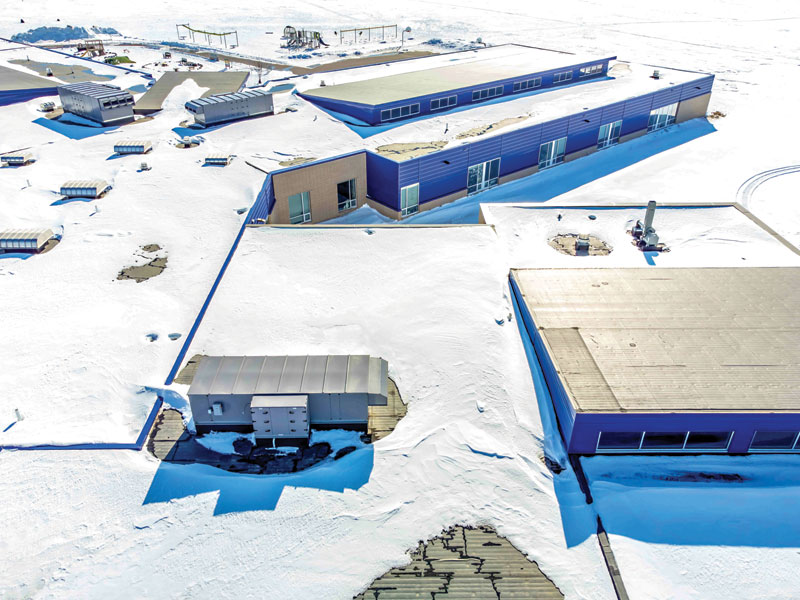
Wind resistance cannot be achieved solely through membrane selection. Proper attachment, edge detailing, and securement at transitions are equally essential. Even the best materials depend on proper perimeter fastening, well-executed flashing details, and secure tie-ins as key elements in overall system performance. In high-wind regions like coastal Newfoundland, for example, these details often determine whether a roof system performs as intended during a storm.
Installation practices that improve performance
On the west coast of British Columbia, BestWest Group president Brock Maglio uses additional methods to reduce flat-roof storm damage, including:
- Plans for high-wind exposure using wind uplift calculators
- Use of fastening systems that meet or exceed specified wind loads
- Use of fasteners compatible with the selected roofing system
- Use of fastening patterns that include additional fasteners in corners and along roof perimeters
- Price quotes that include higher-performance building materials
- Styrene-butadiene-styrene (SBS) modified bitumen membranes
- Heavy-gauge sheet metal
- Substrates such as plywood or engineered roof board materials
- Enhanced warranty options
- Extended warranty coverage available for certain roofing assemblies
- Additional inspection or technical review during installation
He says, “We tend to stick to similar planning protocols and roof system types regardless of the specific group involved. From an installer’s perspective, roofing warranties and long-term system performance are closely linked to proper design, specification, and installation. Protecting the roof from storm damage helps ensure the assembly performs as intended and reduces the likelihood of warranty claims.”
Maglio recalls facing problems with other products early in his career. In those cases, granule loss was the main concern.
“The winter season is when we handle warranty issues,” he explains, “mainly due to rain, and the biggest challenge we face is the time spent figuring out the problem, which may or may not be the roof.”
Determining whether water ingress originates from the roofing system, mechanical penetrations, or wall interfaces can be time-consuming, especially during active storm conditions. These investigations often highlight the importance of building-envelope co-ordination rather than viewing the roof as an isolated system.
Climate challenges in the field
The RoofTech team frequently installs two-ply modified bitumen roofing systems.
“Modified bitumen membranes have a granular surface that can perform well in regions with frequent rainfall and strong winds,” says Kerri. “They also provide good puncture and tear resistance, which can help limit damage from windborne debris.”
Similarly, since BestWest is located in the heart of Metro Vancouver, it regularly experiences heavy rain and strong winds.
Roof repairs and, when needed, reroofing after storm events can be quite challenging depending on the situation. Kerri from RoofTech has not seen a major roof blow-off on his commercial roof installations. Most of the issues he encounters occur on older roofs where installation practices did not fully align with current code requirements.
One of the BestWest team’s most important tasks is repairing storm-damaged roofs to withstand future storms.
“One of our region’s unique climate-related challenges is the rapid temperature shift that can occur after a snowstorm,” says Maglio. “When it’s snowing, and the roof is frozen, the drains usually become ice-blocked. We often encounter roof flooding when temperatures rise above zero degrees Celsius, and heavy rain follows on top of snow and ice. Drainage on flat roofs can remain blocked during this period, causing water levels to rise and expose weak points in the system.”
When ice blocks are present, leaks often occur, causing significant water damage. “Since these conditions happen quickly and are usually temporary, locating the points of entry can take time and effort,” says Maglio.
Repairing and preparing for future storms
When repairing the roof for future storms, he says their solutions need to be more comprehensive than those of the existing or previous roof system. “This sometimes requires changes to the roof design, such as adding extra slope and drainage,” he adds.
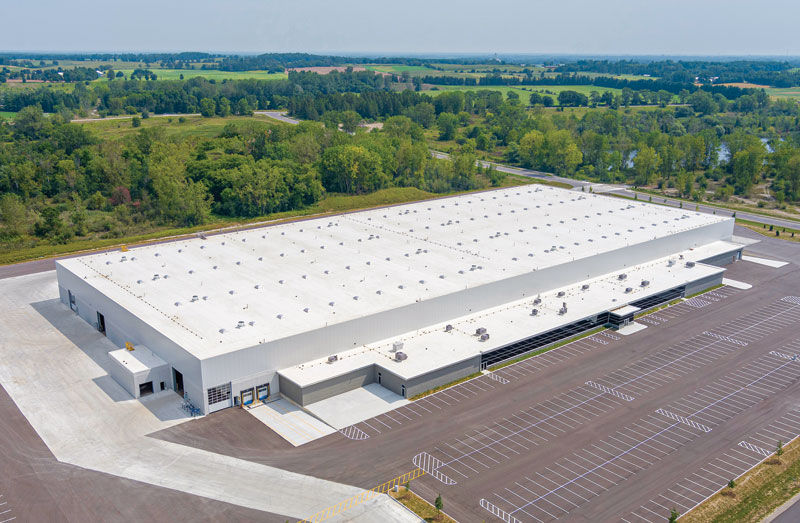
For example, designers may use tapered insulation systems to create a gradual slope toward drains or scuppers, preventing water from ponding on the roof. Additional measures may include installing roof drains, scuppers, or overflow drains to increase the roof’s capacity to quickly remove precipitation.2,3
In its 20-year history, BestWest Group has faced similar challenges after storms. Maglio recalls one case: “It was a new roof with an internal drain failure, which meant a lot of water poured directly into the building.”
He mentions that the volume of rain Vancouver receives is daunting. “Being close to the ocean, we don’t get much snow, but it can be significant when we do. After the snow, temperatures may rise quickly, turning to rain. In this situation, the drainage can’t keep up with the volume of water,” Maglio explains. Additionally, Vancouver’s frequent and heavy windstorms often cause power outages, leading to other issues.
Weather can remain a barrier after storm damage, making it difficult to carry out roof repairs. All roof installations require dry conditions; therefore, temporary fixes are often necessary. Liquid membranes work well for quickly sealing roof defects.
“In other scenarios, we may use leak-seal products or tarping techniques to divert water away from the entry points,” Maglio notes. “Scheduling permanent repairs can be challenging because owners face urgency. In winter, weather breaks are rare, and circumstances are often worsened by having multiple clients in the same situation at once.” Serving everyone satisfactorily can be a challenge, he says.
In Maglio’s experience, customer knowledge of products and their applications varies depending on the circumstances. “The roofing industry is competitive, and building owners may not always be familiar with the technical differences between roofing systems,” he says, “so that’s where we come in.”
When competitors offer lower-cost options, customers are attracted to what they perceive as saving money, but often, the roof design and execution are inferior. He notes persuading owners to choose quality over price can be tricky, but these decisions often come to light during storm season.
Protecting commercial flat roofs from storm damage requires informed design, appropriate material selection, skilled installation, and regular inspection. Co-ordination among designers, consultants, contractors, and manufacturers also plays an important role in ensuring roofing systems perform as intended. While storms cannot be prevented, their impact can be reduced through careful planning, adherence to code requirements, and consistent roofing practices.
Author’s note: This article was developed with input from Phillip Kerri, chief operations officer of RoofTech Systems Ltd., and Brock Maglio, president of BestWest Group, both experienced commercial roofing installers.
Notes
1 To read more on CSA A123.24 and CSA A123.26, visit.
2 See the advantages and reasons why roofs should be designed to drain rather than pond.
3 Find out more on what drainage systems are available for flat roofs.
Author

Kyle Linhares has more than 13 years of experience in commercial product management, including over five years with IKO North America. In this role, he supports product portfolios through market research, regulatory compliance, and cross-functional collaboration across Canadian markets.
Sign up for our weekly newsletter
Construction Canada weekly newsletters give the latest AEC industry news for those who build, design, engineer, specify, renovate or operate in the built environment.
Products & Services
Read the Latest Issue
Demo-Casts