Where facades fail first: Managing continuity at slab edges and connections
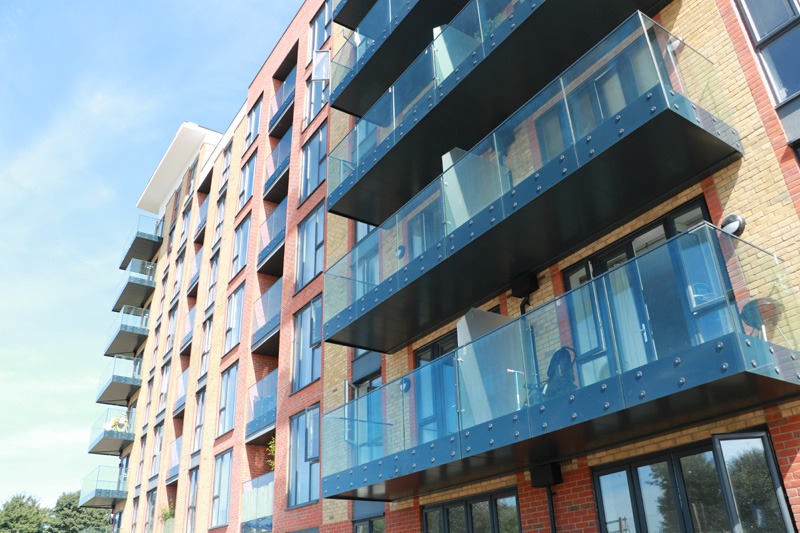
Canada’s accelerated housing agenda is reshaping the built environment at an unprecedented pace. Federal and provincial initiatives aimed at increasing supply have intensified pressure on construction timelines, labour availability, and cost control.
Simultaneously, performance expectations for building envelopes are stricter under the National Energy Code of Canada for Buildings 2020 (NECB), particularly Section 3.2.4 (governing building envelope performance) and Article 3.2.4.2 (addressing thermal bridging). These pressures converge most visibly at the building exterior. Contemporary facades are both environmental separators and architectural expressions, delivering durability, energy efficiency, moisture management, structural stability, fire safety, and acoustic control while remaining economically viable.
Recent projects in major Canadian urban centres, such as the Kengo Kuma building in Vancouver, increasingly feature articulated facade geometries and complex exterior assemblies. This introduces additional coordination and performance considerations for design teams.
More than ever, designers and contractors turn to prefabricated and modular facade elements—including factory-built balcony assemblies—as a strategy to reconcile these competing demands.
While industrialized exterior systems offer advantages in quality control and schedule compression, they also introduce new technical complexities at the interface between structure and envelope. The success of these systems depends not on manufacturing precision alone, but on disciplined integration with building science fundamentals.
Cost pressures and the rise of industrialized facades
Construction cost escalation remains a defining constraint across Canadian markets. According to Statistics Canada’s Building Construction Price Index (BCPI), residential construction costs in 15 census metropolitan areas increased by three per cent year-over-year in Q4 2025. At the same time, BuildForce Canada’s January 2026 Labour Force Survey highlighted a 1.5 per cent decrease in the construction labour force, while a Deloitte report projected the country will need to mobilize half a million skilled trade workers by 2030 to meet its goals. Envelope installation, which relies on precise sequencing across several trades, is particularly vulnerable to labour constraints.
Therefore, off-site fabrication has gained attention as a mechanism to reduce on-site labour demand and compress project schedules. Industry research, including analyses by McKinsey & Company, suggests modular construction can reduce project times by 20 to 50 per cent under suitable conditions, with potential cost efficiencies depending on procurement and project typology.
However, schedule gains and factory efficiencies do not inherently resolve the technical challenges associated with exterior assemblies. Instead, they shift risk toward interface co-ordination, tolerance management, and sequencing. Industrialization may streamline production, but it does not simplify the physics governing heat flow, air leakage, moisture migration, or structural movement.

Building envelope performance at slab edges and interfaces
A recurring co-ordination risk in modular balcony and facade systems is maintaining the continuity of control layers. These systems must be evaluated against the four primary layers: air, water, thermal, and vapour. Slab edges and balcony attachment penetrations represent inherent vulnerabilities where these layers are frequently interrupted. Designers should prioritize systems that maintain uninterrupted air and thermal barriers across floor lines. Air barrier assemblies should be validated in accordance with CAN/ULC-S742, Standard for Air Barrier Assemblies—Specification, or with industry-standard testing, such as ASTM E2357, Standard Test Method for Determining Air Leakage Rate of Air Barrier Assemblies, to confirm continuity across floor lines and penetrations.
Specifications should require assemblies that demonstrate continuity of air and thermal barriers across floor lines, supported by documented thermal modelling. Linear thermal transmittance (psi-value) is a critical performance metric for assessing slab edge heat loss. NECB 2020 Article 3.2.4.2 requires designers to account for thermal bridging where it materially affects envelope performance. Whole-building energy modelling increasingly demonstrates that repetitive balcony penetrations can erode otherwise code-compliant wall assemblies.
In conventional cast-in-place balcony construction, slab projections extend through the thermal envelope, creating linear thermal bridges at each floor level. Interior surface temperatures at slab edges can fall below temperatures associated with condensation risk (often 13 C [55 F], depending on interior humidity conditions) in cold Canadian climates when thermal bridging is not mitigated. When repeated across multiple storeys, these penetrations can significantly erode whole-building energy performance. In fact, even high-performance wall systems can underperform when slab-edge losses are combined across dozens of storeys. Externalized or thermally broken attachment strategies can significantly reduce psi-values and help meet stringent energy targets under the NECB performance pathways.
Thermal discontinuities also introduce long-term durability concerns. In colder climates, poorly insulated balcony connections can lower interior surface temperatures below the dew point, increasing the likelihood of condensation. Over time, this condition may contribute to mould growth, discomfort for occupants, and the degradation of interior finishes. Thermally broken structural connectors or externally supported balcony assemblies can substantially reduce psi-values. These strategies must be evaluated holistically to ensure improvements in thermal performance do not compromise structural integrity or fire separation.
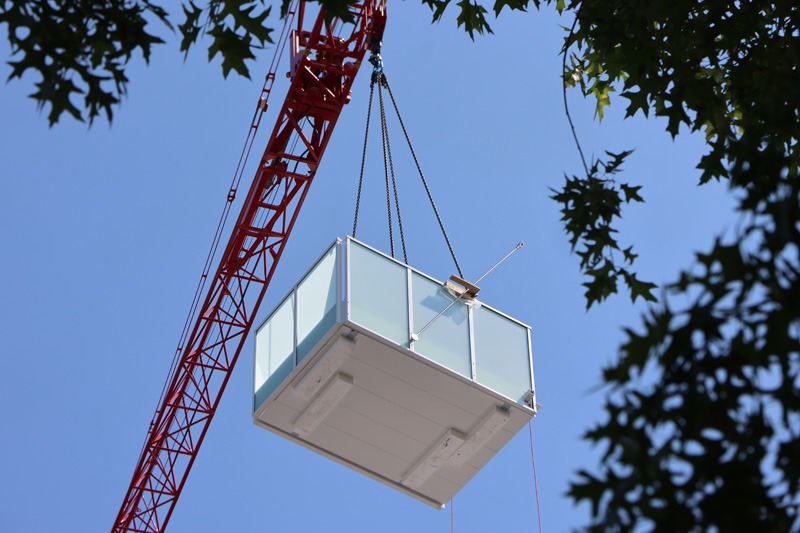
Conventional cantilevered concrete balconies typically exhibit linear thermal transmittance values of approximately 0.6 to 1.2 W/m·K (0.35 to 0.69 BTU/[hr·ft·F]). In contrast, thermally broken connectors or externally supported balcony systems can reduce psi values to approximately 0.15 to 0.30 W/m·K (0.087 to 0.173 BTU/[hr·ft·F]), depending on the configuration.
Water management introduces an additional layer of complexity. Depending on the strategy, prefabricated facade panels may introduce additional horizontal joints, increasing the potential for leakage points. These joints must be designed as drained and ventilated rainscreen elements, not simply sealed joints. Balcony door thresholds and horizontal joints between stacked modules are particularly sensitive locations. Guard anchorage penetrations require similar scrutiny, as every fastener throughout the envelope is a potential air and water leakage path. This approach aligns with the National Building Code of Canada (NBC) requirement for protection from precipitation under Division B, Article 5.6.1.2.
Prefabricated facade elements must incorporate positive drainage paths that align with the primary water shedding plane of the building envelope, rather than relying solely on exposed sealant joints. These pathways must be co-ordinated with the building’s weather-resistive barrier (WRB). Inadequate coordination at these interfaces has been associated with increased risk of post-occupancy envelope performance issues. Consolidating connections, integrating pre-engineered thermal breaks, and including tested sealing strategies are considered best practices in high-performance projects.
Installation sequencing also significantly affects air barrier continuity and trade stacking. Installing balcony systems before window and air barrier completion may ease structural co-ordination, but complicate membrane integration. Conversely, late-stage installation increases the risk of damaging completed air barrier systems. Other common field issues include balcony brackets clashing with window anchors and scaffold removal constraints. Early design decisions should explicitly map the installation sequence to avoid field modifications, and 3D co-ordination—ideally model-based—is becoming essential.
Additionally, specifiers should require validated thermal modelling using 2D or 3D finite element analysis (FEA), rather than relying on nominal insulation values, in alignment with ASHRAE 90.1 and NECB modelling practices.
Structural integration, code compliance, and long-term durability
Beyond thermal and moisture considerations, modular facade systems must respond to structural movement and regulatory requirements. Balcony assemblies and envelope interfaces must account for slab deflection, thermal expansion and contraction, wind-induced building sway, and long-term concrete creep and shrinkage. These movements must be evaluated in accordance with structural design requirements in Division B, Part 4 of the national and provincial building codes. Balcony support connections are commonly designed to limit vertical deflection to L/360 or tighter where glazing systems or brittle finishes are present. Modular systems that are too rigid relative to the primary structure tend to transfer unintended loads back into the envelope.
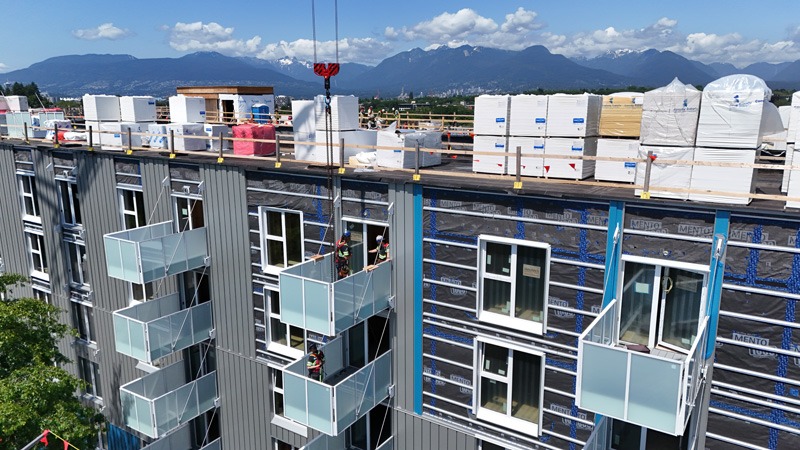
Clear articulation of load paths in the structural general notes is essential. Balcony systems may be fully self-supporting, partially supported by the slab, or structurally composite with the building frame. Ambiguity in structural intent can result in recurring co-ordination issues, conservative overdesign, or unintended stress concentrations. Construction-stage loading often governs connection design, as temporary crane picks, eccentric loading during installation, and incomplete fastening conditions frequently exceed in-service conditions. These scenarios require explicit review during delegated design and temporary works planning.
As modular balcony systems become more common on high-rise buildings, designers should also assess connection redundancy, tie-back requirements, and disproportionate collapse provisions.
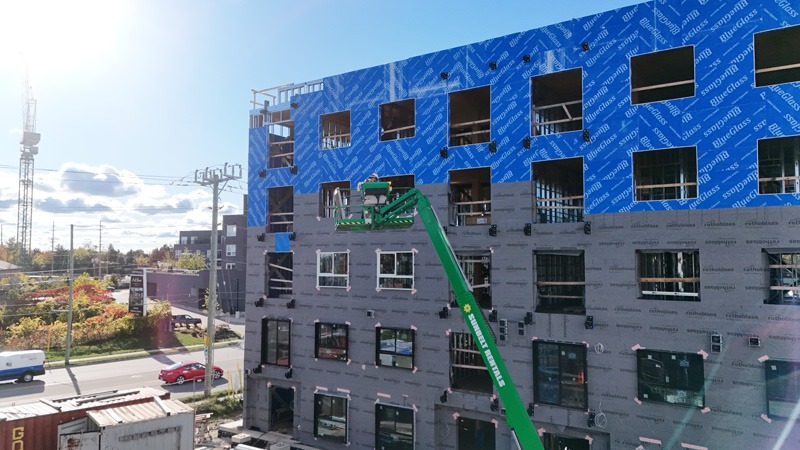
Tolerance management further complicates integration. High-rise reinforced concrete construction commonly exhibits slab-edge tolerance variations of ±25 mm (±1 in.). When repeated floor by floor, these deviations accumulate vertically. Modular facade systems must therefore incorporate adjustability in three axes without compromising thermal performance, waterproofing integrity, or structural capacity. The common industry assumption that factory precision automatically translates into site performance often proves inaccurate. In practice, the success of modular facade systems depends on how well the design absorbs site variability.
Small dimensional variations compound vertically across storeys. Without a defined tolerance absorption strategy, modular elements may drift out of alignment, create uneven joint widths, or induce unintended stresses within connections and finishes. Model-based tolerance analysis and clearly defined adjustment ranges at bracket interfaces can mitigate these risks before fabrication begins.
Code compliance considerations extend beyond energy performance. Balcony guard systems must meet the concentrated and uniform load requirements prescribed by provincial building codes, such as the Ontario Building Code (OBC). Integration of prefabricated guard systems into modular balcony frames requires validation at both the guard and supporting structural levels. Fire performance at slab edges also demands careful co-ordination. For multi-storey residential buildings, the interface between balcony assemblies and the spandrel zone must consider vertical flame spread and spandrel protection requirements.
Even highly prefabricated systems require pre-installation surveys, slab-edge scanning, and anchor-pull testing. These should be written into Division 01 and Division 07 specifications.
Interface ownership is another recurring risk in projects incorporating modular facade elements. The highest-risk zones typically occur at the boundary between trades such as structure, windows, balconies, air barrier, and cladding. Projects benefit from explicitly assigning single-point responsibility for each critical interface within Division 01, reducing ambiguity and limiting co-ordination gaps that often emerge between scopes.
Acoustic performance is also a design consideration. Balcony penetrations can introduce potential flanking paths that may affect suite-to-suite sound transmission class (STC) and impact insulation class (IIC) targets if not properly detailed. In high-density, multi-unit residential construction, where acoustic separation is important, incorporating straightforward acoustic detailing at balcony interfaces effectively addresses this risk.
Long-term maintainability is often an overlooked dimension of facade design. Sealants, membranes, and connection hardware will require inspection and potential replacement over service lives measured in decades. A crucial consideration is whether critical anchors can be visually inspected, retightened, or replaced without major envelope removal. Many contemporary details implicitly assume unlimited maintenance access, which may no longer be available once scaffolding is removed and adjacent assemblies are complete. Designing for inspectability and replaceability is therefore integral to durability.
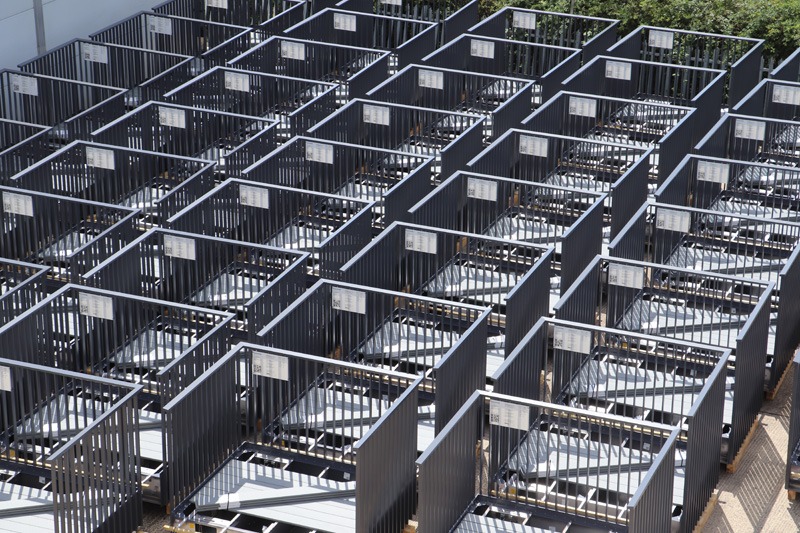
Industrialization can improve quality control and reduce material waste, but assumptions about embodied carbon reductions should be carefully evaluated. While off-site fabrication can reduce waste and improve quality, the lifecycle impact of modular facade systems depends heavily on material selection, transportation distances, and connection strategy. Increasingly, specifiers should request whole-assembly lifecycle assessment data to understand broader environmental implications.
Performance outcomes frequently correlate with procurement methodology. When balcony and facade systems are engaged early under design-assist, delegated design, or performance specification models, outcomes tend to improve. Conversely, late-stage procurement often results in compromised details at critical envelope interfaces.
Architectural expression and modular construction are not mutually exclusive. Industrialized facade and balcony systems can support varied geometries and dynamic building forms.
However, esthetic ambition must be reconciled with rigorous attention to the continuity of control layers, structural clarity, code compliance, and long-term durability. Increasingly, successful high-rise projects are using model-based tolerance analysis, envelope interface-focused clash detection, and parametric bracket layouts. These tools are increasingly used to identify envelope interface conflicts and manage constructability risk.
Conclusion
As energy codes tighten and building envelopes become more highly engineered systems, the margin for error at slab edges and facade interfaces continues to shrink. Industrialized balcony and facade systems can deliver meaningful improvements in quality and schedule, but only when supported by rigorous modelling, clear structural load paths, and disciplined control layer continuity. Projects that treat these interfaces as secondary details rather than primary design drivers will continue to experience avoidable performance and durability risks.
Author

Antonio Manchisi is a mechanical engineer, a seasoned construction industry leader, and a recognized specialist in modular construction. Manchisi is the vice-president of construction at Sapphire Balconies.
Sign up for our weekly newsletter
Construction Canada weekly newsletters give the latest AEC industry news for those who build, design, engineer, specify, renovate or operate in the built environment.
Products & Services
Read the Latest Issue