Reinventing stone: Porcelain and quartz take centre stage
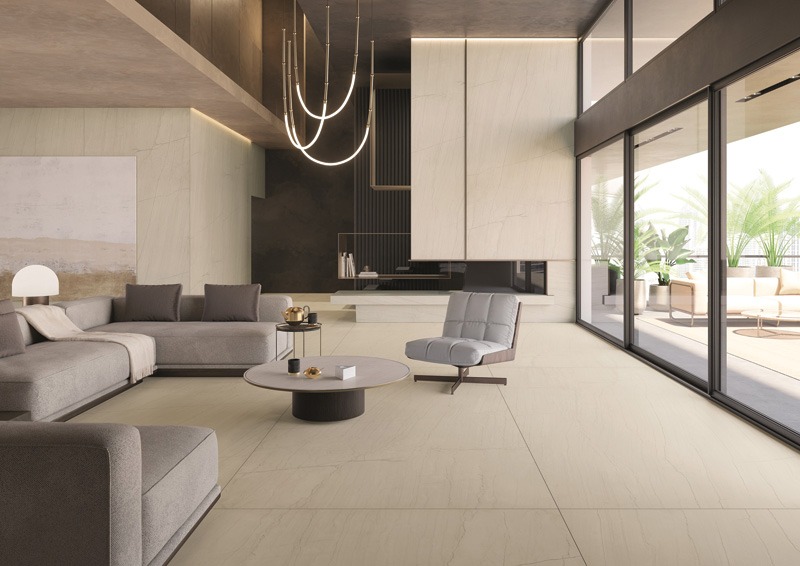
As contemporary architecture continues to push design boundaries, innovations in manufactured stone, such as porcelain and engineered quartz, are reshaping creative possibilities. Thanks to manufacturing innovations and material advances that produce more colours, finishes, and larger slab sizes, architects and designers now have greater creative freedom in where and how they incorporate these materials.
Beneath the surface
Porcelain and engineered quartz each possess characteristics that make them ideally suited for virtually any commercial application that requires a durable, attractive, and easy-to-maintain surface.
Porcelain is made from a blend of natural clay and minerals fired at extremely high temperatures. This intense firing process creates a dense, non-absorbent material resistant to moisture, stains, and scratches. Compared to natural stone, which is porous and requires sealing and long-term care, porcelain is considered non-porous and does not require these extra steps. Since porcelain can be manufactured to look like natural stone, it is a popular alternative, especially for exterior projects exposed to natural light and areas subject to high heat.
Due to its low water absorption rate, porcelain also performs well in freeze-thaw environments common in colder climates such as Canada. Its dense composition helps reduce the risk of cracking, spalling, and moisture-related deterioration caused by repeated freeze-thaw cycles, making it suitable for exterior cladding, paving, and other applications exposed to seasonal temperature fluctuations.
Engineered quartz is a manufactured material that contains natural quartz. Natural quartz is a hard, crystalline mineral made of silicon dioxide. Manufacturers combine 90 to 95 per cent crushed natural quartz with five to 10 per cent resins, polymers, and pigments to create highly durable slabs in a variety of colours and patterns. The resin content of engineered quartz provides slight flexibility, reducing the risk of cracking, while the quartz ensures a hard-wearing, resilient surface. Like porcelain, engineered quartz can mimic the look of natural stone, but it is less heat-resistant.
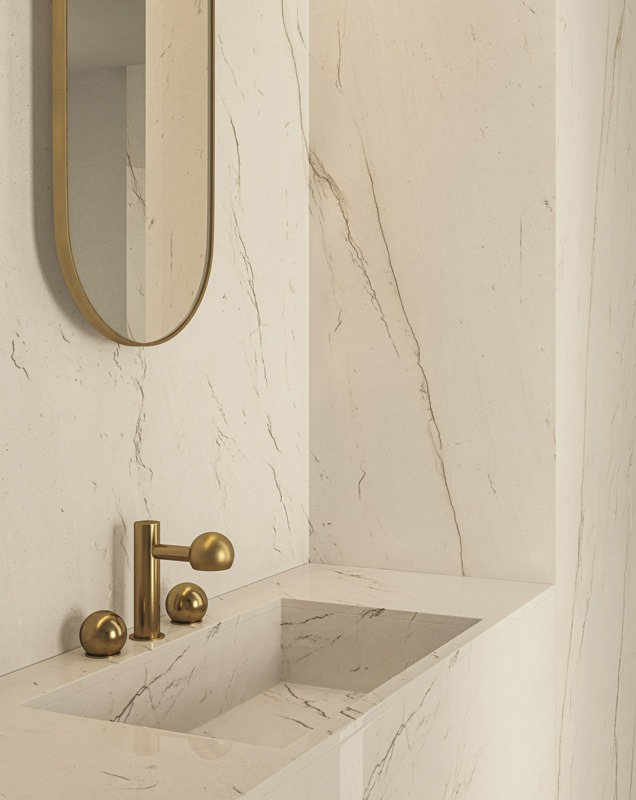
Seamless looks from floor to ceiling
When selecting masonry materials for a project, architects and designers weigh several factors.
First, esthetics: porcelain and engineered quartz are highly versatile in design. Not only do they offer their innate visual qualities, but they can also mimic the appearance of other masonry materials. Advances in printing technology, for instance, can now render high-definition images and textures, enabling remarkable realism. Likewise, extra-large slabs can replicate the look of marble or other natural stone with uninterrupted veining patterns. Designers can further customize their vision by choosing from dozens of colours and a variety of finishes, including matte and glossy finishes, as well as textured, polished, honed, or brushed surfaces.
A second consideration for selection is where the material will be used. Popular applications of porcelain and/or engineered quartz slabs include:
- High-traffic flooring—Found in shopping malls, airports, office lobbies, and hotels, porcelain is a great option that delivers attractive design flexibility with durability and easy maintenance.
- Wall cladding and feature walls—In corporate buildings, retail stores, and luxury residences, both materials are used to create sleek, seamless facades and interior decorative elements.
- Countertops and work surfaces—Porcelain and engineered quartz are common in restaurants, hotels, and commercial kitchens where hygiene, stain resistance, and durability are key considerations.
- Reception desks and conference tables—Frequently incorporated into office and hospitality settings, these materials offer esthetic appeal and long-term wear resistance.
- Vanities and shower walls—Large slabs are ubiquitous in commercial restrooms and hotel bathrooms due to fewer seams, moisture resistance, and easy upkeep.
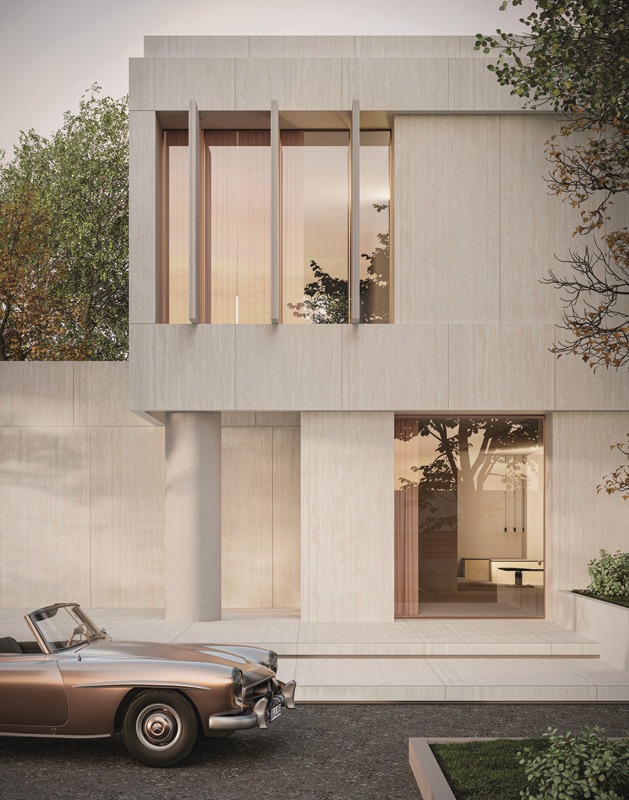
- Exterior facades—Porcelain is the choice for office buildings, hotels, and mixed-use developments where weather resistance and UV stability are important. In colder or variable climates, facade systems should also be designed to accommodate thermal movement, moisture management, and freeze-thaw exposure by properly detailing joints, attachment systems, drainage planes, and ventilation cavities.
- Outdoor dining and entertainment spaces—Used in patios, countertops, and bar areas, porcelain slabs stand up to the elements with high heat tolerance and UV resistance.
- Hospitality and retail displays—Applied in luxury retail counters, shelving, and boutique storefronts, both materials are visually versatile and customizable.
One reason porcelain and engineered quartz have gained popularity in these applications is that manufacturers now produce slabs in larger sizes. Engineered quartz, for example, is available in jumbo slabs measuring around 1.65 x 3.3 m (5.4 x 10.8 ft) and super jumbo slabs measuring about 1.98 x 3.51 m (6.5 x 11.5 ft). These larger slabs have gained favour because they allow designers to create monolithic surfaces with notably fewer visible seams, or none at all. Larger slabs require less installation labour and are often more readily available than natural stone alternatives.
Most quartz slabs are produced in either 20 or
30 mm (0.79 or 1.18 in.) thickness. Porcelain is usually 6 or 12 mm (0.24 or 0.47 in.); however, the smaller thickness can break easily during transportation, so some manufacturers have started adding thin backers to make the material a bit stronger.
Other qualities that make porcelain and engineered quartz attractive for commercial applications include:
Resistance to chipping and cracking
Some natural stone materials, such as marble and travertine, are softer or naturally porous, making them more susceptible to chipping and cracking if not carefully handled or properly treated. Porcelain and engineered quartz are highly durable and can be more forgiving during fabrication, installation, and daily use. When tested to EN ISO 10545-5 (similar in scope to ASTM ceramic tile durability and breaking-strength testing methods), porcelain demonstrates an average impact resistance value greater than 0.85. For exterior applications in colder Canadian climates, freeze-thaw resistance can also be evaluated using ASTM C1026, Standard Test Method for Measuring the Resistance of Ceramic and Glass Tile to Freeze-Thaw Cycling,, which is referenced within Terrazzo, Tile and Marble Association of Canada (TTMAC) installation guidelines for exterior tile applications.
Quartz is tested to ASTM C1870, Standard Test Method for Determination of Impact Diameter from Falling Ball on Ceramic Tile, with typical results showing an indentation depth of ≤ 6.35 mm (0.25 in.) from a 914 mm (36 in.) ball drop and ≤ 6.8 mm (0.27 in.) from a 1.22 m (4 ft) ball drop. While engineered quartz offers strong impact and scratch resistance for interior applications, prolonged UV exposure and repeated freeze-thaw cycling can degrade resin binders over time; therefore, it is not recommended for outdoor use.
Stain and scratch resistance
Both porcelain and engineered quartz excel in stain and scratch resistance, making them ideal for high-use surfaces. Porcelain’s non-porous nature prevents spills, even from coffee or wine, from penetrating the surface, making it perfect for countertops, work surfaces, vanities, and outdoor dining areas. When tested to EN ISO 10545-6, porcelain demonstrates an average abrasion volume loss of less than 145 mm³ (0.00885 in.³)—well below the 175 mm³ (0.01067 in.³) threshold set by EN 14411 Group G. Its stain resistance also earns a rating of Class 5 when tested to EN ISO 10545-14, indicating excellent protection against common staining agents.
Engineered quartz, with its dense, durable composition, also resists everyday wear and tear, maintaining its smooth, polished appearance even in busy spaces. It achieves a Mohs hardness rating of ≥6 when tested in accordance with EN 101:1991, demonstrating strong scratch resistance. Regarding stain performance, quartz earns a Class A rating under ASTM C1378, Standard Test Method for Determination of Resistance to Staining (polished finish), indicating high resistance to household stains.
Heat resistance
Porcelain is highly heat-resistant, withstanding temperatures up to 650 C (1,200 F) in real-world applications. This makes it ideal for fireplace surrounds, outdoor kitchens, and countertops near high-heat appliances. It passed EN ISO 10545-9 thermal shock testing with no visible damage, confirming its stability under rapid and extreme temperature changes.
Engineered quartz, while offering moderate heat resistance, is not heatproof. Manufacturers generally advise that quartz surfaces can withstand up to 150 C (300 F) for short durations. Exposure to temperatures exceeding this range, especially from hot pots or pans placed directly on the surface, can lead to discoloration, cracking, or other forms of damage due to the resin components in quartz. To preserve the integrity and appearance of quartz countertops, it is recommended to always use trivets or heat pads under hot cookware.
Long-term durability and maintenance
Porcelain and engineered quartz slabs are ultra-dense and only need basic cleaning to maintain their appearance. Compared to natural stone (e.g. granite), which requires periodic sealing to prevent staining and etching, porcelain and engineered quartz offer hassle-free care with minimal maintenance.
UV sensitivity
For exterior projects exposed to UV light, porcelain is a clear winner, as it remains colour-stable even in outdoor settings. Natural stone can also perform well outdoors; however, some varieties use resin to smooth rough surfaces, and that resin may yellow over time with prolonged sun exposure. Engineered quartz, while durable indoors, is not suitable for exterior use. Its resin binders can begin to yellow in as little as six to 12 months when exposed to direct sunlight, with discoloration becoming more pronounced over time, especially in lighter colours.
Cost
Porcelain and engineered quartz offer a variety of price points, providing options for different budgets. Natural stone also varies in cost, with some varieties being relatively budget-friendly and others, particularly exotic marbles and quartzites, commanding premium prices.
The balance of beauty, performance, and customization makes porcelain and engineered quartz practical solutions and essential design elements in modern spaces.
Tips for choosing a manufacturer and supplier
Selecting a quality porcelain or engineered quartz manufacturer and a dependable supplier is crucial for ensuring material consistency and reliable availability. Questions to ask and qualities to look for in a manufacturer and supplier should include:
Lead times and available stock
A supplier with a large selection and deep inventory ensures material availability, minimizes project delays, and provides specifiers with greater design flexibility.
Consistency in material quality and colour batches
Verify that the manufacturer maintains uniformity in colour and texture across slabs. This is especially important for large-scale commercial projects that require multiple components. A supplier with deep inventory and single-source procurement by colour can expedite this verification by providing side-by-side comparisons of multiple slabs in the chosen colour.
Material warranty
Choose a manufacturer that offers a comprehensive warranty covering material defects, durability, and performance over time. A strong warranty protects firms and clients from unexpected replacement costs and is considered a reliable indicator of a manufacturer’s integrity.
Certifications for durability, safety, and sustainability
When selecting surface materials, look for third-party certifications that verify the product meets industry standards for durability, fire resistance, safety, and environmental sustainability. In Canada, these standards are often referenced through the National Building Code of Canada (NBC), provincial building codes, TTMAC installation guidelines, and project specifications. Important certifications include:
- ASTM C373, Standard Test Methods for Determination of Water Absorption and Associated Properties by Vacuum Method for Pressed Ceramic Tiles and Glass Tiles and Boil Method for Extruded Ceramic Tiles and Non-tile Fired Ceramic Whiteware Products, for water absorption, and ASTM C648, Standard Test Method for Breaking Strength of Ceramic Tile, for breaking strength. Both are key indicators of durability.
- For exterior porcelain applications in Canadian climates, ASTM C1026 evaluates resistance to freeze-thaw cycling, an important consideration for materials exposed to seasonal temperature fluctuations and moisture.
- For fire resistance, materials are typically classified according to ASTM E84, Standard Test Method for Surface Burning Characteristics of Building Materials, which assigns flame spread and smoke development ratings.
- NSF certification (NSF/ANSI 51 or 61) confirms the material is safe for use in food preparation areas and is frequently referenced for commercial kitchens, hospitality spaces, and healthcare projects.
- GREENGUARD certification verifies the product meets strict chemical emissions limits for healthier indoor air quality (IAQ).
- Declare Label participation lists product ingredients and helps identify materials that do not contain substances found on the Living Building Challenge Red List.
These certifications help specifiers, designers, and builders make informed decisions about high-performing, safe, and environmentally responsible materials.
Customer service and technical support
Seek a supplier with a reputation for offering a seamless experience from sampling to delivery. Technical documentation, fabrication guidelines, and assistance with specifications and installation should also be part of the relationship to ensure proper handling and application of the material.
Working with a reliable manufacturer and supplier helps ensure the consistency of materials and the long-term performance of porcelain and engineered quartz slabs. As the industry evolves, new manufacturing techniques and innovations will only enhance these materials, making them even more valuable in modern building design.
FIGURE 1
| Factor | Porcelain | Engineered quartz | Marble (Natural stone) |
Explanation |
| Chipping and cracking |
High risk | Low risk | Moderate risk | Quartz has resin content, reducing the chances of chipping and cracking. |
| Stain and scratch resistance | Excellent | Excellent | Requires sealing | Porcelain and quartz are non-porous and naturally stain- and scratch-resistant. |
| Heat resistance | Excellent | Good | Excellent | Porcelain and marble handle high heat well; quartz can be heat-sensitive. |
| Durability and maintenance |
Low maintenance | Low maintenance | Requires sealing | Porcelain and quartz need little upkeep; marble requires regular sealing. |
| UV sensitivity | UV resistant | May yellow over time | UV resistant | Porcelain and marble resist fading; quartz may yellow with UV exposure. |
| Extra-large slab availability | Yes | Yes | Limited availability | Porcelain and quartz come in large slabs; marble sizes depend on the availability of natural stone blocks. |
| Material availability | Widely available | Widely available | Varies by quarry | Porcelain and quartz are mass-produced; marble depends on quarry output. |
Environmental stressors and material performance
Masonry materials are subjected to various environmental stressors that can impact their appearance and performance. Refer to Figure 1 to see some of these stressors and how porcelain, engineered quartz, and a natural stone such as marble perform under each condition.
Note: Cost is removed from the table because it can vary so widely with natural stone. It is tough to categorize marble as always more expensive.
Author

Matt DiNorcia is director of strategic sales at UMI | The Source, focusing on the southeast region. He plays an integral role in shaping sales strategy and developing internal systems to optimize customer relationships and streamline operational efficiency, ensuring seamless service and growth for the UMIStone.com client base.
Sign up for our weekly newsletter
Construction Canada weekly newsletters give the latest AEC industry news for those who build, design, engineer, specify, renovate or operate in the built environment.
Products & Services
Read the Latest Issue
Demo-Casts