
Expert insight: Ontario’s first CNG bus maintenance facility with indoor fuelling lanes
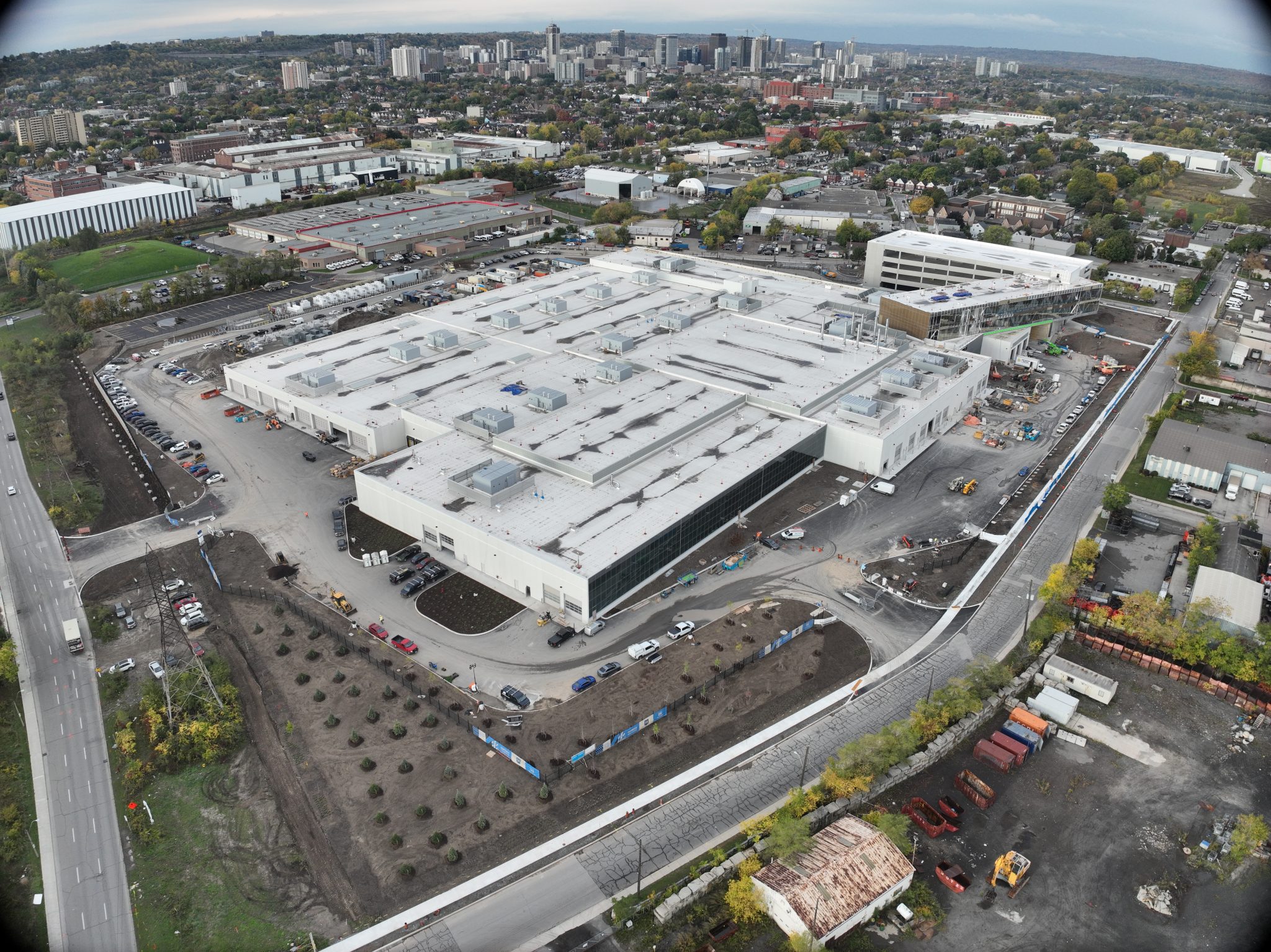
The City of Hamilton, in collaboration with Arcadis, is investing in its transportation network through the construction of its second Transit Bus Maintenance Facility.
As a first-of-its-kind facility in Ontario, the facility will be purpose-built to store, maintain, and fuel the city’s fleet using a low-emission alternative to diesel, compressed natural gas (CNG), and upgrade its network’s existing capacity by 300 buses.
The new $395-million facility is slated for completion in early 2026 and integrates several future-focused features to support Hamilton’s growing fleet, including two indoor CNG fuelling lanes, 20 maintenance bays, advanced bus washing lanes, flexible accommodation for future hydrogen or battery-electric buses, administrative offices, training spaces and meeting rooms, and elevated walkways that separate employee and vehicle movements.
Tanya Martins of Construction Canada spoke to Eric Czerniak, principal and market sector lead operations and maintenance facilities at Arcadis, to learn more about the facility and the province’s potential for CNG infrastructure.
What is the purpose of the new Hamilton CNG Transit Bus Maintenance Facility, and how does it differ from a conventional diesel bus garage?
The new Hamilton CNG Transit Bus Maintenance Facility is a key back-of-house operations and maintenance hub for Hamilton Street Railway’s transit system. While similar to a conventional diesel bus garage, the facility is distinguished by its use of CNG, which Hamilton adopted in 1984 and now operates as the largest CNG fleet in Ontario. The facility includes specialized indoor and outdoor fueling infrastructure, standard and specialty maintenance bays, a wash system, full-size backup generators, and administrative spaces. Designed by Arcadis, it also allows for future adaptation to support a small fleet of battery-electric buses.
How did your team future-proof the design to accommodate these evolving technologies?
Arcadis designed the facility to support both current operations and future technology, with early structural, spatial, and electrical provisions for electric buses. The roof structure can accommodate future roof-mounted charging systems, such as pantographs, while remaining flexible for ground-based charging. Bus storage aisles and the on-grade slab were designed for safe circulation and heavier electric bus loads. Electrical service capacity, room sizes, and provisions for a future transformer and indoor BEB [battery electric bus] substation were also included, allowing the facility to adapt to advancing fleet technology while minimizing future costs and disruptions.
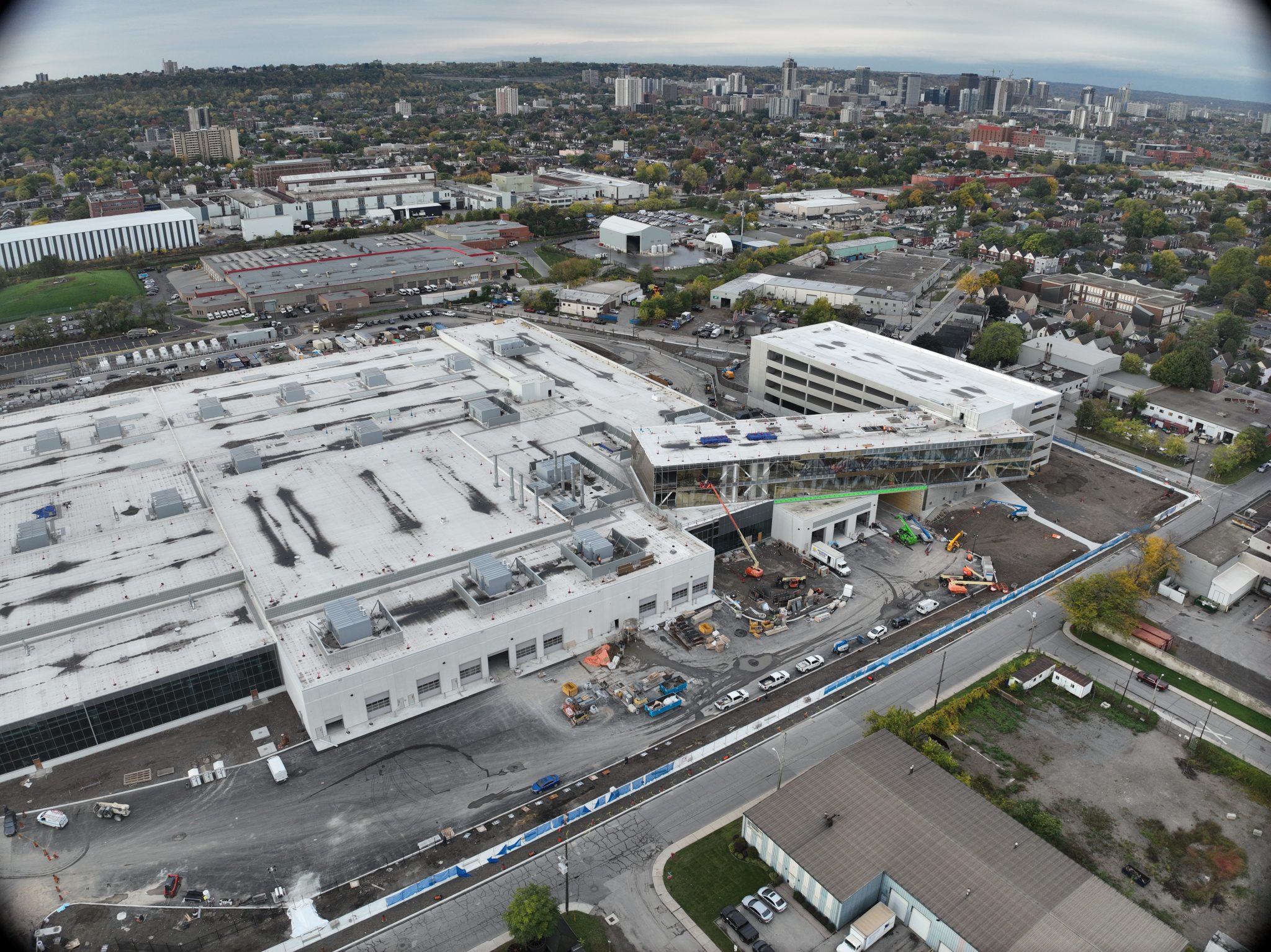
What design strategies or technologies were implemented to ensure safe storage, fueling, and maintenance in a dense urban setting?
Natural gas is delivered via two Enbridge pipelines, with small outdoor storage for daily refuelling and a separate defueling station; no gas is stored inside. Advanced indoor gas detection monitors CO, NO₂, and CH₄ for safety and leak detection. Higher-hazard areas, like the paint bay and indoor refuelling zone, include explosion-relief panels, explosion-proof components, reinforced structures, rated equipment, and building automation. Maintenance and storage areas have classified ceilings, and ventilation systems prevent gas recirculation.
What lessons from Hamilton’s approach could help other municipalities plan or retrofit their own operations?
One of the biggest lessons from the city’s approach is the value of a phased, financially practical pathway toward decarbonization. Rather than municipalities moving directly from diesel to full electrification, which requires high up-front costs, such as electrical grid upgrades, electrical infrastructure upgrades, and costly facility retrofits, Hamilton has continued to invest in its existing CNG fleet as a lower-emission alternative, while planning for a future transition to zero-emission vehicles.
While many municipalities are focused almost exclusively on battery-electric buses, or in some cases hydrogen, which introduces additional safety, storage, and hazard considerations, Hamilton selected a solution that balances environmental benefits, operational feasibility, and long-term adaptability. We believe the emphasis should be on planning and implementing the solution that is ‘right’ for each transit agency without sacrificing operational capacity.
The City of Hamilton’s expansion demonstrates that bus transit systems remain a vital part of urban mobility, justifying continued investment in upgrading and expanding public infrastructure. It also highlights an important point: electrification isn’t the only or the ideal solution for each transit agency.
Sign up for our weekly newsletter
Construction Canada weekly newsletters give the latest AEC industry news for those who build, design, engineer, specify, renovate or operate in the built environment.
Popular Articles
-
1
-
2
-
3
-
4
-
5
Read the Latest Issue

- Two Methods of Collaborative Construction Delivery: Construction Management and Integrated Project
- Reducing a Billion Dollar Problem in Construction Through Correct Moisture Testing of Concrete
- Reducing a billion dollar problem in construction through correct moisture testing of concrete
- Message from the president | Message de la présidente : The role of product information in specification
- 💻 Author-led sessions on new CCDC documents