Composite cladding: Sustainability, performance, and a growing global market
Sustainability is no longer just a values statement. It is a business strategy. According to the 2025 CEO Study from the United Nations Global Compact and Accenture, which surveyed nearly 2,000 chief executives across 128 countries, 88 per cent of CEOs say the business case for sustainability is stronger today than it was five years ago, and 99 per cent plan to maintain or increase their sustainability commitments in the years ahead.
This shift is especially visible in the building industry, where sustainability has long been a priority. In green building construction, product sustainability manifests in many ways, from material makeup and manufacturing processes to end-of-life care and durability (the longer a material lasts, the fewer new products will need to be produced).
When specifying exterior cladding or building envelope materials, building professionals have many options: wood, engineered cladding products, stucco, and brick and stone masonry, among others. Wood-plastic composite (WPC) has evolved from a niche alternative into a mainstream building material. With its sustainability credentials, performance advantages, and design versatility, it is easy to understand why.
Sustainability of composite cladding
From its material makeup through the manufacturing process to its performance and lifecycle, several factors make composite cladding a highly sustainable option.
Material makeup
As manufacturers of WPCs continue to move closer toward zero waste, they have incrementally increased the amount of recycled material in their products—some are made with upwards of 94 per cent pre- and post-consumer recycled material—which prevents materials from being sent to waste streams and landfills, while also preserving valuable natural resources. This makes WPC much more sustainable than many other building envelope materials.
Wood flour is recycled from sawdust, planer shavings, or other scrap material from window trim, door frames, lumber, or cabinet pieces that would otherwise be discarded. Through these recycling efforts, manufacturers of composite decking and cladding products can prevent more than 1 million trees from being cut down each year. This is equivalent to about 15,000 football fields of healthy forests preserved annually. Further, the manufacturing process of WPCs avoids using rainforest species, thus protecting endangered trees and reducing deforestation. Although WPCs can include any wood species, maple, pine, and oak are among the most frequently used. This selection not only leverages more abundant and sustainably sourced wood but also ensures the final products support environmental conservation efforts.
The plastic in composite cladding is derived from milk jugs, shampoo bottles, grocery bags, laundry detergent containers, and other recycled packaging materials. The average family uses approximately 1,500 plastic bags each year, with each bag being used for an average of just 12 minutes. If not recycled, these plastic bags likely end up in landfills or the ocean, where they could remain for up to 1,000 years. That said, it is this same resistance to decomposing that helps make composite cladding last such a long time. As many as 2,000 plastic bags can be used to manufacture a single WPC board, meaning one manufacturer can recycle an average of 45 million kg (100 million lbs) of plastic each year. That is the weight of approximately 227 Boeing 747s.
Manufacturing process
Working toward zero waste, WPC manufacturers have been increasing process efficiency for some time now. These improvements are yet another reason WPC is widely considered highly sustainable.
Composite cladding manufacturers with dedicated recycling facilities can recycle both post-consumer and post-industrial polyethylene (PE), the most common form of plastic waste. Thanks to automated material shredding and sorting, it is becoming faster and less expensive for manufacturers to incorporate recycled materials into building products.
Since these plastics should not enter the waste stream, some manufacturers ensure 100 per cent of the material is reclaimed in the manufacturing process. When the PE arrives at a recycling facility, for example, it undergoes a battery of tests—including thermal, moisture, and infrared analyses—to confirm the molecular structure of the polymers and provide insight into the sample’s history. Inspectors examine the individual physical properties of the samples, check for degradation, and determine whether any contaminants are present. If the samples meet strict quality requirements, they are staged in a warehouse for further inspection. If the samples fail, they are sent to alternate recycling operations with less stringent requirements.
While manufacturing composite cladding requires a constant water supply, some manufacturers use a closed-loop system to maintain sustainability. A closed-loop system uses a reservoir to store and recycle the same water every day, preventing billions of gallons—enough to fill 5,300 Olympic-size swimming pools—from entering the waste stream.
For project teams pursuing green building certification, it is worth noting that leading composite cladding products have been confirmed in conformance with ISO 14025, 14040, 14044, and 21930, all of which are required for products used in LEED v4-certified builds.
Performance and lifecycle
Doubling a building’s lifespan halves its construction-related environmental impacts, which is why the durability of a material, along with its long-term performance, is crucial to its sustainability.
WPCs combine the best qualities of recycled wood—such as strength and low cost—with the long-lasting resilience of recycled plastic, which is less prone to water absorption and insect infestation. Blending these two materials is what makes WPCs last so long and why they are sustainable from start to finish.
Unlike solid wood, the durable composite core of WPC cladding ensures exceptional resistance to rotting, cracking, insects, and decay. A three-sided cap layer protects against fading and staining common with solid wood cladding, and it has a finished surface on both the top and bottom to prevent water absorption further.
Composite cladding also never needs sanding, staining, painting, or sealing. There are environmental dangers associated with volatile organic compounds (VOCs) released by stains and paints. VOCs are a leading contributor to ground-level air pollution and poor indoor air quality (IAQ), which can adversely impact the health of building occupants—a concern recognized by both Health Canada and the Canada Green Building Council (CAGBC) as a key factor in healthy building design. When solid wood is stained or painted to maintain its durability, it will then need to be refinished with more stain or paint every couple of years, which creates a continual cycle of chemical emissions. The chemicals used in treated wood are generally not good for humans, either. Since composite cladding is highly durable and never needs to be stained or painted, it is free of these toxic chemicals and preservatives.
Further, once the WPC has finished serving as cladding, the material can be recycled into something new. Wood treated with chemicals, on the other hand, cannot be burned or recycled when its use as cladding is complete.
Performance of composite cladding
Compared with other building envelope materials, WPC stands apart as one of the most sustainable options, both in terms of durability and material makeup.
Wood cladding
Appearance
Wood siding—including shiplap, tongue-and-groove, and board-and-batten—offers a timeless, authentic esthetic that is difficult to replicate. Its natural grain variation, warmth, and character have made it a preferred choice in residential design for centuries, and it remains a benchmark against which other cladding materials are measured. That said, it is prone to fading, chipping, and staining. It can also develop mould and mildew stains.
Installation
Wood is widely available, easy to cut and work with using standard tools, and familiar to most trades, making it one of the more straightforward materials to source and install in most markets. That said, Wood siding requires multiple trades (carpenters, painters, etc.) to install and finish. The siding will need to be refinished (and sometimes repaired) every few years, which is a time-consuming process that entails scraping, sanding, pressure washing, and re-staining or re-painting.
Durability
Wood splits, splinters, and is particularly affected by freeze-thaw cycles. Water absorption depends on the finish quality and its age. If the siding is not maintained, its durability will be compromised.
Recycled content
Wood cladding contains no recycled content if purchased new. Some wood cladding is made from endangered hardwood species, resulting in negative environmental impacts.
Fire performance
Untreated wood is combustible and can contribute to fire spread. Pressure-treated or fire-retardant-treated (FRT) wood offers improved resistance, but FRT chemicals can release toxic gases during combustion, raising concerns for occupant safety and emergency responders.
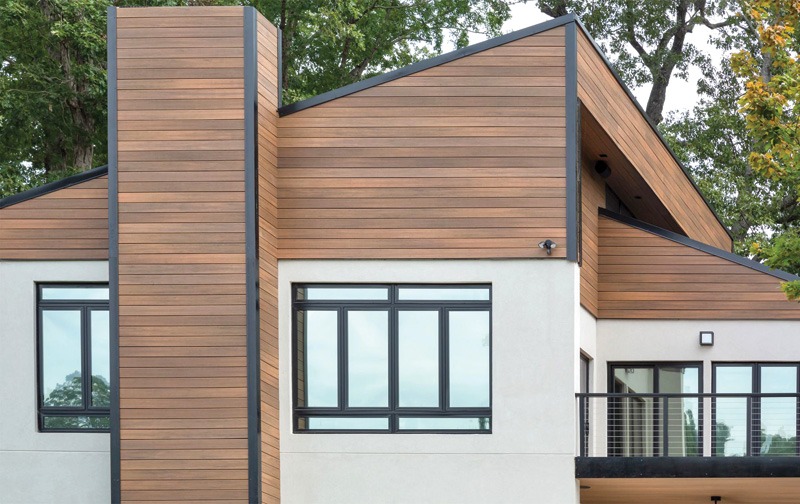
Engineered cladding products (e.g. fibre cement)
Appearance
Fibre cement is a versatile and widely trusted cladding option, offering good dimensional stability and a consistent finish. It is available in a range of profiles and can be factory-primed or pre-finished, giving installers flexibility across a variety of project types and budgets. While engineered cladding products may be embossed with a woodgrain pattern, they lack the natural colour variation found in wood (i.e. the subtle shifts in tone across the grain that give wood its depth and visual richness). As a result, the appearance tends to be more uniform and less naturalistic than composite or solid wood cladding. Engineered cladding products are also prone to fading and cracking.
Installation
Fibre cement is available in a wide range of profiles—including lap siding, panels, and trim—giving installers and designers flexibility to achieve different looks within a single product system. On the downside, since engineered cladding releases silica when cut, the Canadian Centre for Occupational Health and Safety (CCOHS) requires exposure controls and protective equipment for all installers. A specialized blade is also needed to reduce silica dust. The material can break under its own weight, so it requires careful handling to avoid product loss. Installation can vary depending on climate and wind conditions, making scheduling more difficult.
Durability
Engineered cladding products tend to be brittle and can fracture if nailed close to the edge. The finish and face can spall (flake or break off) in cold environments. Like wood, the amount of water that engineered cladding absorbs depends on the quality and age of the finish, so it must be effectively maintained to prevent deterioration. Engineered cladding is highly susceptible to impact damage and freeze-thaw cycles.
Recycled content
Engineered cladding contains little to no recycled content.
Fire performance
Fibre cement is noncombustible and carries a Class A fire rating, making it one of the stronger performers in this category. It does not contribute to flame spread and does not release toxic gases during a fire, which is a meaningful advantage in high-risk fire zones or where building codes mandate noncombustible cladding.
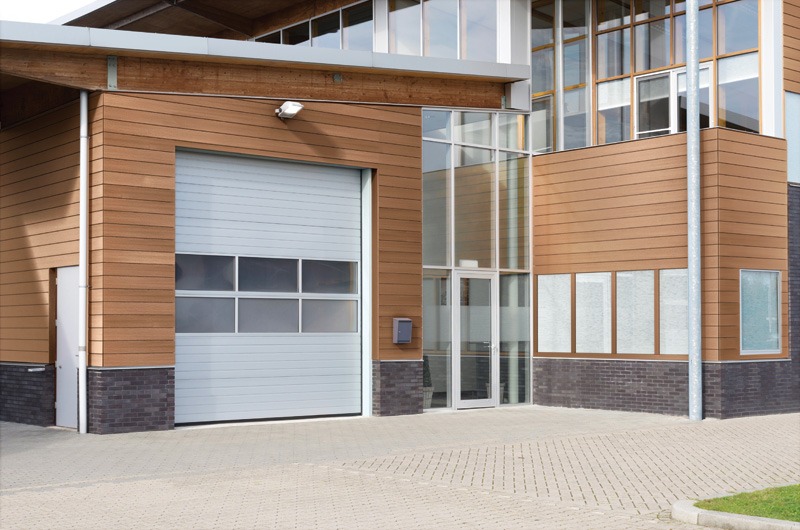
Stucco
Appearance
Stucco offers a seamless, monolithic finish that suits a wide range of architectural styles. Its ability to be tinted in virtually any colour and applied over curved or irregular surfaces gives it a design flexibility that few other cladding materials can match.
Installation
Stucco is very labour-intensive to install, requiring a two- to three-step application, plus painting (dash, scratch, brown, and finish coats), by a concrete contractor. All layers of stucco must be uniform to perform well; improper installation can result in extensive damage to interior walls and structures.
Durability
Stucco is resistant to rot, mould, fire, and insects. However, it is prone to cracking due to its brittle nature, especially when the building’s foundation settles. Stucco is also porous and absorbs water more readily than other materials, which can cause dark spots or mould growth. The material is sometimes affected by freeze-thaw cycles. Because stucco is prone to these moisture-related issues, it is best suited for drier climates.
Recycled content
Stucco typically does not contain recycled content, although some may use post-consumer recycled sand aggregate from crushed, screened waste concrete.
Fire performance
Stucco is non-combustible and contributes to a Class A fire-rated wall assembly when properly installed. It does not release toxic gases during a fire and is frequently specified in Wildland Urban Interface (WUI) zones for this reason.
Brick and stone masonry
Appearance
Both brick and stone have a classic look often seen on more traditional homes. These materials have a wide range of esthetics beyond typical red brick and field stone. Brick is available in assorted colours and coarse patterns, and can be painted, while stone can be laid in a variety of patterns. Manufactured brick and stone veneers offer another option.
Installation
Brick and stone installations are quite labour intensive since the products are heavy. Exterior brick and stone require a wider foundation wall to support their own weight and accommodate the required 25-mm (1-in.) air space. They also require steel support lintels over windows, doors, and gable-ends, as well as brick ties, through-wall flashings, and weep holes for water drainage.
Durability
Masonry is one of the most proven long-term cladding systems available, with well-documented lifespans exceeding 100 years. Though brick is a durable product, it absorbs water and can spall when exposed to excess moisture. Depending on the brick’s water absorption rate and saturated coefficient, it can be affected by freeze-thaw cycles. Brick is also subject to efflorescence, the development of crystalline deposits of water-soluble salt on the brick’s surface.
Recycled content
Some bricks may contain pre-consumer recycled materials, such as overburden from mining, washings from aggregate processing, grog, sawdust, and metallic oxides. This pre-consumer recycled content is generally low, around only 15 per cent.
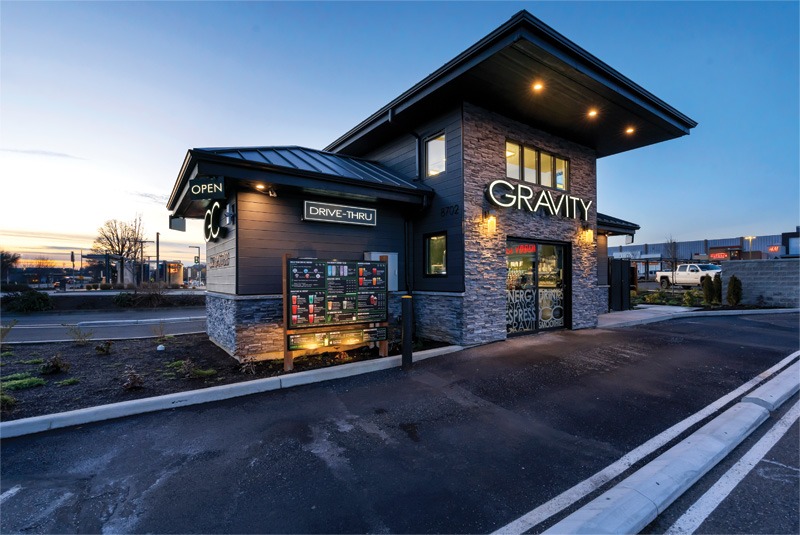
Composite cladding
Appearance
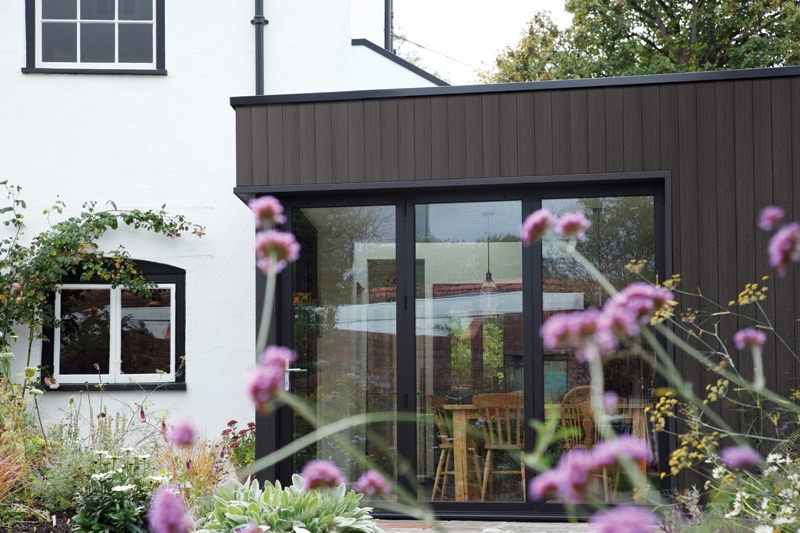
Composite cladding has an authentic wood grain and colour variation that gives it an appearance similar to natural solid wood—but without the fading, cracking, and decay that is typically associated with wood cladding.
Installation
Installation is safer and easier than most other cladding options. Composite cladding is available in longer board lengths than wood or fibre cement, which reduces splices and labour. Since the boards are pre-finished, they require no additional finishing steps or excessive ongoing maintenance, further reducing labour time and expense. Unlike fibre cement, no potentially harmful substances are released during cutting.
Durability
Composite cladding will not crack, splinter, peel, rot, decay, or suffer insect infestation, like wood. Composite cladding may absorb a negligible amount of water but is not affected by freeze-thaw cycles.
Recycled content
Composite cladding is made almost entirely of recycled content and is manufactured without toxic chemicals. In addition, it can be recycled at the end of its life, unlike treated wood.
Fire performance
Leading composite cladding products carry a Class B fire rating and meet NFPA 268, Standard Test Method for Determining Ignitability of Exterior Wall Assemblies Using a Radiant Heat Energy Source, requirements, helping to satisfy fire code regulations for exterior wall assemblies. While WPC is not noncombustible, it does not contain the chemical preservatives found in pressure-treated wood, which can release toxic gases during combustion. Specifiers should verify the fire classification of specific products when working on projects with elevated fire code requirements.
Design benefits of composite cladding
Beyond its sustainability and performance attributes, composite cladding allows designers to provide the warm look of wood with a more durable material, while also staying on-trend with a mixture of exterior materials. While monolithic expanses of synthetic stucco (exterior insulation finishing systems or EIFS), brick, wood, or fibre cement were once the norm, today’s buildings typically feature a combination of materials. Organic-looking products with warm wood tones are now placed alongside poured-in-place concrete and glass or EIFS and stone. This approach is widely adopted in both single-family homes and commercial structures, offering a quick and straightforward method to achieve an esthetic nearly identical to that of newer buildings. It also adds a touch of warmth to the design.
WPCs can be used for many different components in the built environment, including decking, soffits, screen facades, rainscreen cladding, and even trim elements when cut to size. WPCs can also be manufactured in many different shapes, colours, and textures. Lengths and colours can be mixed and matched to create a unique, custom look, and boards can be installed vertically, horizontally, or diagonally. With these design options, architects and specifiers can achieve a variety of styles, from subtle and rustic to bold and modern.
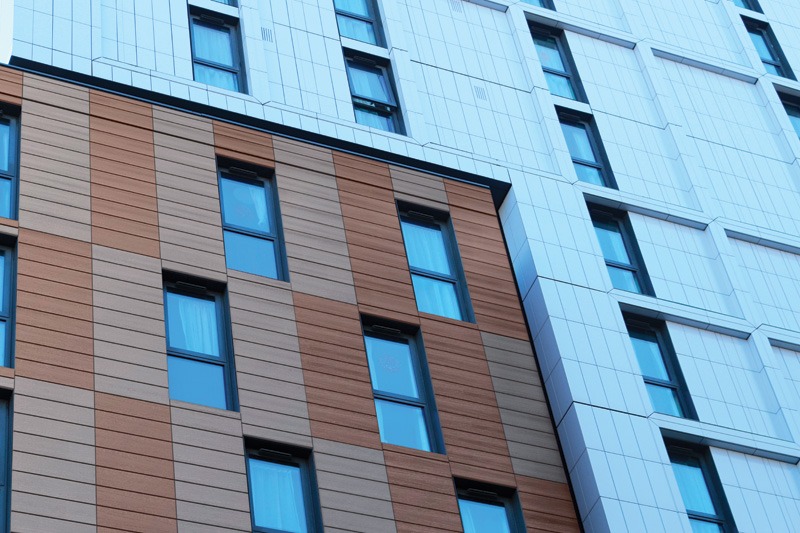
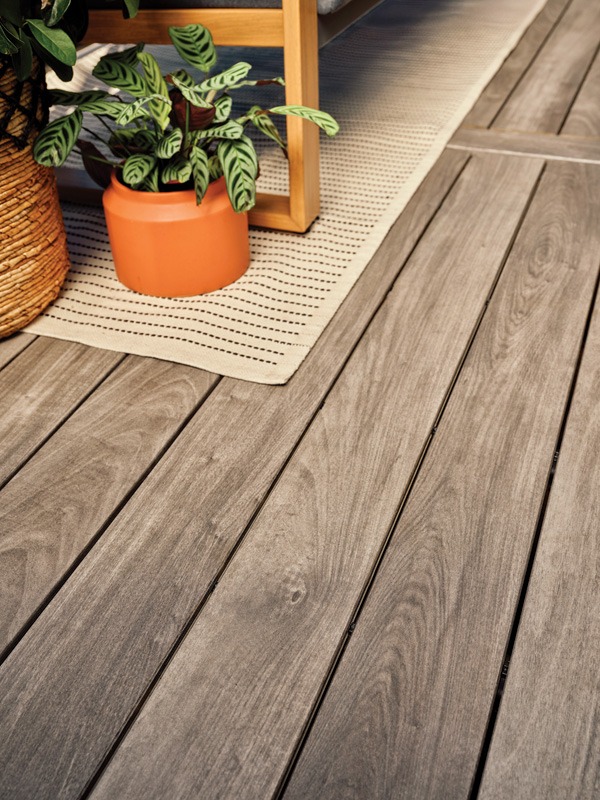
The embossing technology for WPCs has advanced to the point that the material now closely mimics the appearance of solid wood, making it almost indistinguishable. Further, colour options are abundant and not constrained by the regional availability of particular wood species. Rich colour palettes and varied grain patterns are available in a range of browns and greys. Classic browns range from rich mid-tones to the deepest brown, adding depth and drama. The darker choices are especially well-suited to Craftsman-style or Mediterranean homes. Reddish browns are timeless and classic, yet still unique. The colours evoke the warm hues of cinnamon, the rich depth of rosewood, and the vibrant tones of red cedar. Reddish tones provide warmth, energy, and a pop in the landscape. Blonde oak tones have established a strong foothold in the industry, offering a subtle sandy hue for those drawn to the natural, Scandinavian-inspired look. At the other end of the spectrum, deep charcoals and rich espresso tones are gaining significant ground in both residential and commercial applications, lending drama and sophistication to contemporary facades. Greys, with their undercurrents of blue or sandy beige, continue to evoke thoughts of rocky shorelines and weathered wood, making them a natural fit for coastal homes while adding quiet sophistication to urban spaces. Increasingly, designers are pairing WPC boards across multiple tones within a single facade to create the layered, mixed-material exteriors that define today’s most compelling building designs.
The future of composite cladding
When it comes to performance, ease of maintenance, and design capabilities, composite cladding outperforms many alternative materials. It is durable and sustainable, and thanks to its nature-inspired embossing, composite cladding emulates natural wood better than alternative materials.
The numbers tell the story: the global WPC market, valued at approximately CAD $12.7 billion in 2025, is projected to nearly double to CAD $20.7 billion by 2031—a trajectory driven by building professionals who are choosing durability, sustainability, and long-term value over short-term material costs. This momentum is validation of what the material has always offered: the warm beauty of wood, without the vulnerabilities that come with it.
Looking further ahead, the evolution of WPC technology could take the material’s most compelling attribute—its wood-like appearance—to an entirely new level. New advanced image-capture technologies recently seen in composite decking could also make their way to cladding. These new advancements bring photorealistic wood appearances to WPCs, capturing the authentic grain and tone of exotic hardwoods with a precision that even trained eyes could struggle to distinguish from the real thing. For specifiers, that possibility could reframe the conversation entirely, delivering not just a sustainable, low-maintenance alternative to wood, but one that is visually indistinguishable from it.
Author

Thomas Gooch is the senior manager of B2B product management at Fiberon. He is a product innovation leader passionate about creating outdoor living products that deliver exceptional customer experiences and long-term value. At Fiberon, he helps shape the future of cladding and decking by translating homeowner and contractor insights into innovative products, guiding efforts across new product development, portfolio strategy, market growth, and customer-focused solutions.
Sign up for our weekly newsletter
Construction Canada weekly newsletters give the latest AEC industry news for those who build, design, engineer, specify, renovate or operate in the built environment.
Products & Services
Read the Latest Issue