Accessibility of operable windows
This article was originally published in May 2014 by Steve Fronek, PE. It has been refreshed and updated by Steve Gusterson, FCSC, CTR, and Lisa May to further expand on the subject, including updates in industry standards and codes related to accessibility of operable windows.
The Accessible Canada Act (ACA) was passed in 2019 with the intention of creating a barrier-free Canada by 2040.
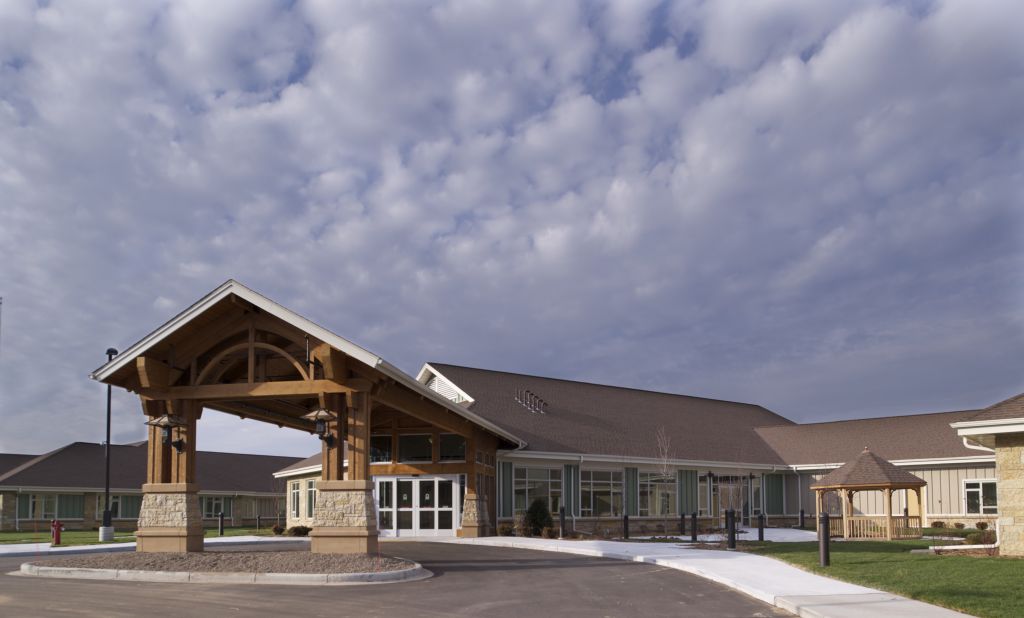
Accessibility to fresh air and a connection to the outdoors for those with physical disabilities are especially important in skilled nursing and personal care facilities, multi-family dwellings, and hotels, along with classrooms and dormitories. To help ensure this access, windows capable of meeting operating force and motion requirements of International Code Council/American National Standards Institute (ICC/ANSI) A117.1, Accessible and Usable Buildings and Facilities, are being more commonly specified in the United States.
AAMA 513, Standard Laboratory Test Method for Determination of Forces and Motions Required to Activate Operable Parts of Operable Windows and Doors in Accessible Spaces, a Fenestration and Glazing Industry Alliance (FGIA) document, defines accessible window units as:
operable window assemblies, including frame, infill, hardware, and all other appurtenances, required by project specifications and/or applicable codes, to be accessible to and usable by people with such physical disabilities as the inability to walk, difficulty walking, reliance on walking aids, blindness and visual impairment, deafness and hearing impairment, in coordination, reaching and manipulation disabilities, lack of stamina, difficulty interpreting and reacting to sensory information, and extremes of physical size.1
In December 2023, Statistics Canada’s Canadian Survey on Disability (CSD) reported 27 per cent of Canadians aged 15 and older, eight million people, have one or more disabilities that limit their daily activities. The top four disability types include those related to pain, flexibility, mobility, and mental-health—with 71 per cent having three or four co-occurring disability types—with more than 40 per cent classifying it as “severe” in nature. Smaller percentages reported visual, auditory, or dexterity impairments. All percentages were significantly higher when only groups over age 65 were considered. The report noted 72 per cent of persons with disabilities experienced one or more of 27 types of barriers to accessibility because of their condition at least sometimes in the past year.
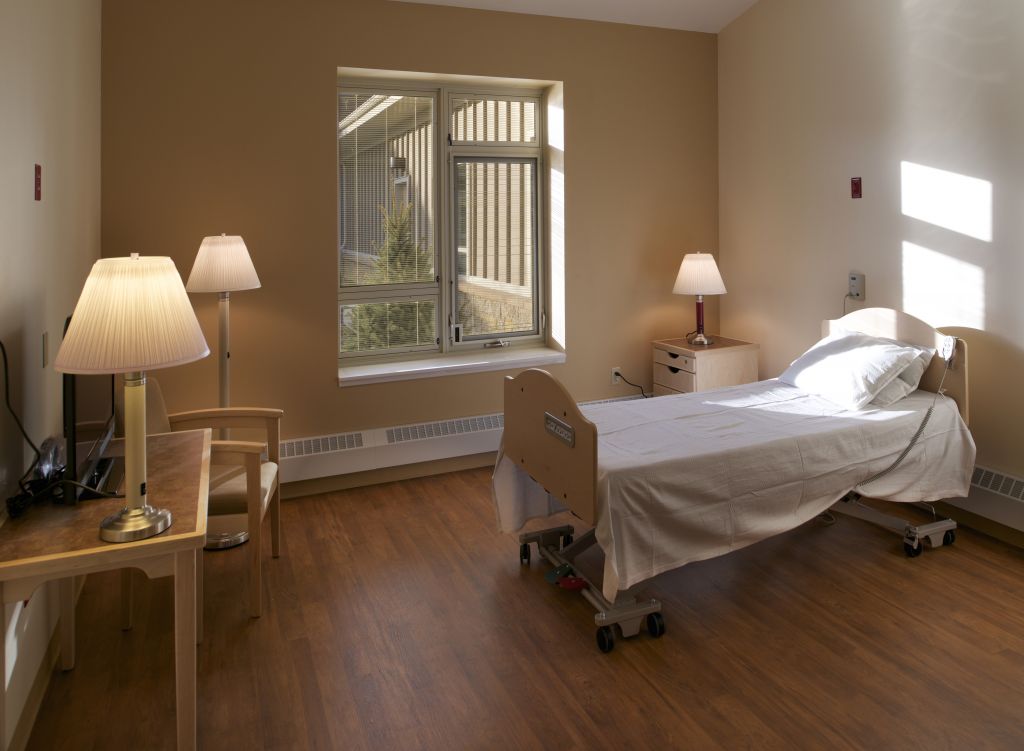
Accessibility as a general building design concept has its roots in disciplines known throughout the years as barrier-free, universal, or inclusive design; other terms have included ‘design-for-all’ and ‘aging-in-place.’ For clarity, the term ‘accessibility’ will be used in this article to refer to any of these design protocols, recognizing some differences in emphasis and design criteria exist. Various protocols have placed more or less emphasis on the use of operable windows.
Standards and laws in the United States
Before exploring considerations for operable windows in this country, it is important to understand the situation south of the border. Even in Canada, operable windows intended for use in accessible spaces are often mistakenly called ‘ADA windows.’ The Americans with Disabilities Act (ADA) is a law, not a building code, specification, or test method—as such, it is missing many of the necessary technical requirements for compliance testing.
It is not the intention of this article to summarize or interpret building code requirements or enforcement provisions in Canada or in the United States; rather, it draws attention to important design considerations and cites relevant examples of best practices. Local authorities having jurisdiction (AHJs) should be consulted in determining applicability and in defining detailed requirements for any given structure or space.
While detailed requirements vary, all U.S. references generally cite ICC/ANSI A117.1 for window operating forces and motions. It addresses three types of dwelling or sleeping units: Accessible, Type A, and Type B. All three cite Sections 308 and 309 of the standard. Operating parts of windows must comply in Accessible and Type A units, unless otherwise specified by local AHJs. Operating parts of windows need not comply in Type B units, unless otherwise specified by local AHJs. As might be expected, Accessible and Type A units also ‘count’ as Type Bs, since they meet more stringent requirements.
Surprisingly, requirements for operable parts of windows were first added to ANSI A117.1 in 1992, although a test method has never been referenced. Paragraph 309 states:
309 Operable Parts
309.1 General. Operable parts required to be accessible shall comply with Section 309.
309.3 Height. Operable parts shall be placed within one or more of the reach ranges specified in Section 308.
309.4 Operation. Operable parts shall be operable with one hand and shall not require tight grasping, pinching, or twisting of the wrist. The force required to activate operable parts shall be 5.0 pounds (22.2 N) maximum.
Recognizing the need for a repeatable, reproducible, and uniform test method, a task group was formed in 2012 and developed AAMA 513 to fill the void. AAMA 513 now is referenced in ICC/ANSI A117.1, Section 506.2.
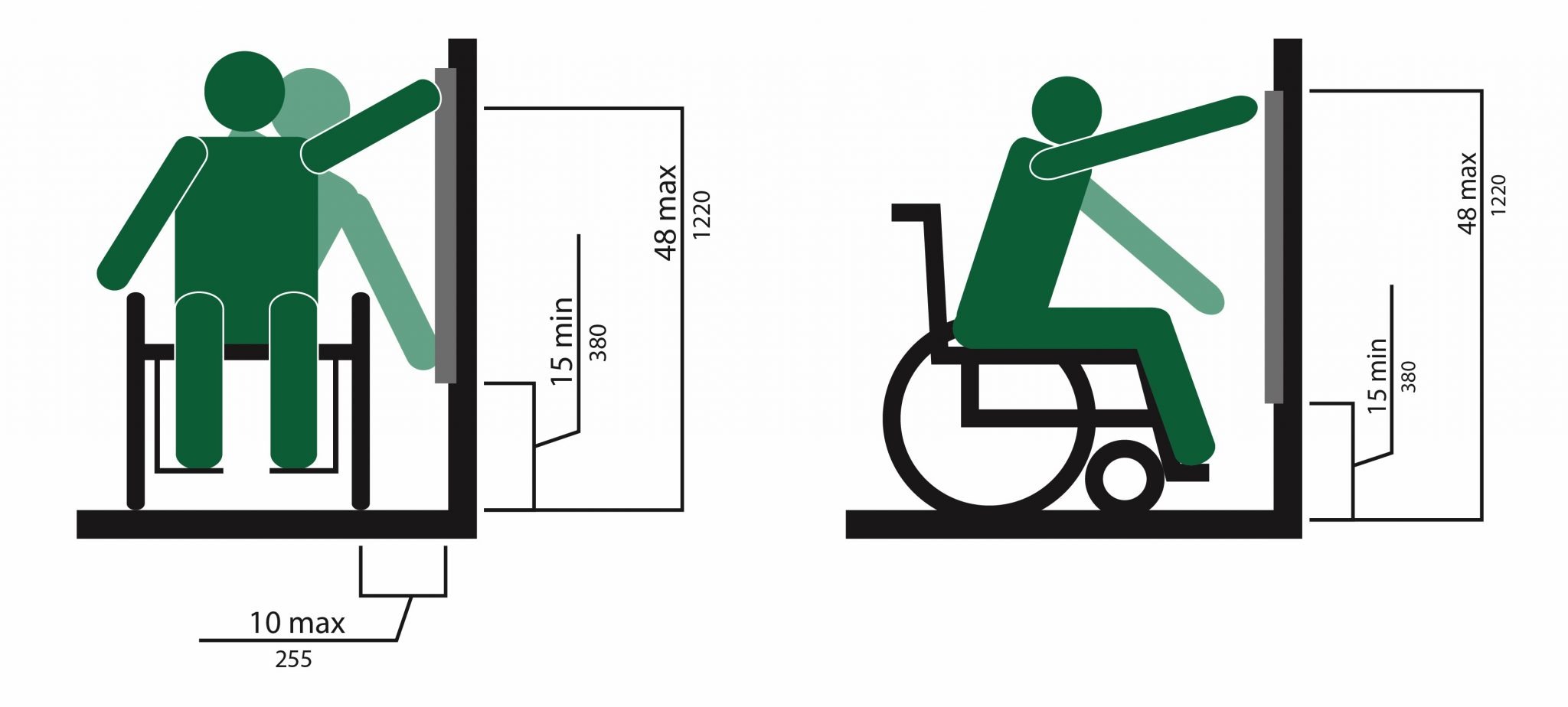
In addition to forces and motions, the specifier must ensure operable windows are located and detailed in a way that meets the ‘reach’ limitations of ICC/ANSI A117.1. (One typical diagram is shown in Figure 1). Different height requirements apply to ‘obstructed’ and ‘front’ reach. There are also physical limits on clearances and protrusions, as well as approach area and threshold height (for terrace doors and sliding glass doors).
It is important to remember building codes represent only minimum requirements. Even when not required, accessible operating windows may be a desirable feature of the occupied spaces being designed, making it easier for everyone to enjoy the fresh air.
ICC’s 2024 International Building Code (IBC) Section 1108.2: Design notes, “Accessible units, Type A units and Type B units shall comply with the applicable portions of Chapter 11 of ICC A117.1.”
Canadian codes and standards
For basic air, water, and structural performance of windows, doors, and skylights, the National Building Code of Canada (NBC) 2020 version references the North American Fenestration Standard (NAFS), which is developed and maintained jointly by the FGIA and its AAMA standards, the Window and Door Manufacturers Association (WDMA), and the CSA Group (formerly known as the Canadian Standards Association) as AAMA/WDMA/CSA 101/I.S.2/A440.
Most requirements are harmonized between the United States and Canada. NAFS includes maximum allowable operating forces for different types of operable windows.
The NBC first addressed accessibility in a new Clause in its Section 3 in 1985, affecting institutional buildings and those used for assembly, as well as large residential, office, and retail buildings. In general, apartment buildings were required to provide barrier-free access, but accessibility within individual residential suites was exempt from requirements unless mandated otherwise by AHJs. Single-family homes and other smaller residential buildings were also exempt. In 2005, when NBC moved to an objective-based format, accessibility became one of its four main objectives, to ensure disabled persons the freedom to access and circulate within a building, and use the buildings facilities.
In 2022, a federal-provincial-territorial governance model was adopted and includes the Canadian Board for Harmonized Construction Codes (CBHCC).
In 2023, CSA Group and Accessibility Standards Canada (ASC) published CSA/ASC B651, Accessible design for the built environment, which is referenced in the NBC.
The description for general operation of controls including windows and doors parallels that of ICC/ANSI A117.1. CSA/ASA B651’s Clause 4.2.4 states:
“Controls shall be: a) operable with one hand, using a closed fist position; or another method of operation that does not require tight grasping, pinching, or twisting of the wrist, and b) with a force not to exceed 22 N.”
With respect to accessible window views and sill height, NBC varies from CSA/ASA B651’s Clause 7.4.6.2, which states:
“Windows shall: where intended for viewing, except where located above a counter, have a sill no higher than 750 mm from the floor; and b) where operable for ventilation, have an opening and locking mechanism that comply with Clause 4.2.”
Comparatively, the 2020 NBC says:
Window “sill height shall not be more than 900 mm above the floor.”
The 2020 NBC also provides alternative sill heights on certain dwelling units.
Additional information is being proposed to CBHCC for NBC 2025 to further the progress toward ACA’s goals for a barrier-free Canada. For example, ASC’s CAN/SC-2.8 Accessible-Ready Housing, generally references door handles, window operators, and locks.
The current NBC contains accessible design requirements to be applied in cases where the AHJ designates such criteria. These accessibility requirements most commonly apply to large, multi-storey residential buildings, hotels, skilled care facilities, and dormitories.
Most Canadian provinces and territories set a minimum number (or percentage) of residential units required to be designed for accessibility, or that can be adapted for accessibility. In some locations, these minimums apply only to publicly funded projects, while in others privately funded projects are also affected. Applicability to renovation projects versus new construction also varies by jurisdiction. Several Canadian municipalities have raised the bar still higher, setting mandatory accessibility requirements, or recommending design and construction standards over and above provincial and territorial building codes.
Accessibility of operable windows has not been specifically addressed in NBC’s barrier-free provisions, other than a general requirement in “Performance of Windows, Doors, and Skylights” requiring they “are easily operable.” However, some Canadian provinces, territories, and municipalities have adopted more stringent window-specific standards or guidelines for accessibility and barrier-free design. Again, local AHJs should be consulted in determining applicability and defining detailed requirements for any given structure or space.
Provincial, territorial, and municipal accessibility standards and guidelines
Window-specific standards and guidelines adopted by provinces, territories, and municipalities—mandatory or non-mandatory—include, but are not limited to, the following illustrative examples, paraphrased for brevity.
The non-uniformity of these standards and guidelines, while presumably responsive to local preferences, pose challenges for the product designer striving for broad market applicability of a tested system. It is also important to remember lowered sill height to allow for views and hardware operation from a wheelchair may require the addition of fall prevention guards or limited opening devices. This, in turn, can affect the use of operable windows as routes of egress in un-sprinklered buildings.
Current building codes in British Columbia, Nova Scotia, Ontario, Manitoba, and Saskatchewan reference or align with the 2020 NBC and CSA/ASA B651. Most Canadian building codes also directly reference the current, harmonized version of NAFS.
Alberta
NBC 2019 Alberta edition states:
“Windows shall
a) be equipped with opening devices located not more than 60 mm above the window sill and of a design that does not require tight grasping, pinching with fingers, or twisting of the wrist as the only means of operation, and
b) be located so that the sill is not more than 865 mm above the floor level.”
Modifying this text to include a minimal sill height, Alberta’s NBC(AE) “Accessibility design guide 2024” states: “Openable windows shall… be located so that the sill is not less than 400 mm from the floor level and not more than 865 mm above the floor level.”
British Columbia
The 2024 British Columbia Building Codes (BCBC) references CSA/ASC B651 and requires controls to be operated, “with one hand in a closed fist position, without requiring tight grasping, pinching with fingers, or twisting of the wrist, and ii) unless otherwise stated, with a force not more than 22 N.”
To ensure view and connection to the outdoors from a wheelchair, British Columbia Office of Housing and Construction Standards’ 2020 Building Access Handbook requires windows in common areas should have a sill height less than 750 mm (29.5 in.). Both operable window hardware and window coverings (e.g. drapes and blinds) controls should be located within wheelchair-accessible height and reach, and usable by those with limited use of their hands. Interestingly, different reach limitations are defined for adult males, adult females, and children in wheelchairs, none of which are the same as those shown in ICC/ANSI A117.1.
Nova Scotia
Effective April 1, 2025, Nova Scotia Building Code Regulations, references CSA/ASC B651. The province’s Schedule C−Barrier-Free Design’s accessibility requirements apply to a broad spectrum of building types, and controls for the “operation of building services or safety devices” must be accessible.
Ontario
The 2024 Ontario Building Code (OBC) references CSA/ASC B651 and requires windows open to the outdoors in certain occupancies.
Toronto
The City of Toronto Accessibility Design Guidelines (TADG) are the mandatory, guiding accessibility standard for City renovations and newly constructed buildings and public spaces. TADG 2021 includes specific guidelines for window hardware to “be adjustable and usable by all individuals, including persons who have limited dexterity and strength.”
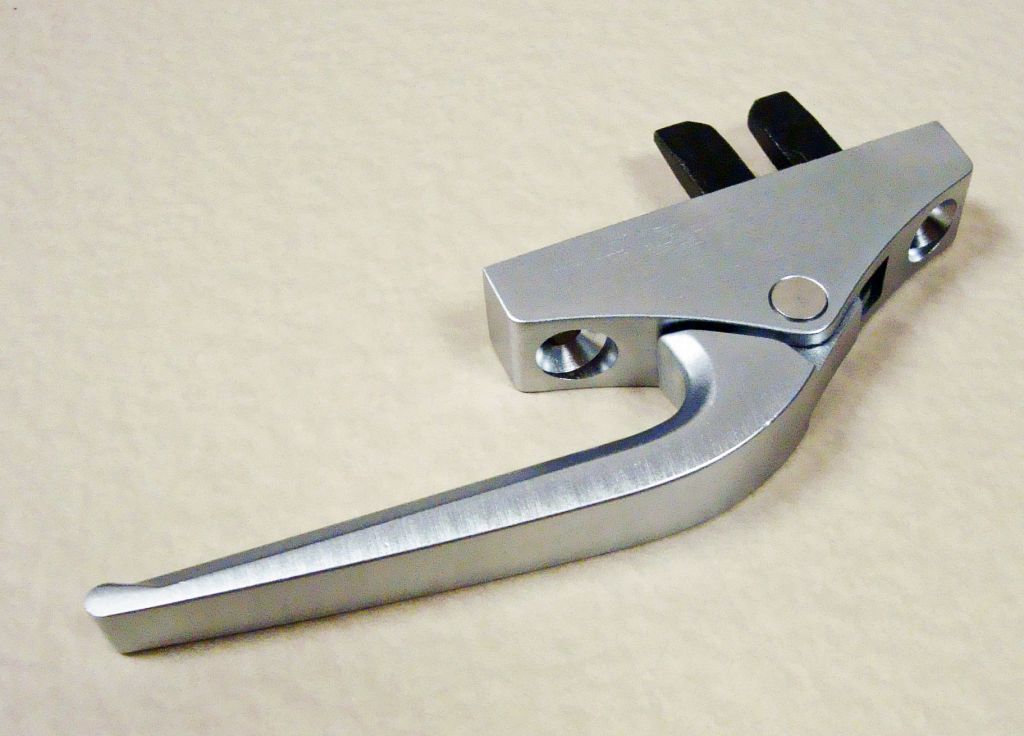
Window sill height should be less than 760 mm (30 in.), and transoms located out of the seated line-of-sight. Lever-style window hardware should be mounted within reach, 900 mm to 1050 mm (35 in. to 41 in.) above finished floor. Window covering controls should also be mounted low.
Winnipeg
New construction or renovation of city-owned or -operated buildings is covered by the 2015 City of Winnipeg Accessibility Design Standard. Wheelchair side reach allowances are set that are different than those shown in ICC/ANSI A117.1.
Large expanses of glass must be marked for the visually impaired, and sill height maintained at 760 mm (30 in.) or less for view. Window opening hardware must be mounted between 400 and 1200 mm (15 and 47 in.) above the floor, and allow one-hand operation without tight grasping, pinching, or twisting of the wrist.
AAMA 513: test method and specifications
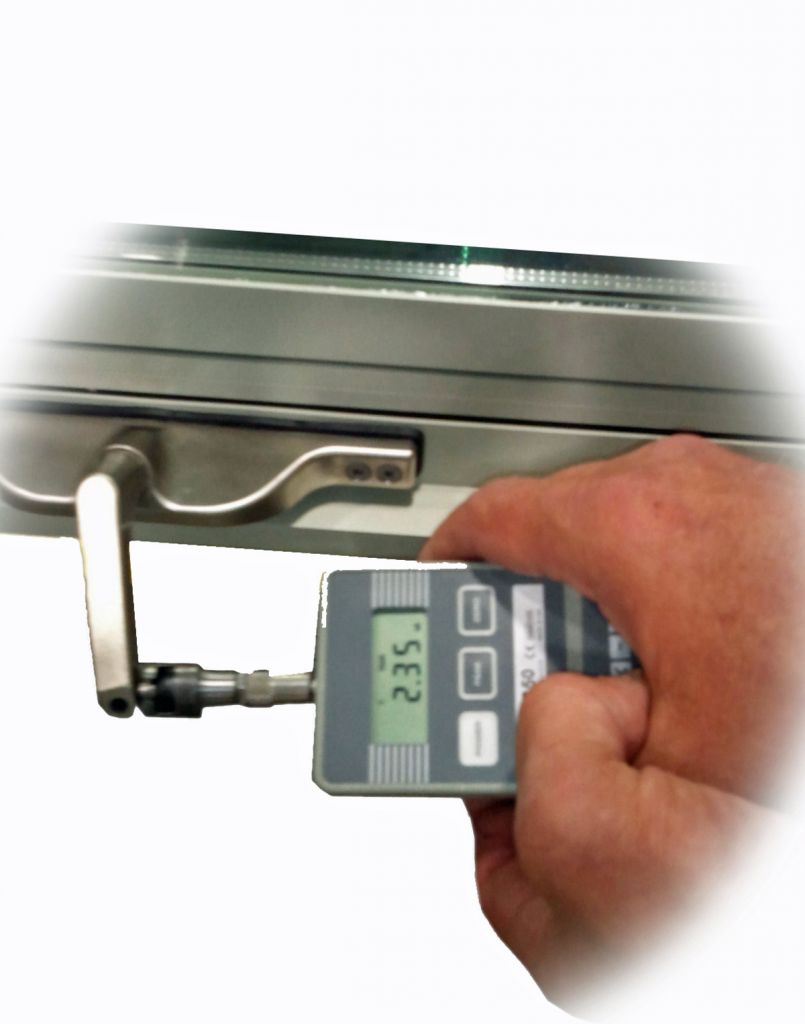
The purpose of the AAMA 513 laboratory test method is to demonstrate a given window unit, as designed, is capable of being operated with forces and motions consistent with ICC A117.1 limitations, if properly installed, adjusted, and maintained.
Operation of any window includes four actions:
- unlocking or unlatching;
- opening the sash or vent;
- closing the sash or vent; and
- locking/latching.
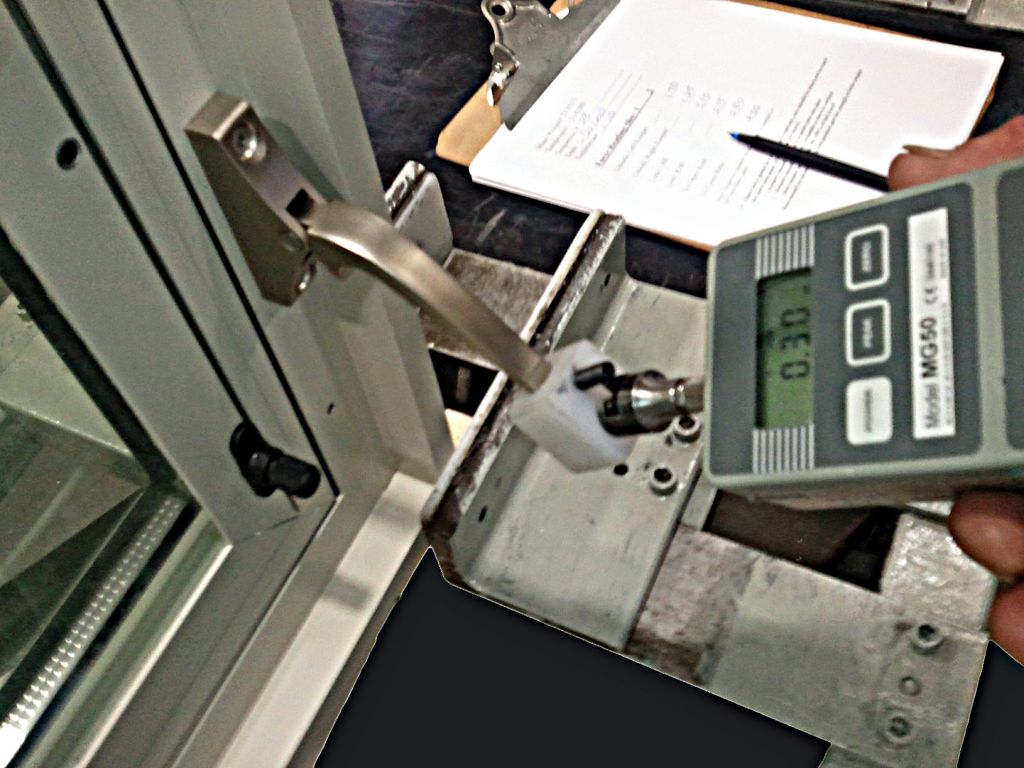
All four actions must meet accessibility requirements for force, motion, and reach, and be performed using one hand.
By grouping accessibility testing of “hardware and weather seal packages,” used across a range of individual products, one test assembly can qualify multiple individual products.
AAMA 513 is a useful laboratory test method, eliminating the variables of wind and weather that could affect operating force onsite, as well as addressing critical issues such as sampling, measurement precision, test equipment, methodology, and inspection.
Some manufacturers’ accessible windows perform the same as standard operable windows, with no reductions in air, water, thermal, or structural performance necessary. However, AAMA 513 allows some leeway, given the low locking forces and friction required to keep forces below 22.2 N (5 lbf). As noted in AAMA 513:
For accessible units, certain “reductions” in air infiltration and water resistance performance requirements shall be permitted, when compared to conventional requirements, given the desirability of minimizing operating forces.
Air Infiltration: 1.5 times the maximum air infiltration specified in AAMA/WDMA/CSA 101/I.S.2/A440, for the type and class tested is allowed but no greater than 1.0 l/s/m2 (0.2 cfm/sf) at 75 Pa (1.57 psf).
Water Resistance: …conduct [AW Class] water resistance testing at … 20% of inward acting design pressure for the project for AW Class, but not less than … 390 Pa (8 psf).
Design Wind Pressure: Design loads shall be based on project requirements, or a minimum of … 1920 Pa (40 psf) for AW products (whichever is greater).
AAMA 513 offers the following language for specifiers’ use:
Accessibility: As indicated on architectural drawings or project specifications, operable windows as required in occupied spaces shall meet the operating force limits and motion restrictions of ICC/ANSI A117.1 Section 309.4, when tested by an AAMA-accredited lab in accordance with AAMA 513. [Specifier’s Note: All code-required operable windows in a given occupied space may be required to meet these restrictions.]
Product design
It should not be expected standard, off-the-shelf operable windows can be adjusted to meet accessibility requirements, even when properly located in plan and section. Especially on large windows, achieving ease-of-operation with restricted motion will likely require specially designed compression weatherseals and low-friction hardware components. Hardware must be selected that ensures windows do not fall shut under their own weight, or require two hands to hold closed and lock simultaneously.
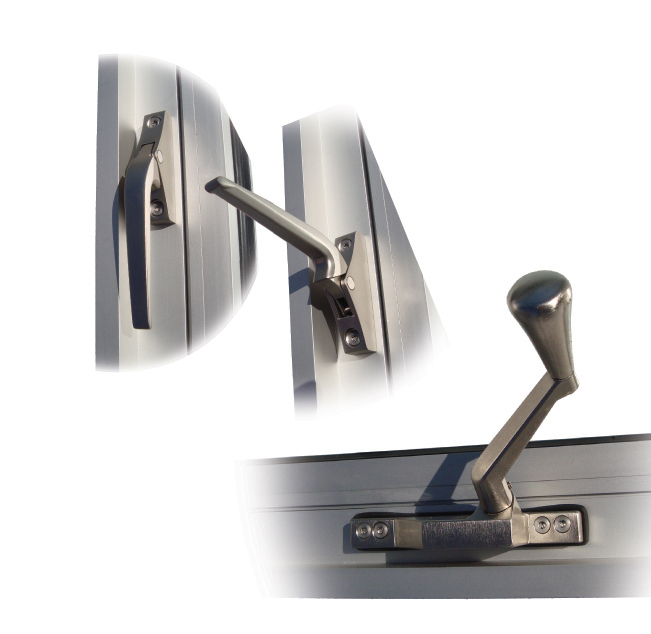
Project-out awning vents cannot usually be manually operated due to the requirement for hold-open friction. Out-swing casement vents cannot be hand-operated due to the requirement for one-hand operation. Roto-operators can be provided for both of these vent types, and provide mechanical advantage to overcome friction and help lift the weight of glazing infill. Project-in hopper vents require glass to be lifted, and typically are not fitted with roto-operators.

Hung windows require the occupant to lift the sash to open it, as well as to apply added force to overcome friction of weather-seals. Counter-balancing devices may not provide adequate force assistance when operating large windows. Similarly, operation of horizontal sliding sash requires both inertia and weather-seal friction to be overcome. This can limit the applicability of manually operated hung and sliding windows in accessible spaces under the current ICC/ANSI A117.1, Section 506.2, operating force maximum 37.7 N (8.5 lb) for vertical or horizontal sliding windows.
It is important to keep in mind motorized and mechanical operators have long been available for almost any window type; single- and double-hung, horizontal sliding, parallel-opening, or dual action; as well as the projected vents addressed previously in this article. As long as forces and motions necessary to activate and operate motorized and mechanical features meet the requirements of ICC/ANSI A117.1, these may be deemed accessible operator types.
The use of insect screens may limit accessibility options for certain vent modes and hardware packages. Typically, controls and cords for blinds, drapes, or shades are not required to be accessible.
Reach diagrams
One must locate and detail operable windows in a way that meets the ‘reach’ limitations of ACC/ANSI A117.1. One typical diagram is shown in Figure 2. Different height requirements apply to ‘obstructed’ and ‘front’ reach. There are also physical limits on clearances and protrusions, as well as approach area and threshold height (for balconies, terrace doors, and sliding glass doors).
Installation and maintenance
Production-line testing of operating force can help ensure windows leaving the factory are complaint with AAMA 513 requirements. Accessible operating window products require additional care in installation, final adjustment, and maintenance to achieve and maintain compliance. Plumb, square, and level installation is critical. Building settlement can affect operating forces, and necessitate post-installation adjustment.
Standard operable windows cannot always be adapted to achieve accessibility at a later date. The fieldwork necessary vary widely with application and window type. Adaptation may be as simple as hardware adjustment, or virtually impossible without complete reconfiguration of window openings and surrounding conditions. If adaptability is desired, the design team is strongly encouraged to develop a window accessibility plan early in the design process, then detail and specify products accordingly.
Terrace and patio doors
The same subcontractor that provides windows often provides doors for access to balconies, terraces, and patios; however, accessibility requirements for doors are somewhat more complex than for windows.
For barrier-free designs with swinging and sliding doors, the 2020 NBC describes a minimum clear width and clear floor space, threshold height, easy-to-operate hardware located at an accessible height, and closers with limited opening force as well as closing lag time.
The 2020 NBC states, “Every doorway that is located in a barrier-free path of travel shall have a clear width not less than 850 mm when the door is in the open position.” Furthermore, doorway thresholds “shall be not more than 13 mm higher than the finished floor surface and shall be beveled to facilitate the passage of wheelchairs.”
Per the 2020 NBC, door-operating devices shall “be operable at a height between 900 mm and 1100 mm above the floor.” The same operating force and means of operation for operable windows also applies to swinging and sliding doors. In addition, “When unlatched, a door in a barrier-free path of travel shall open when the force applied to the handle, push plate or latch-releasing device is not more than
a) 38 N in the case of an exterior swinging door,
b) 22 N in the case of an interior swinging door, or
c) 22 N in the case of a sliding door.”
For balcony access requirements, the 2020 NBC notes a clear width of not less than 800 mm (31.5 in.) Various AHJs and project specifications for accessibility also will note kick plates need to be provided on hinged doors. Adequate manoeuvring space must be provided on the balcony, and on the latch side of the door. Swinging terrace door thresholds must not exceed 13 mm (0.5 in.) in height and must be bevelled, requiring careful design to avoid compromising weatherability in high-rise applications. In the interest of weatherability, some leeway is provided for sliding glass door sill height in certain AHJs.
As with operable windows. some Canadian provinces, territories, and municipalities adopt more stringent standards and guidelines than the NBC for terrace and patio doors.
Code requirements notwithstanding, accessible terrace and patio doors may be a desirable feature of the spaces being designed, making it easier for all occupants to enjoy balcony spaces, with easily operable door panels and lower-profile thresholds.
Conclusion
Whether or not required by code, accessible operating windows may be a desirable feature of occupied spaces in skilled nursing and personal care facilities, multi-family buildings, hotels, classrooms, and dormitories. Accessible operating windows help ensure fresh air and a connection with the outdoors are made accessible to people with physical disabilities. Product development and compliance testing efforts at most manufacturers are underway, to provide a broad selection of accessible window types, both manually operated and motorized.
Notes
1 The portion in italics comes from ICC/ANSI A117.1. (back to top)

This article was originally authored by Steve Fronek, PE, who dedicated 43 years to educating and improving the fenestration industry. In 2024, he retired as vice president of technology from Wausau Window and Wall Systems, a brand of Apogee Architectural Metals. Throughout his career, Fronek served in a multitude of industry association leadership roles including for 30 years with the Fenestration and Glazing Industry Alliance (FGIA) and previously the American Architectural Manufacturers Association (AAMA), where he chaired 2011-12 board of directors and more than 40 committees, authored at least 25 technical standards, and earned many awards and recognitions.

Steve Gusterson, FCSC, CTR, is vice president of preconstruction design in Canada for Alumicor, a brand of Apogee Architectural Metals. Based in Toronto, he has held numerous roles with Alumicor throughout his 40-year career. For more than 20 years, he also has served as an active member of Construction Specifications Canada (CSC), volunteering on the Technical Representative Program and numerous committees, as the Toronto Chapter’s chair and director, and as a Certified Technical Representative (CTR) instructor. He was inducted into the CSC College of Fellows (FCSC) in 2021. In 2023, he was honoured with CSC’s highest accolade, the Life Membership Award. Gusterson also is a member of the Ontario Glass and Metal Association and a contributing external member of the Architectural Technology and School of Science & Engineering Technology Program Advisory Committee for Durham College.

Lisa May is the director of preconstruction and architectural services for Alumicor, EFCO Tubelite, and Wausau Window and Wall Systems – all brands of Apogee Architectural Metals. For 20 years, she has assisted architects, contractors, and building teams with aluminum fenestration and framing product selections. She regularly shares her knowledge and industry expertise as an author, a continuing education presenter, and a member FGIA, the National Glass Association (NGA), and the U.S. Green Building Council (USGBC). She can be reached at lmay@apog.com.
Sign up for our weekly newsletter
Construction Canada weekly newsletters give the latest AEC industry news for those who build, design, engineer, specify, renovate or operate in the built environment.
Related Products & Services
Read the Latest Issue