Comparing open-cell and closed-cell spray foam

Spray polyurethane foam (SPF) insulation represents a different approach to building enclosure performance compared to traditional fibrous or board-based insulation materials. Rather than relying solely on thermal resistance, spray foam is applied as a liquid that expands in place, conforming to substrates and sealing gaps as it cures. This in-situ application enables it to function not only as insulation but also as a key component of the air-control layer within an assembly.
This dual role—thermal insulation combined with air sealing—is central to its performance. In many buildings, uncontrolled air leakage is a primary driver of energy loss and moisture movement. By adhering directly to framing members, sheathing, and penetrations, spray foam minimizes unintended air pathways, reducing convective heat transfer and limiting the transport of moisture-laden air into vulnerable parts of the assembly. As a result, SPF systems often deliver performance exceeding expectations based solely on R-value.
Beyond air sealing, spray foam also contributes to the overall continuity of the building enclosure. As it is applied as a continuous layer, it can reduce reliance on multiple materials and transitions to achieve effective control of heat, air, and, in some cases, moisture. This can simplify detailing and improve constructability, particularly in complex geometries or assemblies with numerous penetrations.
However, not all spray foams perform the same way. The term “spray foam” encompasses two distinct material types, open-cell and closed-cell, each defined by its internal cellular structure. As the foam expands during application, it forms millions of tiny cells. In closed-cell foam, these cells remain intact and fully enclosed, creating a dense, rigid material with low permeability to air and moisture. In open-cell foam, the cell walls rupture during expansion, forming an interconnected network of air-filled pockets that results in a lighter, softer, and more vapour-permeable material.
These structural differences are fundamental. They influence not only density and thermal resistance, but also how each material interacts with air, vapour, and water within the building enclosure. Closed-cell foam tends to resist the movement of heat, air, and moisture, while open-cell foam allows assemblies to remain more vapour open, supporting drying under the right conditions.
Understanding these distinctions is critical when specifying spray foam systems. While both materials provide effective air sealing and insulation, their roles within an assembly and impact on long-term durability can differ significantly.
Designing with open-cell spray foam insulation
Open-cell spray foam is often mischaracterized as a lower-performance alternative to closed-cell insulation. It serves a fundamentally different role within the building enclosure. Rather than functioning as a vapour barrier, open-cell foam is intentionally vapour permeable, enabling assemblies to manage and release incidental moisture over time. When understood and applied correctly, it becomes a powerful tool for improving durability not by resisting all moisture, but by allowing assemblies to tolerate and recover from it.
One of the defining characteristics of open-cell spray foam is its high vapour permeability. Depending on thickness, it can exceed 10 perms, placing it firmly within the category of vapour-open materials. This permeability allows moisture vapour to move through the assembly, enabling drying in response to changing environmental conditions. In practice, small amounts of moisture intrusion are inevitable whether introduced through minor air leakage, seasonal vapour drives, or incidental wetting during construction. The critical question is not whether moisture enters the assembly, but whether it can dissipate.
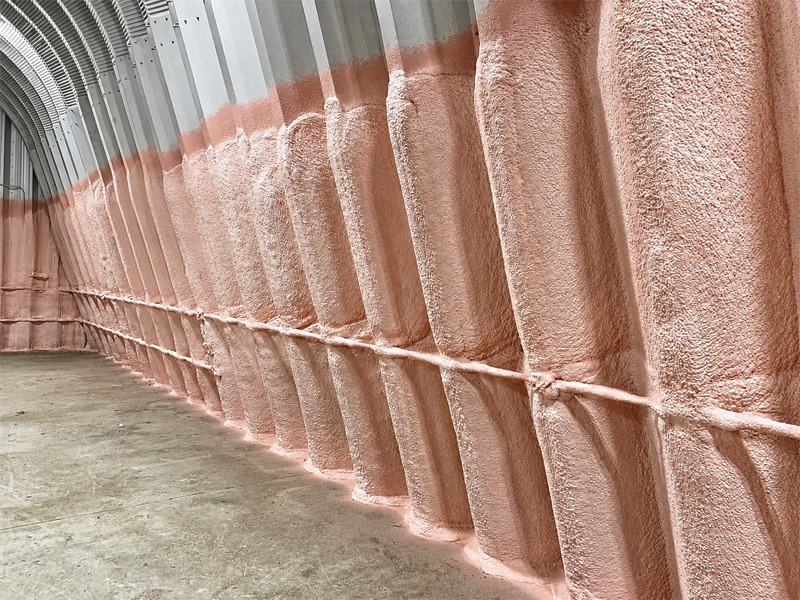
In this context, open-cell foam supports a more resilient approach to enclosure design. Rather than relying solely on impermeable layers to prevent moisture movement, a strategy that can be difficult to execute perfectly in the field, it allows assemblies to recover when moisture is introduced. This drying potential reduces the risk of accumulation at critical interfaces, where mould growth, material degradation, and loss of thermal performance often originate.
A key distinction must be made between air control and vapour control, two functions that are often confused in practice. Open-cell spray foam can perform effectively as an air barrier when installed with sufficient thickness and continuity. This is a critical attribute, as air leakage remains the dominant mechanism for moisture transport in buildings, often moving significantly more moisture than vapour diffusion alone. By restricting air movement, open-cell foam addresses one of the primary drivers of moisture-related risk within assemblies.
At the same time, its vapour permeability ensures this control does not compromise drying. This combination of being airtight yet vapour open makes open-cell foam particularly valuable in assemblies where both control and resilience are required. It allows designers to manage the primary moisture transport mechanism while maintaining a drying pathway when moisture is introduced.
From an application standpoint, open-cell foam is well-suited for assemblies where drying potential is beneficial or necessary, particularly in Canadian climates characterized by long heating seasons and seasonal reversals in vapour drive. In these conditions, assemblies must be able to respond to changing moisture gradients throughout the year. As a result, material selection is often less about geographic location alone and more about the assembly’s configuration and drying strategy.
For example, in unvented roof assemblies such as cathedral ceilings, insulated along the underside of the roof deck, open-cell foam supports inward drying, reducing the risk of long-term moisture accumulation. This is especially relevant where roofing materials or membranes limit exterior drying.
Another common application is in wall assemblies incorporating vapour-impermeable exterior components, such as certain sheathings or claddings. In these cases, maintaining inward drying potential becomes critical, and open-cell foam helps provide a pathway for moisture to dissipate toward the interior, provided appropriate interior finishes and ventilation strategies are in place.
In addition to its moisture-related benefits, open-cell foam offers strong acoustic performance. Its lower density and interconnected cellular structure enable effective sound absorption, making it well-suited for interior partitions, multi-unit residential construction, and spaces where acoustic separation is a design priority. While often considered a secondary attribute, this performance can significantly enhance occupant comfort.
Despite these advantages, open-cell foam is not a universal solution. Its lower R-value per inch, typically in the range of R-3.5 to R-4, means that thicker assemblies may be required to meet energy code requirements compared to closed-cell alternatives. More importantly, its vapour permeability means it cannot function as a vapour control layer where one is required by code or climate conditions. In colder Canadian climates, additional vapour control strategies may be necessary to limit outward vapour diffusion during winter months.
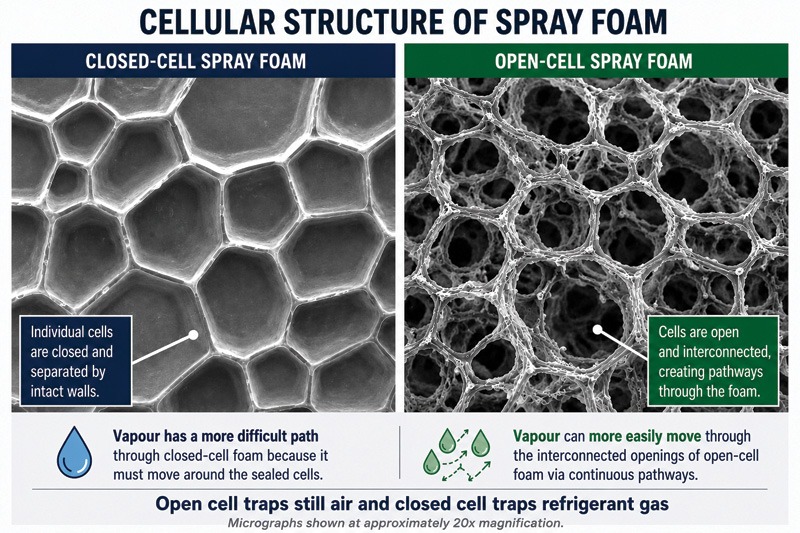
It is also important to recognize that open-cell foam does not provide bulk water resistance. It should not be relied upon as a drainage plane or water-control layer, and must be integrated into a broader enclosure system that includes appropriate water management strategies. As with any material, its performance is highly dependent on how it is detailed and co-ordinated within the assembly.
Ultimately, the value of open-cell spray foam lies in its ability to contribute to a more balanced enclosure strategy, one recognizing both control and recovery as essential to long-term performance. Rather than attempting to eliminate all moisture movement, it enables assemblies to manage and release moisture in a controlled manner.
By combining effective air control with vapour permeability, open-cell foam supports assemblies that are more adaptable to real-world conditions. This shift from resistance to resilience is central to improving durability, reducing risk, and maintaining performance throughout the building’s lifespan. When used in the appropriate context, open-cell spray foam becomes not a compromise, but a deliberate design choice.
Designing with closed-cell spray foam insulation
If open-cell spray foam is the building enclosure equivalent of “letting the assembly breathe,” then closed-cell spray foam is the more defensive approach, controlling moisture movement and limiting its intrusion before it ever reaches the assembly’s interior components. Both open- and closed-cell insulation have their place; both can perform exceptionally well. But they solve building science problems in two very different ways. The industry often makes the mistake of treating spray foam as a single category, when open-cell and closed-cell products operate with almost opposite strategies. The open-cell foam strategy emphasizes drying potential, whereas the closed-cell foam strategy emphasizes control.
Closed-cell spray polyurethane foam (ccSPF) has become one of the most misunderstood insulation types in the design and construction community. Depending on who is asked, it is either the greatest advancement in modern insulation technology or the villain responsible for every building science issue since the invention of vinyl wallpaper. The reality, as usual, is somewhere in the middle and mostly comes down to understanding the second law of thermodynamics and the four control layers, rather than LinkedIn opinions and recommendations.
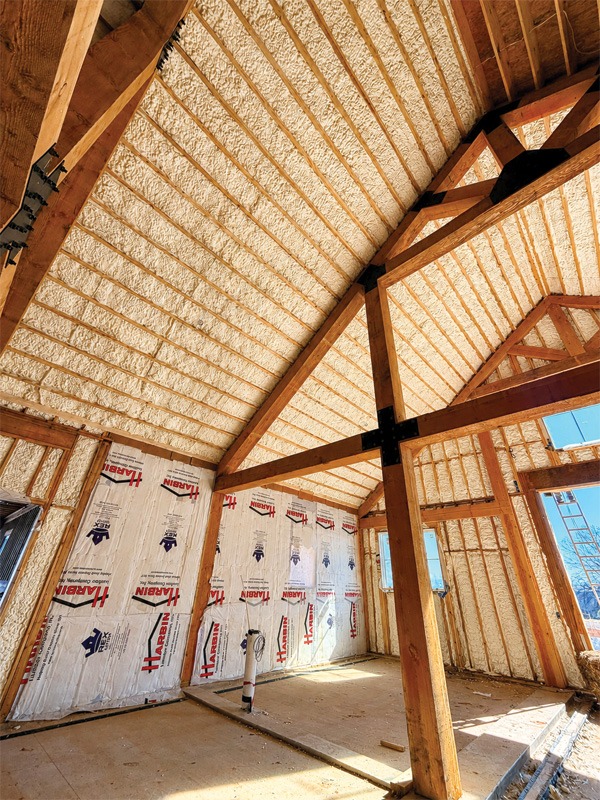
ccSPF is a medium-density insulation material combining thermal resistance, air control, vapour control, and moisture resistance into a single monolithic layer. At approximately 0.91 kg (2 lb) density, the spray-applied material contains millions of tiny, closed cells filled with a refrigerant gas, allowing it to achieve a higher thermal performance value, typically around R-6 to R-7 per inch, depending on the location of the thermal test. The true benefit of ccSPF is not simply the high-performing R-value—plenty of materials can insulate. The real strength lies in its ability to control multiple environmental forces simultaneously (air, vapour, moisture, thermal, and dynamic loading).
One of the most important characteristics of closed-cell spray foam is its low vapour permeance. At sufficient thicknesses, typically between 25.4 and 50.8 mm (1 and 2 in.), depending on the product or manufacturer, it can function as a Class II vapour retarder or even approach vapour barrier performance. This reduces vapour movement through the assembly in cold Canadian climates. For a significant portion of the heating season, interior conditions are warmer and more humid than the exterior environment. Vapour naturally wants to migrate outward (exterior relative humidity [RH] is lower than interior RH most of the time). If that moisture reaches a condensing plane within the enclosure, problems begin. Wet sheathing, mould growth, corrosion, reduced thermal performance, and, eventually, durability issues all stem from the same basic mechanism.
Closed-cell foam can reduce this moisture risk by restricting vapour movement directly at the monolithic insulation layer. Additionally, it also functions as an air barrier when installed continuously and at the proper thickness. This distinction is critical because while vapour diffusion gets most of the attention in conversations, air leakage is usually the real problem. A small air leak can transport far more moisture into an assembly than vapour diffusion alone. A small gap around a penetration or an imperfect transition detail can allow significant amounts of warm, humid air to enter cold assemblies over the course of a winter.
The spray-applied nature of the material allows it to conform to irregular substrates, seal transitions, and reduce uncontrolled air movement in ways that board-stock materials and membranes often cannot. Architectural details always look beautiful on a screen or drafting table; however, they can look like a jumbled mess on the jobsite. This is why constructability matters just as much as theoretical performance, aligning realistic performance with realistic construction.
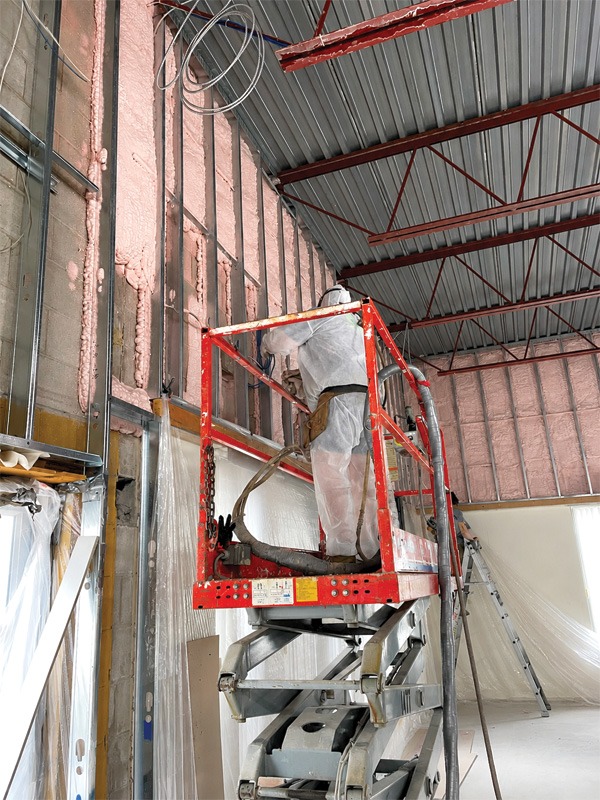
Closed-cell foam continues to perform well in difficult applications because it reduces the number of materials required for multiple control functions. In many assemblies, it can reduce the need for separate vapour retarders, separate air barriers, or additional transition detailing complexity. This is particularly valuable in retrofit projects, where existing conditions are often unpredictable, and space limitations become critical.
Many older buildings were never designed with modern air barriers or vapour control strategies. They rely heavily on mass, drying potential, and thermal storage. Introducing interior insulation into these assemblies dramatically alters the wall temperature profile. Suddenly, the original masonry becomes colder during winter months, increasing the risk of condensation and freeze-thaw cycling. In these situations, ccSPF is often used specifically for its ability to limit interior moisture transport toward the masonry while providing high thermal resistance at a minimal thickness. In many retrofit scenarios, every inch counts. Adding 152.4 and 203.2 mm (6 to 8 in.) of insulation inward may not be feasible due to window transitions, floor space loss, structural limitations, or architectural constraints. Closed-cell foam allows designers to achieve higher effective thermal resistance with reduced assembly thickness.
Of course, like every material in building science, ccSPF is not magic. It does not eliminate the need for proper detailing and sequencing. It does not compensate for bad water management, and despite what some sales presentations may imply, it still simply cannot violate the second law of thermodynamics.
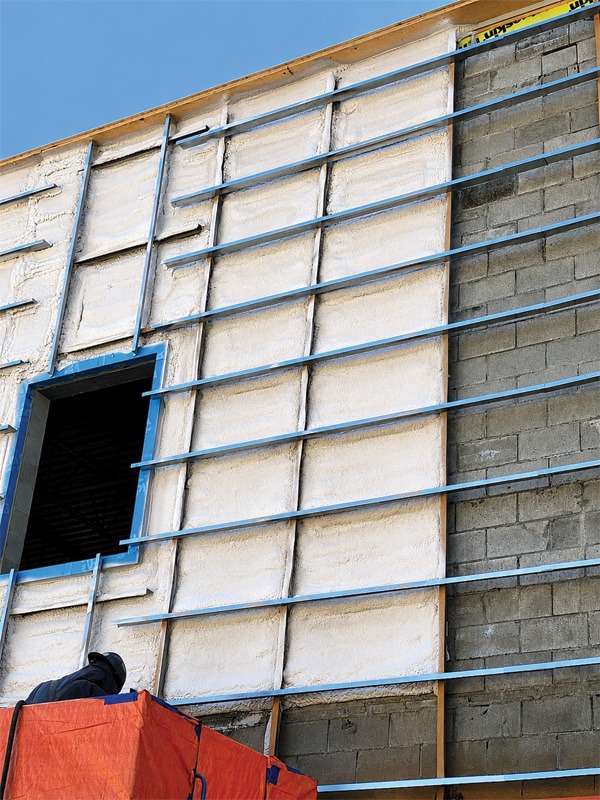
Bulk water intrusion remains the largest threat to the building enclosure’s durability. Closed-cell foam should never be used as an excuse to ignore flashing design, drainage strategies, or proper sequencing. If rainwater is repeatedly entering the assembly, it will eventually become very apparent to everyone involved. Another common misconception is that vapour impermeable assemblies are automatically “bad” because they reduce drying potential. Just like storytelling, there are two sides to every wall. If drying occurs in one direction, the enclosure can be very effective.
Drying potential is important, but so is moisture loading. An assembly experiencing minimal moisture intrusion in the first place may not require significant drying capacity. Conversely, highly vapour-open assemblies can still fail if moisture accumulation exceeds the system’s drying capacity. Good enclosure design is always about moisture balance.
In many Canadian climate zones, particularly those with long heating seasons, limiting interior-to-exterior vapour transport remains a highly effective moisture management strategy. Closed-cell foam can provide exceptional control when used appropriately. This becomes even more important in buildings with elevated interior humidity, such as natatoriums, hospitals, food processing facilities, or high-occupancy residential buildings. In these environments, vapour drives can be significant, and controlling moisture movement becomes critical to long-term performance.
Closed-cell foam also offers additional benefits, including its moisture resistance. Unlike fibrous insulation materials, ccSPF does not readily absorb or retain bulk water. Its closed cellular structure limits water absorption and maintains thermal performance even in demanding environments. This characteristic has made it particularly valuable for below-grade applications, crawlspaces, foundation walls, and areas with elevated moisture.
There is also a structural component that often gets overlooked. Due to its density and adhesion characteristics, ccSPF can contribute to assembly stiffness and substrate reinforcement in certain applications (it has been shown to increase racking strength up to 300 per cent). While it should never replace structural engineering, its ability to bond continuously to substrates can improve overall assembly rigidity and reduce air movement pathways within assemblies.
Of course, no conversation about closed-cell foam can avoid the topic of carbon. The industry has evolved significantly over the past decade. Earlier generations of closed-cell spray foam used blowing agents with high global warming potential, raising legitimate concerns about embodied carbon. Today, many formulations have transitioned to hydrofluoroolefin-based (HFO) blowing agents, which have dramatically reduced global warming potential.
The carbon conversation surrounding insulation materials also needs to move beyond simplistic “good material versus bad material” arguments. Operational carbon, durability, resilience, transportation, assembly thickness, service life, and control layer integration all influence a building’s real-world environmental performance. Sometimes, the lowest embodied carbon material on paper may require significantly thicker assemblies, additional membranes and fastening systems, increased transportation volume, or more complicated installation sequencing.
Ultimately, closed-cell spray foam remains one of the most effective tools available for controlling heat, air, vapour, and moisture within a single material layer. When used appropriately, detailed correctly, and integrated into a well-designed enclosure strategy, it can significantly improve durability, energy performance, and resilience.
Conclusion
Ultimately, the discussion surrounding SPF should move beyond simplified debates about whether open-cell or closed-cell products are inherently “better.” Both materials can contribute to high-performing building enclosures when their properties are aligned with the specific needs of the assembly, climate, and occupancy conditions.
For designers, the more important consideration is understanding how each material manages heat, air, vapour, and moisture within the enclosure system. Some assemblies benefit from drying potential and vapour permeability, while others require greater control and resistance to moisture transport. In many cases, durability does not depend on maximizing a single performance characteristic, but on achieving the appropriate balance between control and resilience.
As building enclosures continue to evolve in response to energy efficiency targets, carbon reduction goals, and increasing climate variability, material selection will require a more nuanced understanding of long-term performance. When specified thoughtfully, installed by qualified professionals, and integrated correctly, both open-cell and closed-cell spray foam can serve as effective tools within durable, high-performing enclosure strategies. In Canada, SPF installers must be trained and licensed in accordance with CAN/ULC-S705.2 and follow the manufacturer’s installation requirements.
Authors

Rockford Boyer, B. Arch. Sc., MBSc, BSS, is an experienced building science leader at Elastochem with more than
20 years of expertise in sustainable building design. He holds an undergraduate degree in civil engineering and architecture and a master’s in building science. He is also a member of Passive House Canada and the Ontario Building Envelope Council (OBEC). He is also a part-time professor at Sheridan College, teaching in the architectural technology program and sharing his knowledge and expertise with future generations of architects and designers.

As the vice-president of marketing at Elastochem, Betsy Cosper combines her expertise in building science, product commercialization, and sustainability to bring innovative insulation technologies to market. She has held international leadership roles across the construction, horticulture, and advanced material sectors and holds a BSc (Hons.) and an MBA.
Sign up for our weekly newsletter
Construction Canada weekly newsletters give the latest AEC industry news for those who build, design, engineer, specify, renovate or operate in the built environment.
Products & Services

Read the Latest Issue