How heat pump advances are changing cold-climate design
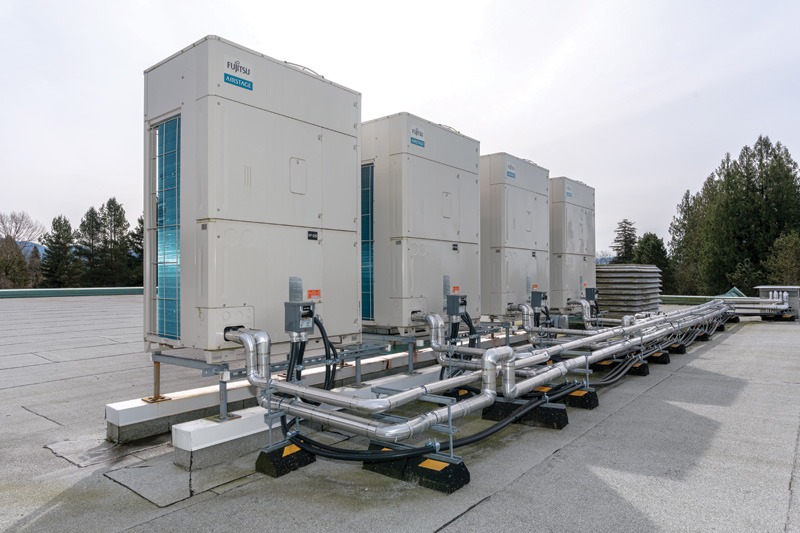
For decades, heat pumps in cold climates were treated as a compromise technology—acceptable in shoulder seasons, questionable when temperatures dropped, and often paired with a fossil-fuel backup system. That perception is changing quickly—not gradually, but decisively.
Today’s generation of air-source heat pumps, particularly inverter-driven ductless and variable refrigerant flow (VRF) platforms, is no longer a niche product. They are becoming primary heating systems in residential and commercial applications across North America. The shift is driven by a combination of compressor and refrigerant advancements, improved system design flexibility, and increasingly sophisticated controls allowing equipment to respond dynamically to real-world building loads.
For contractors and building professionals, the implications are significant. Design assumptions are changing, installation practices are evolving, and system selection demands a more nuanced understanding of performance at part load and in low-ambient conditions, not just nameplate capacity.
Cold climate performance
One of the most notable advancements in heat pump technology is cold-climate performance at low outdoor ambient temperatures. Systems that once required backup heat in subfreezing conditions can now operate well below -29 C (-20 F), depending on configuration and sizing.
Modern cold-climate ductless systems are designed specifically for low-temperature environments, and many manufacturers now offer models intended for cold-climate performance. Some systems can maintain full rated heating capacity at temperatures as low as -26 C (-15 F) and up to 90 per cent capacity at -30 C (-22 F), while achieving seasonal efficiencies as high as 33.5 Seasonal Energy Efficiency Ratio 2 (SEER2) in single-zone configurations.
These systems are not simply “rated” for cold weather. The focus is on maintaining usable heating output even when conditions fall outside typical design expectations.
Key features supporting this performance include enhanced inverter compressors, improved defrost logic, base pan heaters to manage condensate freeze protection, and redesigned coil and fan assemblies intended to maintain airflow stability in extreme conditions.
From a contractor’s standpoint, the most important change is conceptual: cold-climate heat pumps are no longer supplemental equipment. When properly sized using real heating load data, they are increasingly capable of serving as the primary heating source even at higher latitudes.
Matching load in real time
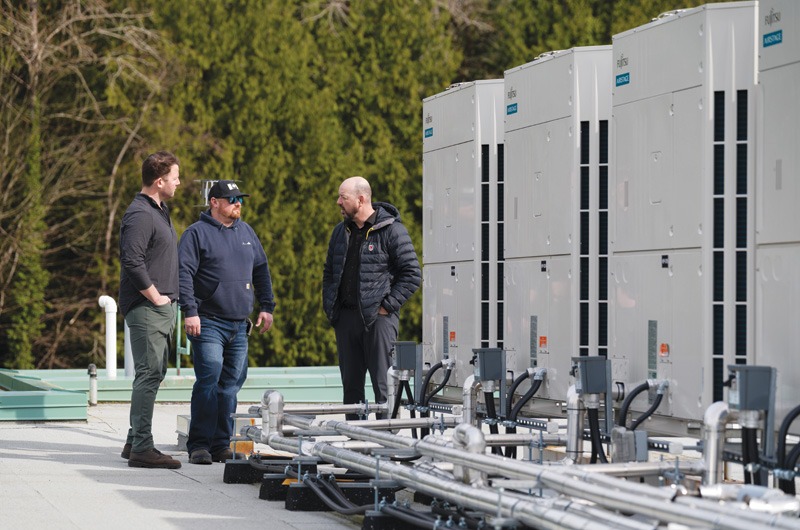
If one advancement defines modern HVAC performance, it is inverter-driven variable-speed compressors.
Traditional HVAC systems operate in binary mode: on or off. This leads to frequent cycling, which is inherently inefficient and mechanically stressful. Equipment is typically oversized to meet peak design conditions, resulting in most systems spending the majority of their operating life short-cycling under partial load.
Inverter-driven systems change this entirely. By continuously modulating compressor speed, they align output with actual building demand in real time. The result is smoother operation, improved humidity control, and significantly reduced energy waste. In ducted systems, it also means less velocity noise.
A variable-speed system behaves much like a vehicle’s cruise control. It continuously adjusts output to maintain a steady, comfortable indoor environment despite changing external loads, such as solar gain, building occupancy, and outdoor temperature swings.
Published research from Pacific Northwest National Laboratory (PNNL) and Oak Ridge National Laboratory (ORNL), and ASHRAE-related industry studies, suggests that retrofit conversions from fixed-speed to variable-speed or inverter-driven HVAC systems can reduce energy consumption by roughly 20 to 40 per cent, depending on building type, climate, and operating conditions.1,2,3
Light commercial VRF
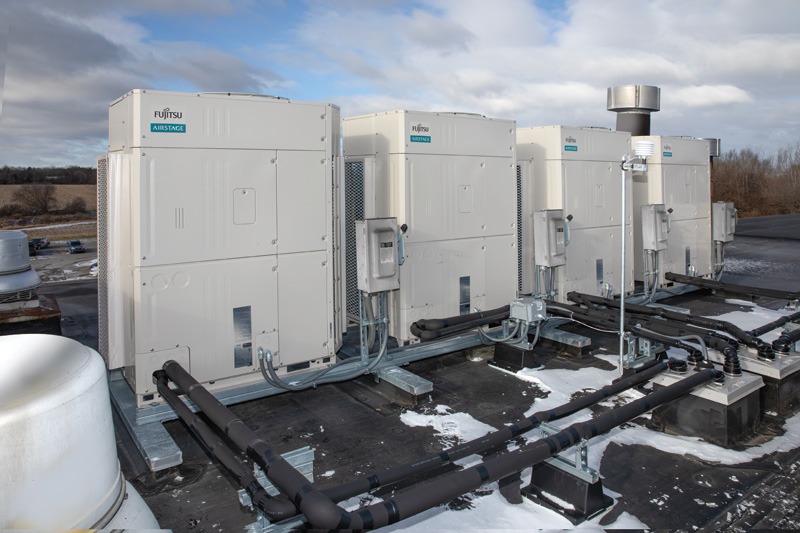
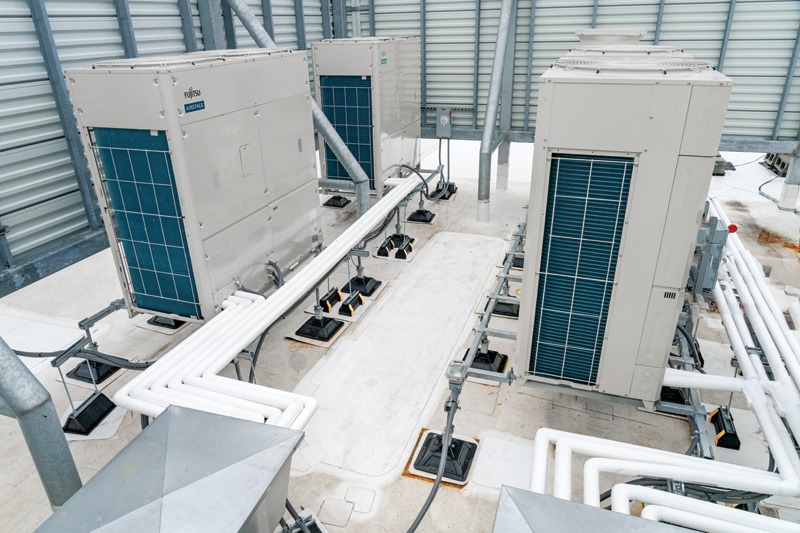
If a facility requires greater capacity and zoning flexibility than mini-split systems can economically provide, but a 105.5-kW (30-ton) VRF system is oversized for the application, intermediate system options are available.
On the light commercial side, VRF systems have evolved into highly adaptable platforms for multi-zone conditioning in offices, retail, education, and multifamily applications.
One of the primary differentiating factors between light commercial and commercial VRF systems is the power source needed at the installation site. Some light commercial VRF products use single-phase power. As a result, the property owner can enjoy many of the benefits of a VRF system without upgrading to three-phase power.
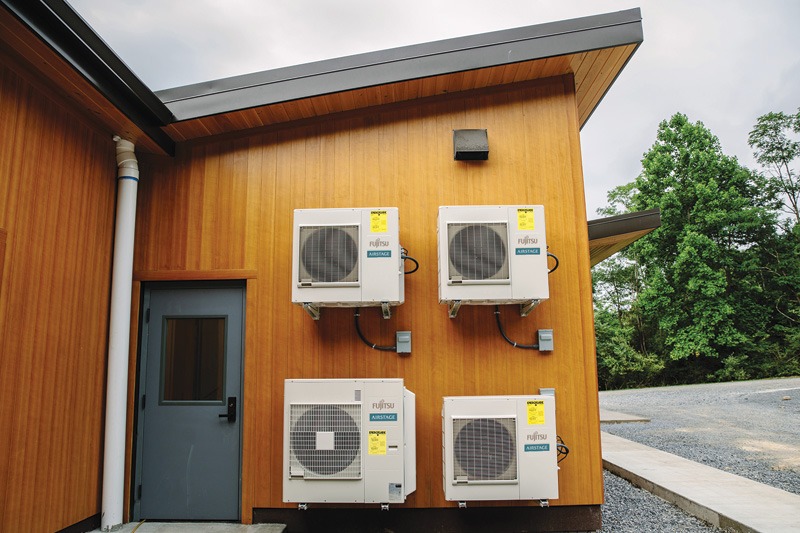
These systems reflect several key trends in the market: smaller equipment footprints, higher efficiency ratings, and expanded system design flexibility.
As expected, the capabilities of single-phase VRF systems fall between those of mini-splits and three-phase VRF systems: total system capacities ranging from 7 to 17.6 kW (2 to 5 tons), the ability to support up to a dozen zones with a single outdoor unit, and increased total equivalent piping length.
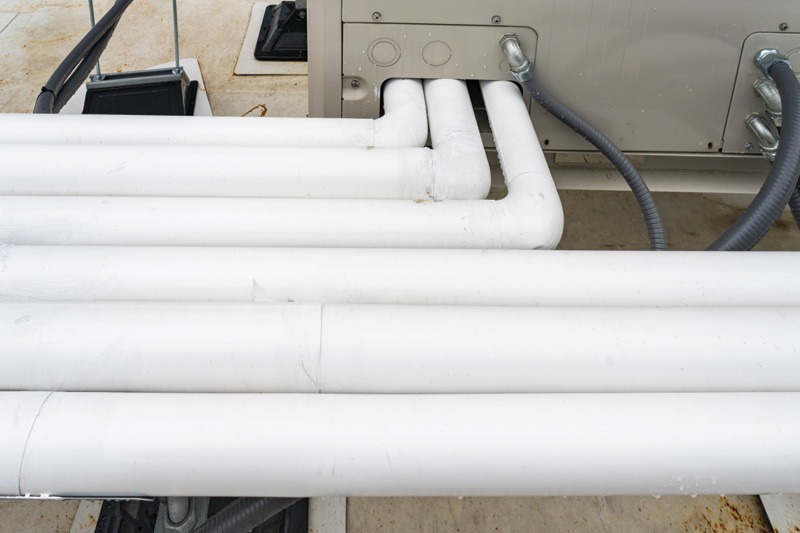
These improvements matter in practical design terms. Longer allowable piping distances reduce constraints on equipment placement. Higher system diversity ratios allow designers to better align system capacity with actual building load profiles rather than theoretical peak demands. Smaller footprints help in scenarios where mechanical space is limited.
Noise levels and refrigerant charge management have also improved, simplifying compliance and installation in dense urban or multifamily environments.
Heat recovery provides simultaneous heating and cooling
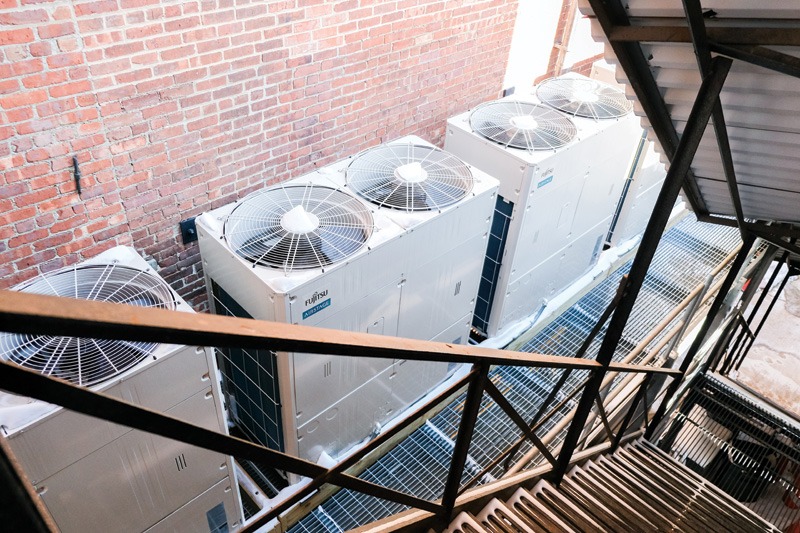
Many building professionals are already familiar with three-phase VRF equipment. These systems can exceed 105.5 kW
(30 tons) per system, accommodate up to 64 zones, and offer very generous total equivalent piping length. Given the simplicity of scaling these systems, there is almost no commercial application in which VRF cannot serve as the primary heating and cooling source.
There is less awareness surrounding heat recovery VRF, however. This is perhaps the most impactful recent technological development. Unlike heat pump-only systems, heat recovery VRF can provide simultaneous heating and cooling to different zones within the system. This is achieved using refrigerant branch units (RBUs) that redirect energy between zones as required.
In practical terms, heat rejected from cooling zones can be used to serve zones that are actively calling for heat. This significantly improves overall system efficiency, particularly beneficial in buildings with mixed thermal loads.
Mixed thermal loads can result from building occupants controlling their own spaces, which is common in office buildings, multifamily facilities, hospitals, etc. Buildings with varying solar exposure can also benefit from heat recovery. For example, solar loads will vary greatly between the north and south sides of an all-glass high-rise.
A2L refrigerants
Refrigerant transition is another major driver in the industry. The shift toward A2L refrigerants, such as R-32 and R-454B, is being driven by evolving environmental regulations and global climate policy. A2L refrigerants are a class of low-global-warming-potential (GWP) refrigerants classified by ASHRAE Standard 34 as having lower toxicity (“A”) and lower flammability (“2L”) characteristics.
In Canada, adoption timelines and code alignment for A2L refrigerants have progressed gradually through Natural Resources Canada (NRCan) and provincial regulatory authorities. Although A2L-based equipment is already widely available, variations in code adoption and enforcement have slowed the transition in the field. By comparison, the United States has moved more aggressively toward adopting A2L refrigerants through the Environmental Protection Agency’s (EPA) phasedown schedule under the American Innovation and Manufacturing (AIM) Act of 2020.
A2Ls have a lower global warming potential. Refrigerants such as R-32 represent a substantial reduction in environmental impact while improving system efficiency. It is also very efficient in cold climates, specifically.
For builders and HVAC professionals, the transition is not as disruptive as early concerns may have suggested. While A2Ls require updated safety considerations, including refrigerant detection systems in certain applications, the installation process and service procedures remain largely unchanged. The key takeaway for the field is that A2L adoption is not a future event; it is already underway.
Cloud-based monitoring and serviceability
As heat pump systems become more capable, controls and diagnostics are evolving rapidly to match.
Heat pump manufacturers are improving service and commissioning workflows through remote connectivity and data-driven diagnostics. Some cloud-based platforms provide real-time monitoring of VRF and mini-split systems and support integration with third-party equipment.
Building management systems (BMS) can include enhanced diagnostic tools designed to streamline service response. Alarm notifications can include decision-tree style troubleshooting guidance, and error codes are linked directly to service documentation and recommended procedures. These systems benefit everyone involved in an HVAC system, from building occupants and owners to the commissioning agent and installing contractor.
In practical terms, this changes field operations in several ways. It provides faster fault isolation and diagnosis, reduced service call times, improved first-time fix rates, and the ability to pre-stage replacement parts before dispatch.
For contractors, this level of visibility avoids or reduces downtime and improves service efficiency. It also supports a broader shift toward predictive and proactive maintenance strategies. In many scenarios, a maintenance issue can be remotely identified and resolved before the system shuts down.
Market trends
Across North America, heat pump adoption is accelerating due to numerous factors: environmental policies, rising energy costs, and improved cold-climate performance.
While adoption rates vary by region, the overall trend is clear: heat pumps have transitioned from supplemental systems to primary HVAC solutions in both residential and commercial markets. VRF and ductless systems are seeing particularly strong growth in retrofits, where existing ductwork limitations or building constraints make traditional equipment less practical.
The ability to integrate inverter-driven heat pumps with ducted systems is also a major factor. On the residential side, there is a wide variety of air handler options. For large commercial ducted applications, direct exchange (DX) kits permit engineers and installers to integrate custom-built refrigerant coils with existing air handlers of almost any capacity or configuration.
The increasing popularity of multifamily housing is also driving adoption, as building owners seek to balance occupant comfort with long-term operational efficiency. Providing individualized zone control, along with simultaneous heating and cooling in heat recovery systems, aligns with these requirements.
What is emerging is not simply a better heat pump—it is an integrated HVAC platform combining inverter-driven compressors, advanced refrigerants, modular system architecture, and cloud-based diagnostics.
For general contractors, architects, engineers, and HVAC specialists, the implications are straightforward but important: system selection now requires a deeper understanding of part-load performance, zoning strategy, refrigerant compliance, and controls integration than ever before.
The result is a technology landscape where the question is no longer whether heat pumps can perform in cold climates, but how far their application can extend across the built environment.
Notes
1 For additional research on variable-speed packaged rooftop units, see Pacific Northwest National Laboratory (PNNL), “Energy Performance Evaluation of Variable-Speed Packaged Rooftop Units Using Field Measurements and Building
Energy Simulation.”
2 For further analysis of variable-speed control strategies and associated energy savings, consult M. Hydeman et al., “Savings with Variable Speed Control,” Energy Engineering, Vol. 111, No. 3.
3 For a comparison of variable refrigerant flow (VRF) and variable air volume (VAV) system energy performance across multiple climate zones, review Oak Ridge National Laboratory (ORNL), “Evaluation of Energy Savings Potential of Variable Refrigerant Flow (VRF) from Variable Air Volume (VAV) Systems in U.S. Climate Locations.”
Author

Lennart Stahl Sr., applied systems engineer at GENERAL HVAC Solutions America, Inc (formerly Fujitsu General America, Inc.), has more than
30 years of experience working with climate solutions through their entire life cycle, from concept through development and market introduction, and has expertise in variable refrigerant flow (VRF) solutions. Lennart has published articles and white papers and is a strong innovator, receiving numerous industry patents and awards.
Sign up for our weekly newsletter
Construction Canada weekly newsletters give the latest AEC industry news for those who build, design, engineer, specify, renovate or operate in the built environment.
Products & Services

Read the Latest Issue