Exclusive: Inside a net-zero living laboratory
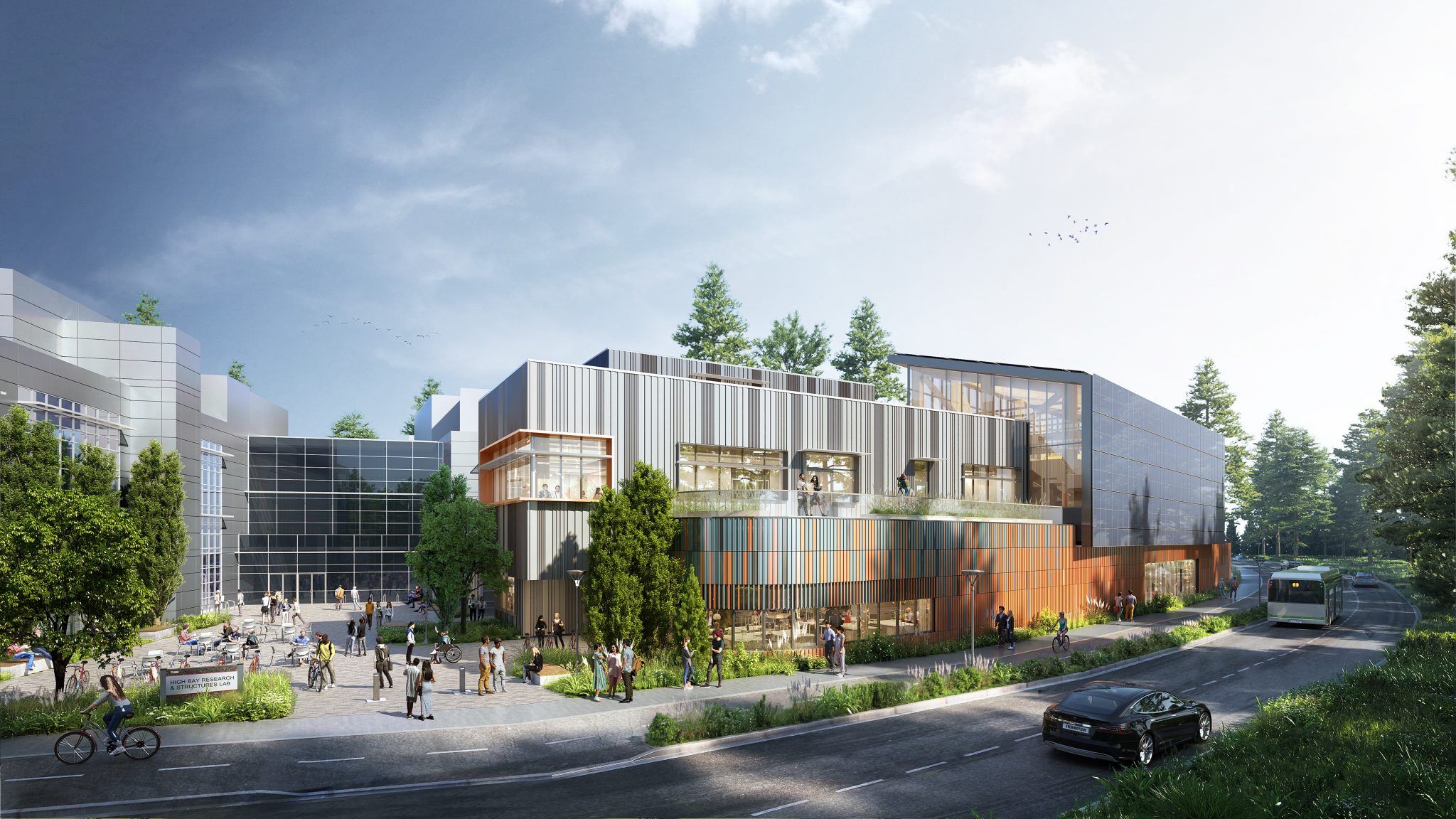
Following our earlier feature on the University of Victoria’s (UVic) expanded civil engineering campus, Construction Canada spoke with Esteban Matheus, associate at DIALOG, to dig deeper into how the University of Victoria’s new civil engineering expansion is reshaping the relationship between architecture, education, and climate action.
In this follow-up interview, Matheus reflects on designing net-zero, mass-timber buildings as “living laboratories,” and on the close collaboration with faculty that helped embed research, landscape, and performance directly into the campus fabric.
How are the structural properties of mass timber being monitored in real time?
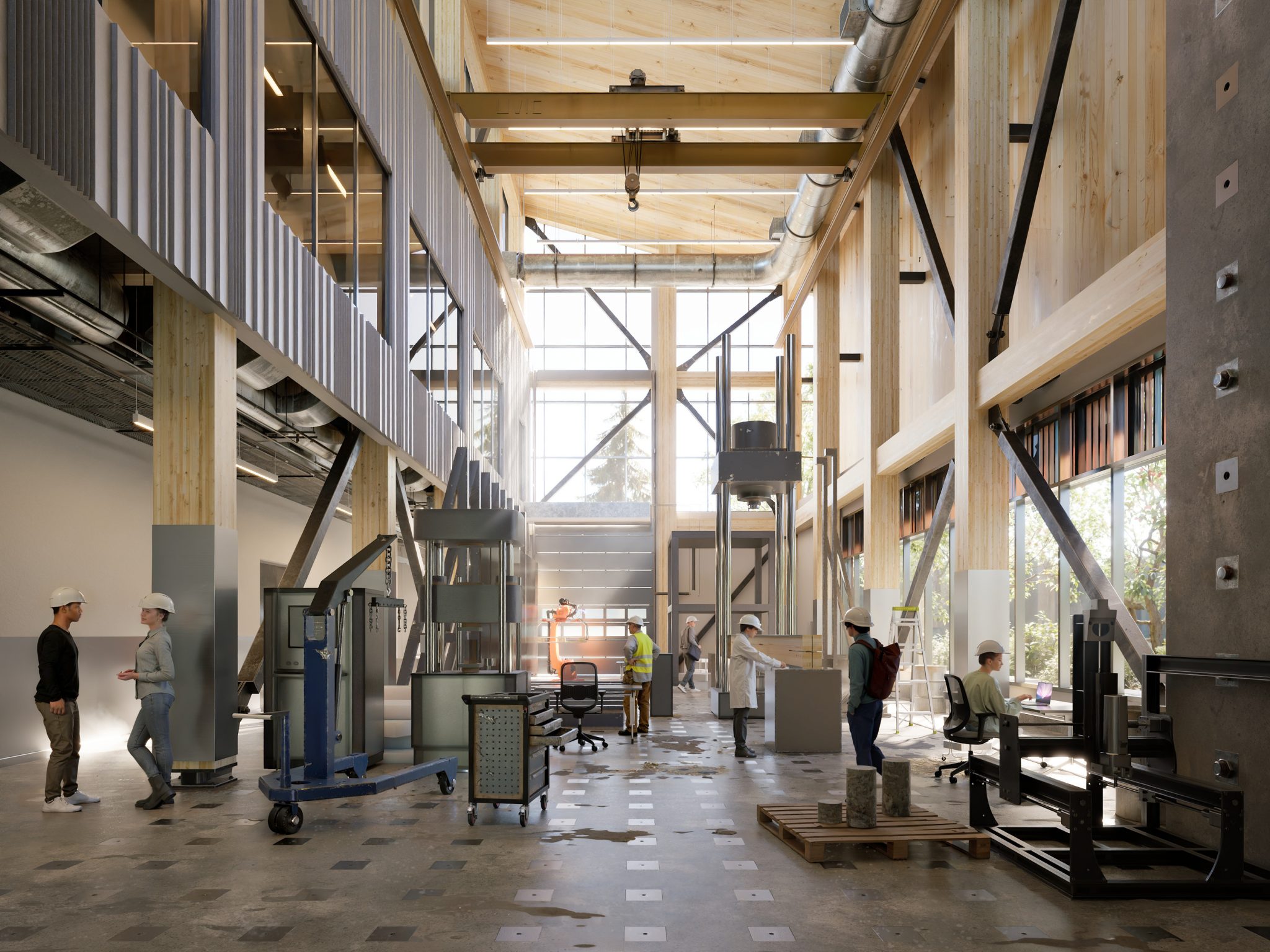
From the start, our goal was to design a building that could be used as a research instrument. We embedded sensors directly into mass timber elements, specifically the glulam beams and cross-laminated timber (CLT) floor panels, to track their performance over time.
As a result, we created a system that allows us to measure stresses within each individual member, allowing students and faculty to monitor how loads accumulate and fluctuate over the building’s lifespan. The sensors also allow us to monitor movement and deformation during wind events and minor seismic activity, which is particularly important in a high-seismic region like Victoria.
The data being collected in real time can be used to either validate or challenge existing assumptions about mass timber behaviour, and help future engineers make better-informed decisions on design standards and even support design-for-disassembly for sustainable and safer future reuse of the mass timber.
What combination of passive design, renewable energy systems, and material selection has been employed to achieve Zero Carbon Building accreditation?
The Zero Carbon building looks at the entire carbon emissions footprint of the building, including embodied and operational carbon. The envelope design of the project includes high-performance glazing, additional insulation, and reduced air leakage. The window-to-wall ratio has been kept low by strategically placing windows based on solar heat gains, daylight, and views. Together, these passive design strategies reduce the amount of energy required for heating and cooling, which in turn translates into a reduction of operational carbon emissions.
In what ways did the collaboration between architects, civil engineering faculty, and research teams influence spatial design and lab configuration?
Collaboration was an important pillar of this project. Our approach involved working together with researchers and faculty at the University of Victoria to develop spatial and technical strategies that aligned with their needs and goals.
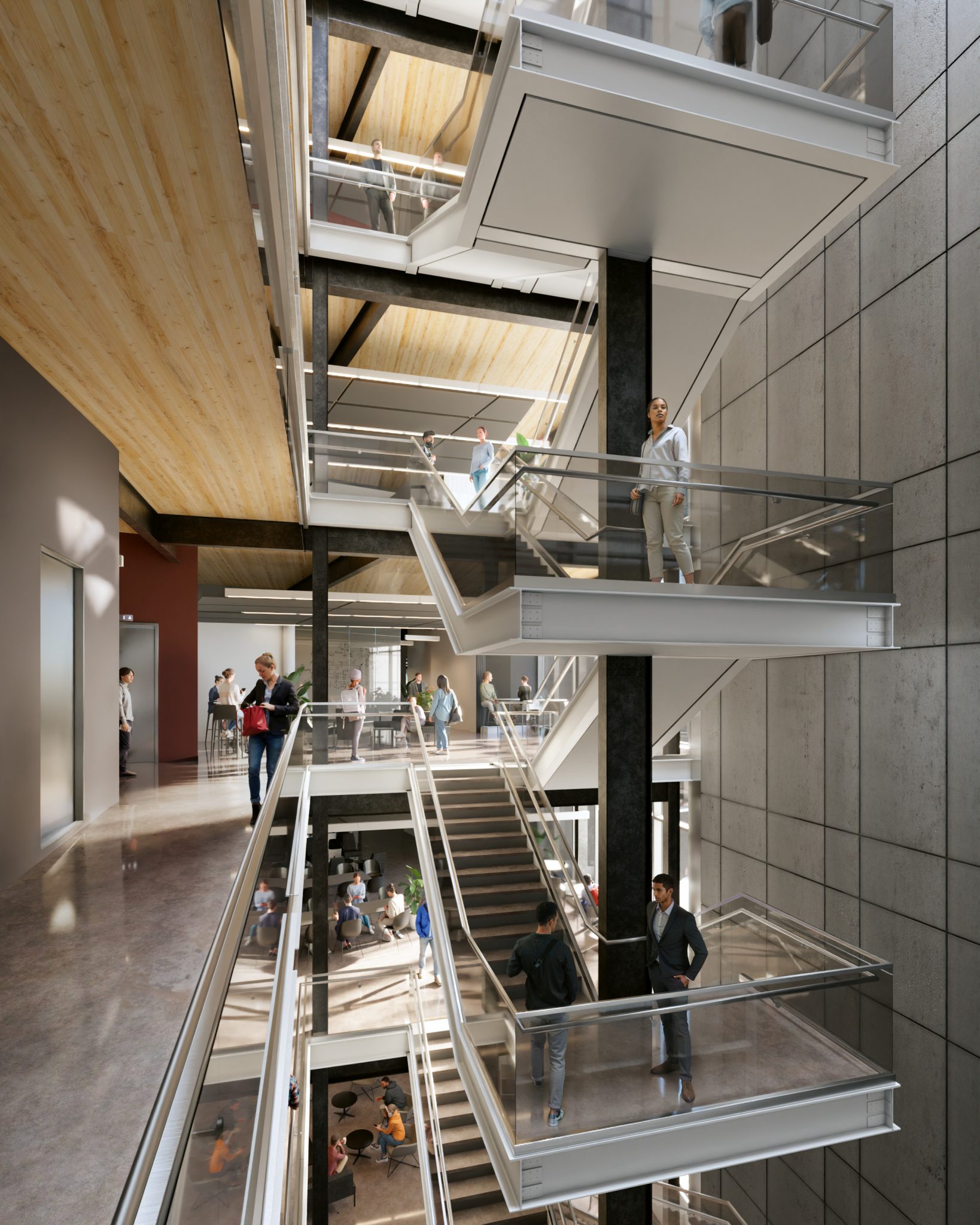
Faculty input directly influenced where sensors were placed, how labs were organized, and how structure was expressed.
What are the key challenges in designing and constructing net-zero institutional buildings in a coastal climate like Victoria, B.C.?
Building an academic building in Victoria presented a unique set of challenges. From a climate perspective, moisture management is critical, especially when using mass timber. We had to ensure we had ventilation strategies and moisture-level sensors to mitigate future issues and extend the building’s lifespan.
At the same time, building infrastructure that can withstand seismic activity, especially when connected to existing structures, can be very challenging because it involves integrating different structure typologies.
Institutional buildings, specifically lab spaces, add another layer of complexity to the mix. Labs require high air-change rates, which can quickly undermine energy performance if not carefully managed. Balancing safety, flexibility, and carbon targets required close co-ordination between architecture, mechanical engineering, and researchers.
Sign up for our weekly newsletter
Construction Canada weekly newsletters give the latest AEC industry news for those who build, design, engineer, specify, renovate or operate in the built environment.
Popular Articles
-
1
-
2
-
3
-
4
-
5
Read the Latest Issue