Hybrid carpet: Flooring that lasts
There are many expectations from indoor spaces today; they must look esthetically pleasing but be strong enough to withstand heavy use, be easy to clean but not feel sterile and unwelcoming, and feature healthy, sustainable materials that support human and environmental health. There are dozens of boxes to check and considerations to be made when designing and specifying a commercial environment. These spaces need to work harder and smarter for those who use them.
Flooring is the foundation of any interior, visually and functionally setting the tone for the space. While there are many high-performance flooring solutions, including some custom options for specific uses, one surface stands above the rest in terms of versatility: hybrid carpet.
The first hybrid carpet hit the market in 1967. Decades later, these innovative floors remain a smart and efficient solution for many commercial spaces, balancing comfort for occupants and long-term performance for facility managers and building owners.
But what exactly is a hybrid carpet, and where should they be specified?
What is hybrid carpet?
Hybrid carpet refers to flooring that combines the comfort and acoustic benefits of carpet with the durability of a resilient floor. It includes three essential layers: a polyvinyl chloride (PVC) cushion backing, a vinyl precoat, and nylon yarn tufted into a nonwoven, primary backing. The three layers are fused together to create a durable floor cover that looks like carpet but performs like a resilient sheet. This combination gives hybrid carpet extreme longevity and easy maintenance. Depending on the manufacturer, hybrid carpet is available in rolls and tiles, and with or without a factory-applied adhesive. Seams are chemically welded during installation to create a wall-to-wall impermeable moisture barrier.
How does hybrid carpet address common concerns?
Acoustics
In education, health care, or workplace settings, acoustics play an important role. Evidence-based design indicates that a calm, quiet environment is critical to supporting cognitive well-being, and flooring can significantly contribute to or reduce unwanted ambient noise. With its added cushion layer and a tufted surface, hybrid carpet absorbs more noise than hard surfaces, reducing echo and ensuring speech is clearer and easier to understand. Some hybrid carpets can perform more than 200 per cent better than hard surfaces in Impact Insulation Class (IIC) ratings, which measure how well a flooring absorbs impact vibrations within a room and between floors of a building.
Well-being and comfort
Hybrid carpets provide firm support underfoot, which studies1 suggest can reduce discomfort and reduce the risk of trips and falls. Hybrid carpets can also support respiratory comfort. In 2022, Allergy Standards Ltd. certified one manufacturer’s hybrid carpet as the world’s first Asthma & Allergy Friendly® soft-surface flooring, making it scientifically proven to reduce exposure to asthma and allergy triggers and contribute to better indoor air quality (IAQ).
Allergens in the air can trigger asthma and allergy symptoms; it is important to be able to remove the allergens using a standard maintenance routine. Hybrid carpet’s low pile height and unique structure easily release the particles during vacuuming. In fact, Allergy Standards Ltd.’s scientific testing proved 95 per cent of allergens were removed from the certified product with a simple dry vacuum.2 The testing standard requires the flooring to be cleaned according to the manufacturer’s instructions, which do not call for a special vacuum or filter. As a result, a standard commercial vacuum was used during testing.
Moisture mitigation
When a concrete slab releases excess moisture, major issues, such as mould, can start to grow. When installed over high-moisture substrates, hybrid carpets with a permanent wall-to-wall moisture barrier insulate the moisture in the slab from the drier air above. Moisture vapour emissions from high-moisture substrates naturally migrate toward drier air above to reach equilibrium. The hybrid system insulates the moisture in the substrate from this drier air and thus interrupts the process. As a result, moisture vapour emissions from the substrate are greatly suppressed to a rate roughly equal to the material’s own permeability. This virtually ceases all moisture vapour, mitigating dissipation into the space and virtually eliminating conditions that would be favourable to microbial growth. This allows hybrid carpet to be installed without calcium chloride or in-situ relative humidity (RH) testing, provided that no free liquids or moisture-stained concrete are present on the substrate. pH testing is required according to ASTM-F710 and levels must be between 7.0 and 9.0 for installation. It is important to review manufacturer instructions prior to installation.
In addition to fixing moisture issues from the slab up, hybrid carpets can also address moisture issues from the top down. A hybrid carpet with a closed-cell cushion leaves no paths for water or other contaminants to seep through (unlike open-cell, which does allow water to seep through). A closed-cell cushion hybrid carpet with welded seams is impermeable to liquids, including spills and leaks. For optimal impermeability, speak with the manufacturer’s representative about the hybrid carpet’s performance in the industry’s Moisture Penetration by Impact Test, which can be used to test for impermeability on the body of the carpet and at the seam after 10,000 impacts at 68 kPa (10 psi), as well as impermeability at the seam after 50,000 cycles of Phillips Chair traffic.
Maintenance upkeep
Since hybrid carpets stop liquids in their tracks, preventing them from soaking through to the subfloor, cleaning up spills and leaks is a breeze. From an everyday maintenance standpoint, hybrid carpets are designed to look new with less effort. Low pile heights ensure dust and allergens are easily removed with a dry vacuum, and resistance to crushing gives the floor long-term durability.
The top tufted layer is typically made with solution-dyed, premium cationic nylon, which carries a negative charge to provide permanent resistance against staining agents commonly found in food and beverages. It is also treated with a non-toxic, third-party certified chemistry that resists soiling from oils and organic materials. In addition to this built-in protection, many hybrid carpets are covered under lifetime warranties for resistance to acid-based stains often present in health care, education, and food service environments. For ongoing maintenance, cleaning products certified under the Carpet & Rug Institute Seal of Approval Testing Program are recommended.3
Sustainability
The specific sustainability attributes of a hybrid carpet will vary depending on the manufacturer. Still, many on the market are made with some level of recycled content and can be diverted from landfills at their end of life through a manufacturer’s flooring take-back and recycling program. Since their day-to-day maintenance does not require harsh chemicals, hybrid carpets help reduce volatile organic compounds (VOCs). During Allergy Standard Ltd.’s third-party certification testing, a sample of textile flooring is installed in an environmentally controlled chamber, where VOCs released are measured over a 14-day period. Emission levels after 24 and 336 hours are compared to established thresholds to ensure they remain low throughout. If the flooring is designed to be installed with adhesive, the adhesive is also included in this chamber test to evaluate the complete system’s impact on IAQ. Careful material selections that are free of ortho-phthalates and per- and polyfluoroalkyl substances (PFAS) will also support healthier indoor and outdoor environments.
Made to last
Another benefit of hybrid carpet is its proven durability, even in demanding, high-traffic environments. For example, an elementary school installed a hybrid carpet in its building in 1967 (the year these resilient carpets were first introduced). In 2023, the school was demolished to make way for a new building. Before demolition, the manufacturer of the hybrid carpet visited the school to test how the floors were still holding up after all those decades. The results? Soil still lifted easily from the fibres, and the welded seams performed like new. A 19-L (5-gal) bucket of water poured over the 55-year-old seams cleaned up easily, with no moisture making it through to the sub-floor.4 On another note related to sustainability, the team removed the carpet before demolition so it could be recycled.

Where can hybrid carpet be specified in various segments?
Today’s hybrid carpet is offered in many colours and pattern combinations, including customizable options, making it usable in any high-use space. There is room for hybrid carpet in nearly any segment.
Education
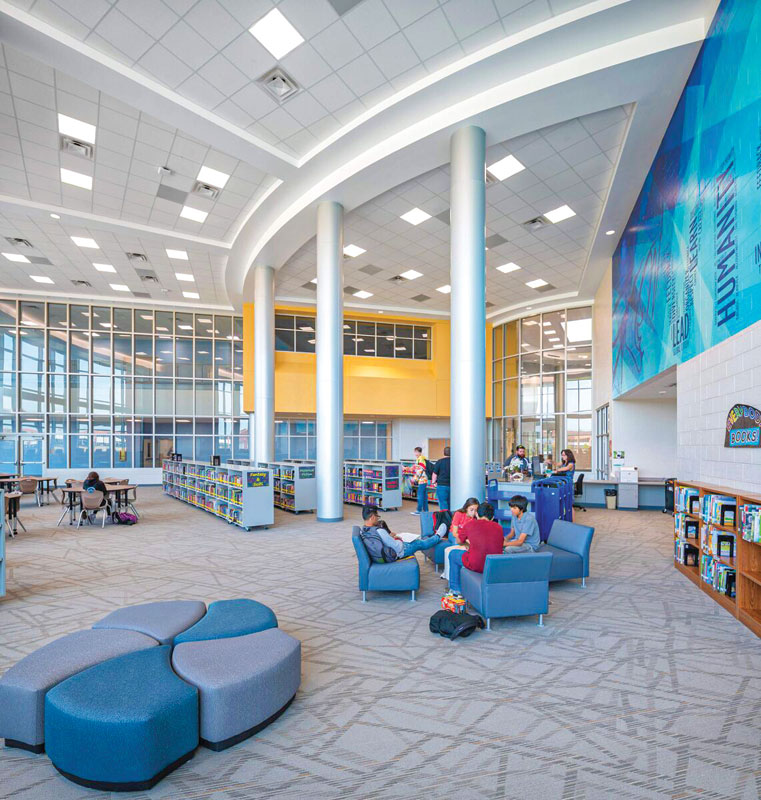
Education facilities are some of the best candidates for hybrid carpet. From an acoustic standpoint, the carpet can dampen echoes and ambient noise in classrooms and hallways. Classrooms can also greatly benefit from hybrid carpet’s contribution to IAQ. Asthma is one of the leading causes of school absences among children, accounting for more than 10 million missed school days annually.5
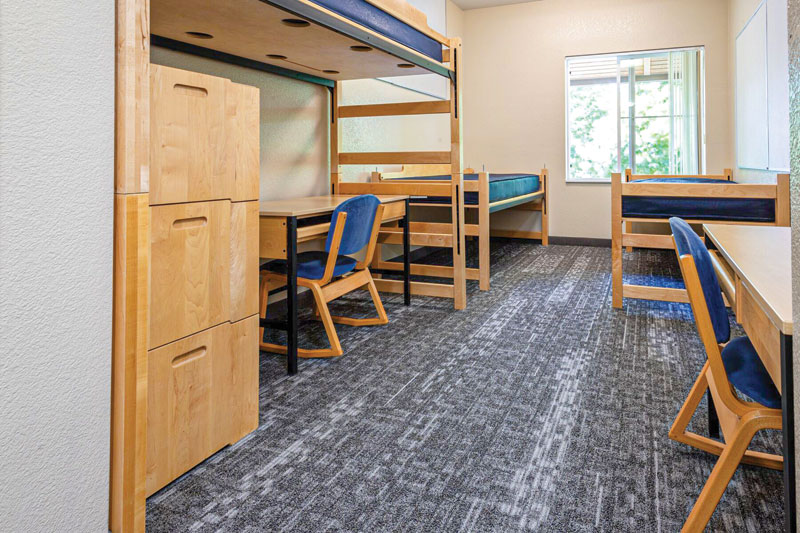
With an uptick in emotional support animals (ESAs) on college campuses,6 the higher education space may also see an increased need for hybrid carpet. Facility staff at some colleges have faced the challenge of replacing carpets frequently due to animal-related accidents in residence halls. Seeking a more durable solution, some teams have turned to hybrid carpet with closed-cell backing. This type of flooring allows for easier and more effective cleaning, reducing the need for frequent replacements and offering a more sustainable approach for campus facilities.
Workplace
Poor IAQ is a significant concern in Canadian workplaces, impacting employee health and productivity. Research indicates that improving IAQ could enhance labour productivity by approximately $7.5 billion annually in Canada.7 Common indoor pollutants, such as radon, tobacco smoke, and wildfire particulates, can cause fatigue, headaches, and cognitive impairments.8
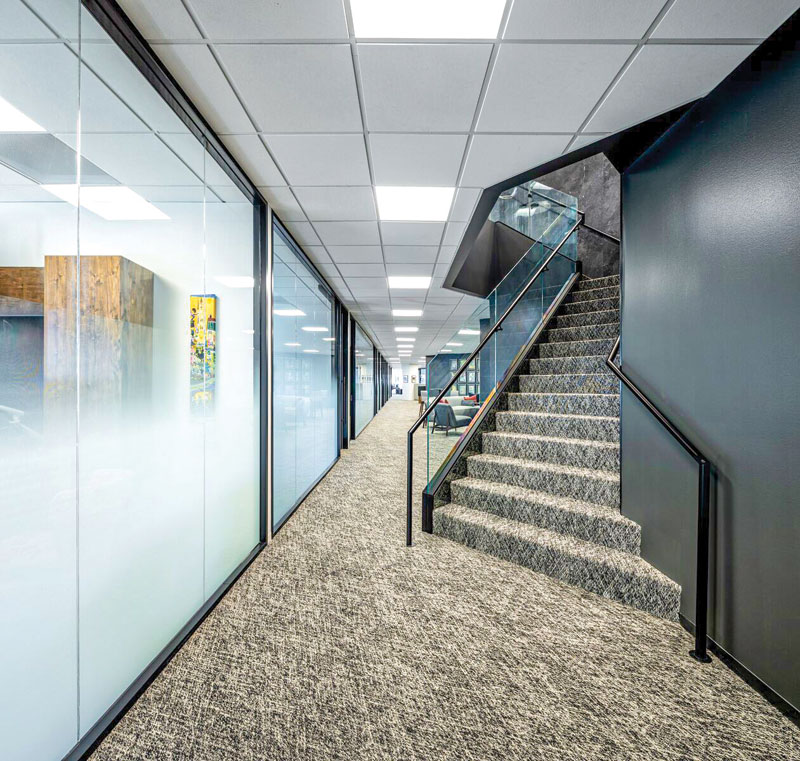
One effective solution to support a healthy and productive office environment is the use of hybrid carpets. These carpets help reduce dust and allergens, limit microbial growth, and allow for quick and effective cleaning without harsh chemicals. By improving IAQ, hybrid carpets contribute to a more comfortable and efficient workspace.
Acoustic comfort is another critical factor influencing employee well-being and productivity. Noise is a leading source of employee complaints in offices, with studies showing that even low levels of background noise can cause a 66 per cent decrease in focus and a 20 per cent drop in productivity.9 Distractions in the workplace can contribute to a loss of more than 90 per cent of an organization’s productivity.10
Hybrid carpets can enhance acoustic comfort by reducing noise levels and providing a quieter environment for employees. This improvement in acoustic conditions can lead to better focus, reduced stress, and increased overall productivity.
Health care
While resilient sheet products remain a preferred flooring solution for many acute health care settings due to infection control requirements, there are areas in health care and senior living that can benefit from the performance attributes of hybrid carpet, where infection control is less of a concern.
Studies have shown noise can negatively impact a patient’s well-being, and is one of the most stressful and distracting non-clinically relevant elements in a health-care setting.11 The acoustic benefits of a hybrid carpet make it suitable for lobbies and waiting areas, where dampened noise levels can offer a more calming first impression. Similarly, hybrid carpets in staff wellness rooms or break rooms can offer visual and physical comfort and a quiet place to recharge.
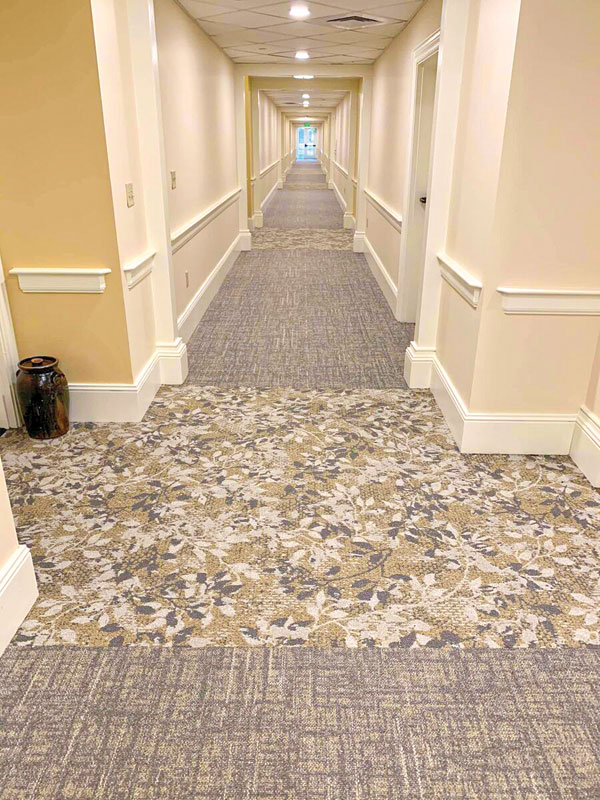
Senior living communities are also good candidates for hybrid carpet. Throughout areas where accidental spills and pets can cause moisture concerns, such as corridors, sitting areas, and dining rooms, a hybrid carpet offers long-term resilience and easy maintenance of traditional resilient flooring while providing the comfort and warmth of carpet. A hybrid carpet in these spaces can also help reduce slip, trip, and fall accidents, often exacerbated by slippery surfaces, glare, and too much cushion underfoot. The low pile height of a hybrid carpet allows for easy rollability, so people who use wheelchairs or walkers can easily maneuver.
Multi-family
As gathering and amenity spaces gain importance for multi-family residents, hybrid carpet provides the soft texture of carpet, while its cushion helps dampen sound between floors. Similar to education environments adopting more animal-friendly flooring, the moisture barrier of a hybrid carpet is ideal for common rooms, hallways, and pet-friendly residences within a multi-family complex. Hybrid carpet, backed by a certification such as Asthma & Allergy Friendly,® can also be a great selling point for prospective residents with asthma and allergy concerns in a pet-friendly building.
The list of suitable environments for hybrid carpet includes hotels, restaurants, airports, etc. In high-traffic areas where acoustics and moisture mitigation are top concerns, hybrid carpet has emerged as a valuable consideration.
Conclusion
Resilient surfaces are popular choices for commercial spaces for their easy cleaning routines, lowered ability to harbour allergens, and contributions to better IAQ. However, when a soft surface is still desired for certain spaces to soften acoustics and provide a more textural esthetic, hybrid carpet checks all the boxes. This tried-and-true classic flooring remains innovative and flexible for the needs of buildings today.
Notes
3 For a complete listing of certified products, visit www.carpet-rug.org
4 To see more, watch.
5 Read “Asthma-Related School Absenteeism, Morbidity, and Modifiable Factors”.
6 Refer to “With Emotional-Support Animals on the Rise, How Are Colleges Responding?”.
7 Review.
9 See.
10 Refer.
11 Learn more by reading “Health Inequity by Design: Waiting Rooms and Patient Stress”.
Author

Antonio Bucca is senior director of soft surface product management at Tarkett North America, where he leads commercial strategy and innovation across carpet tile, broadloom, and woven product lines. Having started in Tarkett’s marketing support department, he gained foundational experience in product launches and sample operations, before progressing through leadership roles in sales, operations, and product management. With more than a decade of industry experience, Bucca excels in aligning design, supply chain, and market intelligence to drive sustainable growth and differentiation in a highly competitive soft surface market.
Sign up for our weekly newsletter
Construction Canada weekly newsletters give the latest AEC industry news for those who build, design, engineer, specify, renovate or operate in the built environment.
Products & Services
Read the Latest Issue