
Recasting brutalism: A civic landmark reimagined
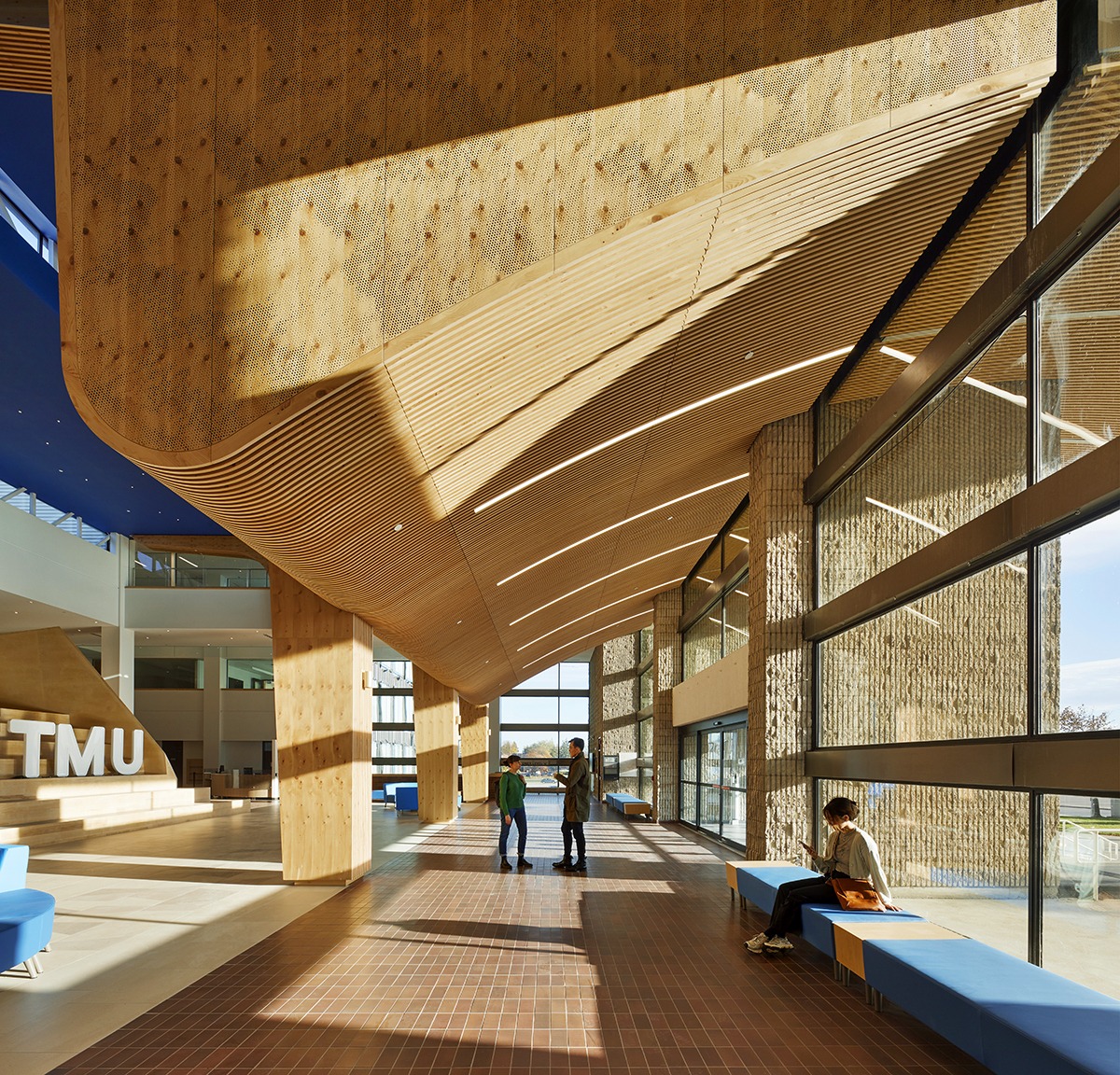
Phase One of Toronto Metropolitan University’s (TMU’s) new School of Medicine is now open, establishing a new model for community-integrated medical education.
Designed by Diamond Schmitt, the project transforms the former Bramalea Civic Centre into a contemporary academic environment that integrates medical education with a public primary care clinic.
The design retains the strong civic presence of the original 1970s Brutalist structure. By removing interior barriers and transforming the four-storey atrium, the former civic building has been reimagined as a welcoming and inclusive academic environment.
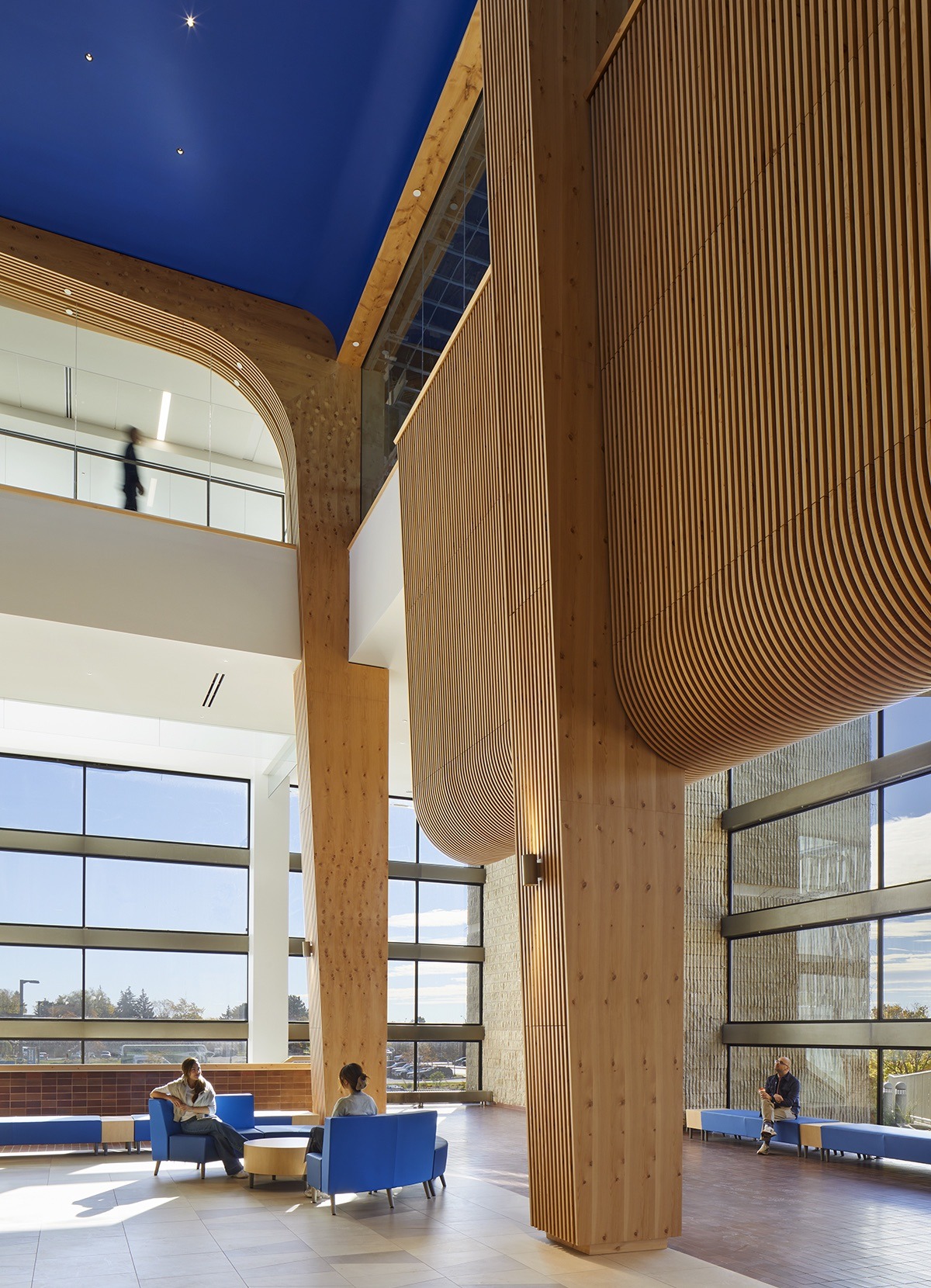
The building’s original structural columns are clad in wood, evoking the tall pines of nearby Chinguacousy Park, creating the feeling of being under a forest canopy.
Above, an Ojibwe star map spans the ceiling, referencing the celestial knowledge systems that have guided Indigenous peoples for generations. Along the floor, portions of the original tile have been preserved and interwoven with new tile patterns inspired by the structure of a Wampum belt.
Indigenous design principles informed the project through collaboration with Two Row Architect, an Indigenous-owned firm, and guidance from TMU’s Indigenous Design Guidelines.
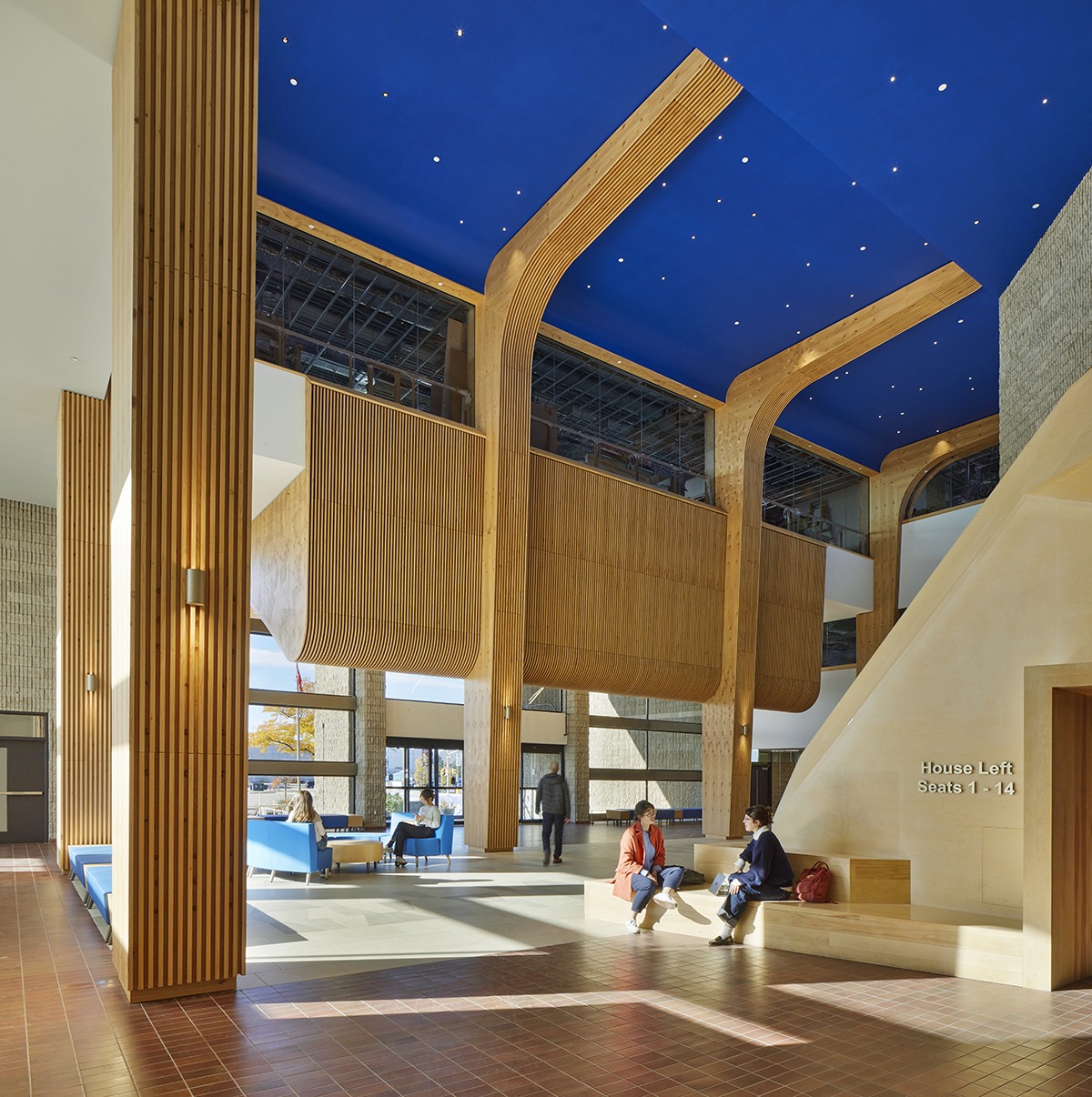
The school of medicine is organized around three interconnected environments of active learning spaces for clinical training and the central atrium, which are part of Phase One, and academic and faculty areas that support research and administration, which will be completed in Phase Two.
Throughout the building, the design strategically leverages the building’s original terraced structure to maximize access to natural light for learning and event spaces.
Sign up for our weekly newsletter
Construction Canada weekly newsletters give the latest AEC industry news for those who build, design, engineer, specify, renovate or operate in the built environment.
Read the Latest Issue

- Reducing a Billion Dollar Problem in Construction Through Correct Moisture Testing of Concrete
- Reducing a billion dollar problem in construction through correct moisture testing of concrete
- Message from the president | Message de la présidente : The role of product information in specification
- 💻 Author-led sessions on new CCDC documents
- PCD and CCA In-Person Courses