Beyond the membrane: The next chapter of polyurea waterproofing
Here is a universal truth in construction: water always wins. The industry can try and fight it, detail around it, pray the torch guys do not miss a seam, but in the end, water finds the weak link. This is why waterproofing is one of those construction trades that typically do not make headlines until there is a failure, and then suddenly everyone on the project knows exactly what went wrong and the fingers start pointing.
When this author wrote their first piece on polyurea in Construction Canada last year, it was about introducing the polyurea system, a fast cure, seamless application, chemical resistance with all the shiny technical bullet points. But after spending more time in the field, talking with installers, and digging into project case studies, they realized there is a second chapter of polyurea to tell. This is not just about “what is polyurea.” It is about how it is changing the waterproofing practice in Canada, where it shines, where it stumbles, and what is the next generation.
So, grab a strong coffee or a Red Bull and let’s get started with the second chapter.
More than just waterproofing
In building science community, everyone loves their control layers: air, vapour, thermal, and moisture control. They are supposed to work in tandem, not against each other. The tricky part is that real buildings/sites are not architecturally scaled details; they are messy intersections of materials, trades, and schedules.
Polyurea has mostly been sold as “a waterproofing layer,” but in practice, it is more than that. Due to its seamless, tough, and flexible characteristics, it often ends up having multiple functions:
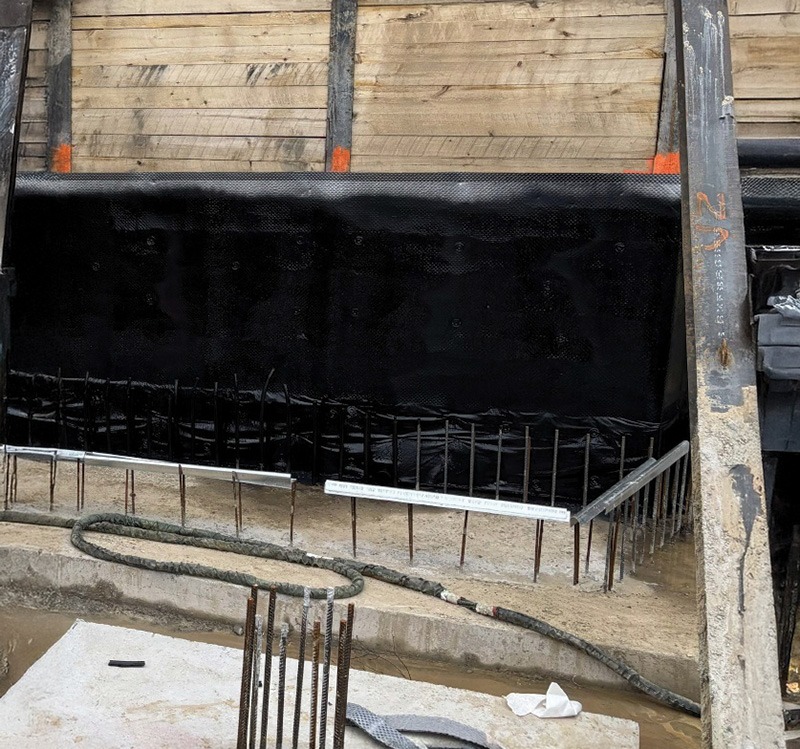
Acting as an air barrier on below-grade walls
- Serving as a secondary vapour retarder under plaza decks
- Protecting thermal insulation in roof assemblies
The big advantage of polyurea is system integration. Instead of relying on various layers of dissimilar products taped, glued, or welded together, there is one continuous, resilient membrane that provides secondary security. However, this is key; it only works if the design team understands what they are asking the membrane to do. There cannot just be a material substitution from a sheet membrane for polyurea membrane without rethinking the whole assembly.
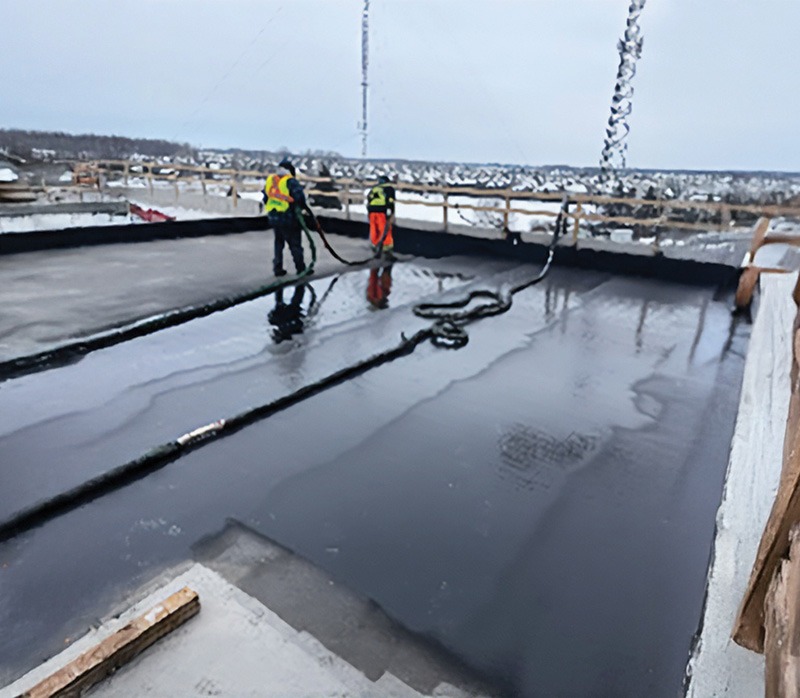
Honestly speaking, polyurea is not a miracle coating without adequate design, preparation, and application. It can turn a project around when done correctly, but it can just as easily fall short if the basics were not adhered to. In the author’s experience, success is derived by three site factors: good surface preparation, a skilled installer, and solid quality control. Nail those factors, and the polyurea performs beautifully and as intended. Miss one of the three, and it causes trouble (just like any other product). On one Toronto podium deck project, polyurea was chosen because the building owner could not afford to shut down the retail space below for more than a weekend. The crew blasted the concrete, applied primer, laid down polyurea on Saturday, and by Monday morning delivery trucks were back on the deck.
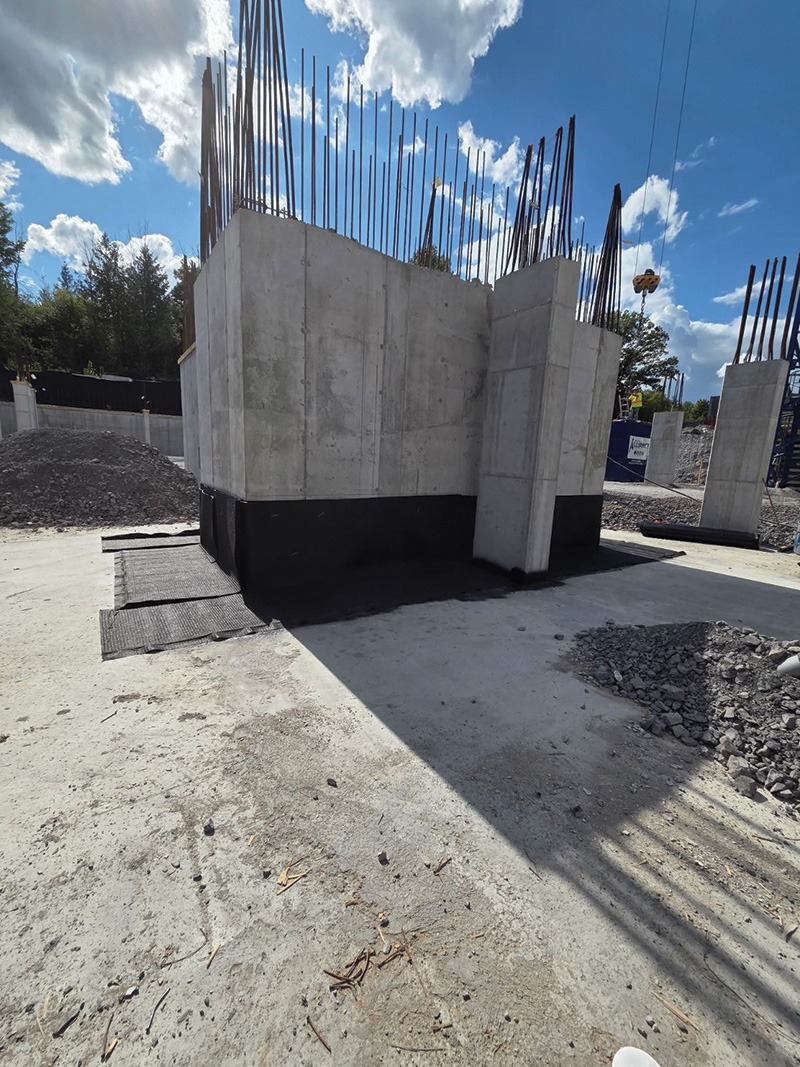
Now, being the devil’s advocate; a below-grade application in Calgary saw the general contractor try to “save time” by skipping the application of primer on damp concrete. The polyurea went down fine, looked great, in fact. But within months, water pressure (second law of thermodynamics) started forcing it right off the wall. By the time the repairs were done, the cost savings were long, long gone.
Lesson learned? Polyurea can deliver outstanding performance, but it can be less forgiving than sheet membranes when corners are cut. When one gets it wrong, the membrane makes it known fast.
Freeze-thaw, floods, and resiliency
Here is where polyurea membrane really starts to shine: Resilience. It is known that the climate is not getting easier. In Canada, that means more freeze-thaw cycles, more rain/snow events, and more flooding. Traditional waterproofing membranes are not always designed for that kind of punishment or durability. Polyurea waterproofing, with its flexibility, resilience and chemical resistance, is starting to be used not just as waterproofing, but as flood protection and containment.
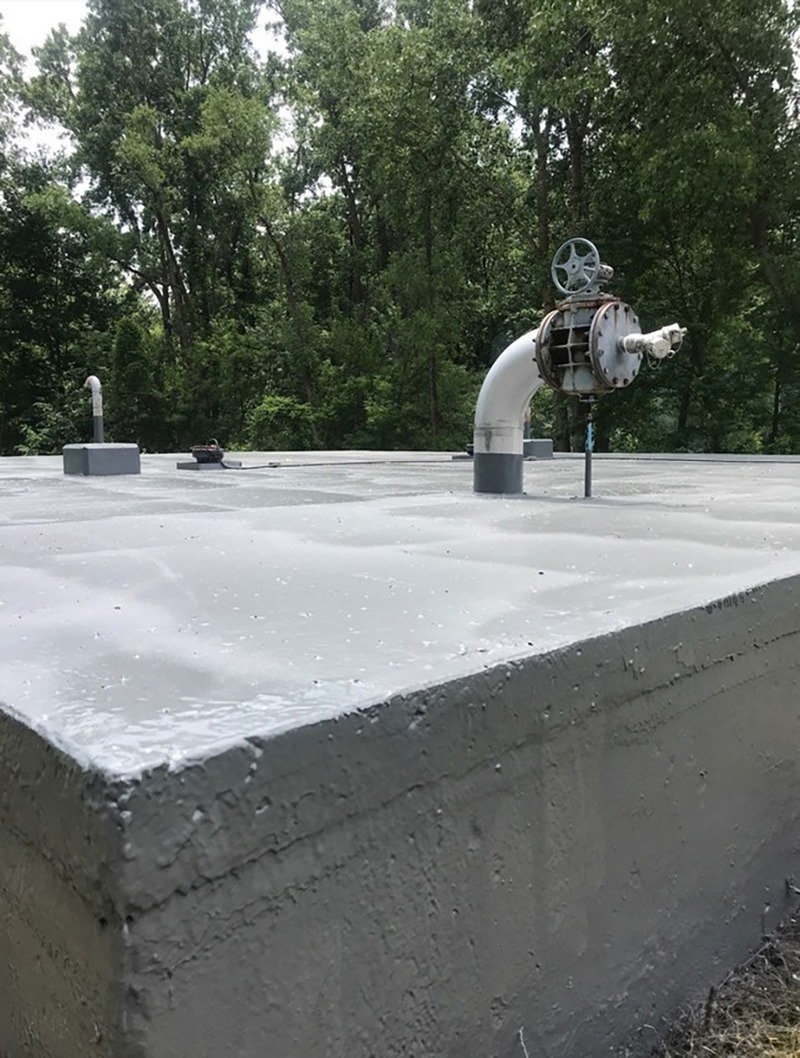
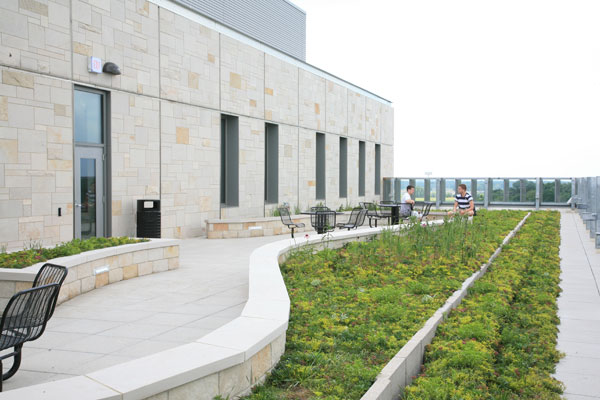
Looking at underground parking garages in Montreal or Ottawa, where road salt and hydrostatic pressure and temperatures are relentless. Or those podium slabs in Vancouver that double as green roofs. In these scenarios, polyurea is not just keeping water out of the system; it is acting as a long-term durability strategy, and municipalities are catching on. The author spoke with a facilities manager in St. John’s who has been specifying polyurea waterproofing in stormwater tanks and culverts. Why? They need infrastructure that has the potential to survive saltwater and abrasion resistance without shutting down for repairs every five years. Polyurea waterproofing has similar upfront costs, but lifecycle cost is where it wins.
The failures nobody talks about
When understanding a building component or system, reading the marketing and technical documents help, but much information can be gained from looking at past failures. Polyurea failures usually fall into three categories:
Adhesion loss
This one is the classic polyurea waterproofing heartbreak. One can have the best product in the world, but if the surface is not prepared correctly, it is game over. Dust, laitance, or a bit of hidden moisture in the concrete will come back to remind one of the negligence. Caution should be given to damp substrates as they look dry, feel dry, then pop blisters once the coating cures, which is usually in minutes. The majority of the time, the problem is not the polyurea waterproofing itself—it is what it is applied to.
Thickness variation
Polyurea does not forgive thin spots of application. A pinhole here or a light pass there might not seem like an issue until the first pressure test, when suddenly, there is a leak path and a long day ahead. It is a fast-moving system, so it takes a steady hand and a good eye to keep coverage even. Wet film gauges, overlap checks, electric thickness gauges, and a bit of pride in your spray pattern go a long way.
Installer error
The material is only as good as the applicator holding the spray gun. Wrong pressure, cold substrate, or bad mix ratio can turn a perfect specification into a repair job. Polyurea moves quick, so experienced installers know their equipment, their surface, and their rhythm. The inexperienced usually learn the hard and expensive way.
These issues are not the result of the waterproofing material itself; they are failures of process. Polyurea waterproofing is reliable, solid; it is the shortcuts, the guesswork, and the “good enough” mentality that cause the headaches for the site and design team. As polyurea waterproofing shows up in more specs and more job sites, the industry needs to tighten up how we prepare and install it. This means real contractor training, not a five-minute demo in a parking lot over a Timmies. It means QA/QC mockups and programs that catch mistakes before they are buried under concrete or backfill. The chemistry and chemists have it figured out; now it is about consistency, accountability, and raising the bar so polyurea performs the way it was designed for.
Right now, polyurea is in a funny place with Canadian standards. It is not a fringe product anymore, Canadian Construction Materials Centre (CCMC) has approved systems, ASTM has test methods, but it is not fully embedded in codes the way sheet waterproofing membranes are. This creates a chicken-and-egg problem: some specifiers hesitate because “it is not in the book,” while manufacturers argue the product cannot get into the book without more specs and jobs.
However, the momentum around polyurea is starting to shift here in Canada. As embodied carbon reporting starts hitting specs, long-life resilient membranes such as polyurea gain traction. As climate resilience becomes part of building codes, systems that withstand flooding and freeze-thaw cycles without replacement will move from “nice to have” to “required.”
Infrastructure: Where the action is
To see polyurea flex its membrane muscles, look at infrastructure industry. This is where it earns its stripes.
- Bridges—Polyurea is used as a waterproofing and anti-corrosion layer under asphalt overlays, protecting concrete decks from salt, freeze-thaw, and decades of abuse. It is fast to apply, cures in minutes, and does not hold up traffic for a week, and municipal crews love that.
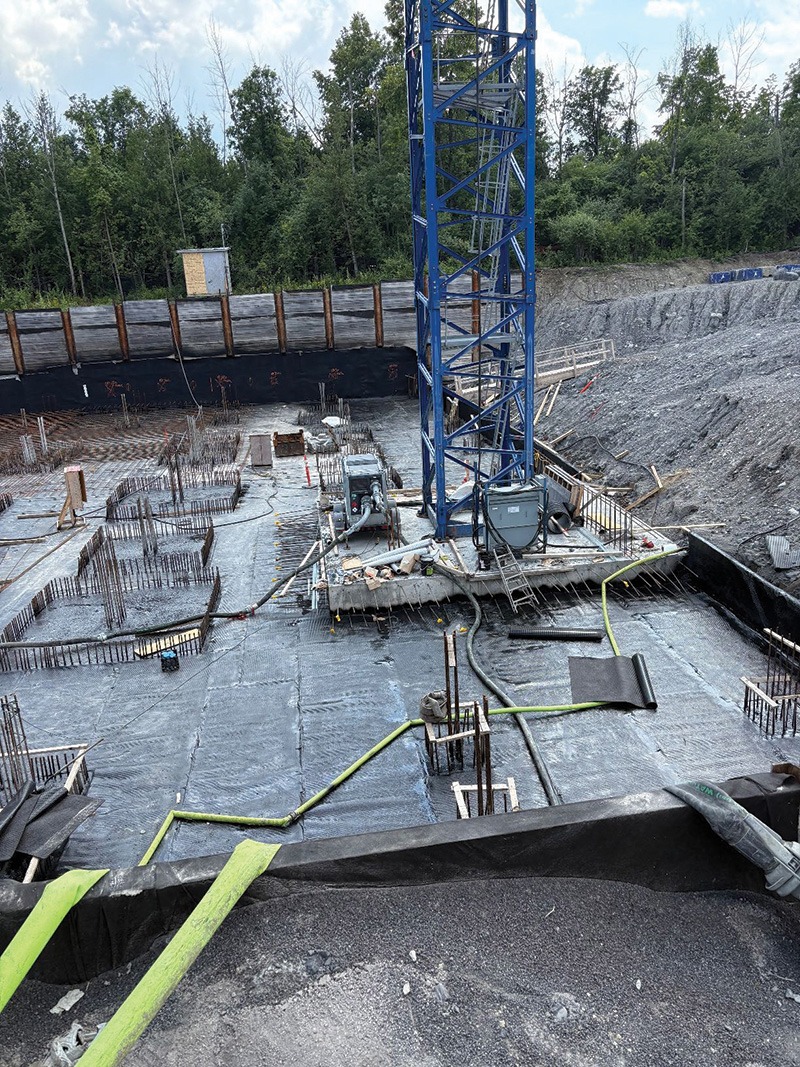
- Wastewater plants—Polyurea’s chemical resistance and durability is key here. Tanks, clarifiers, containment pits, and places where concrete and epoxy systems would normally degrade, stay intact because polyurea is resilient against acids, salts, and whatever else ends up in the mix. It is referred to as the coating’s equivalent of a raincoat for industrial sludge.
- Transit tunnels and subways—These are perfect examples of where seamless application matters. Polyurea creates a continuous waterproof membrane that keeps groundwater on the outside. No seams, no joints, no weak spots, just a monolithic waterproofing barrier between the tunnel occupiers and the mess behind the wall.
These are not quick residential touch-ups. These are high-stakes, high-budget, public-facing projects such as bridges, tunnels, and treatment plants where failure is not an option and everyone from the engineer to the mayor wants peace of mind. Municipalities are willing to spend more upfront for something that will not peel, crack, or leak five years later.
Polyurea may have successfully entered the Canadian market through the building enclosure side, roofs, parkades, below grade, and podiums, but it also has a future on infrastructure projects. The bigger and harsher the job, the better it has the potential to perform. It is fast, durable, and proven in environments that would degrade a lesser coating. This is not a niche product anymore—it can provide national-scale waterproofing protection, one spray pass at a time.
Here is where it gets interesting: Polyurea is already a high-performance coating, fast-curing, flexible, and built to last, but research and development are where the chemistry can really be dialled in. What used to be a niche waterproofing system is now a full-on chemistry-derived product for the Canadian market.
- Polyurea and polyaspartic blends—This combination brings the best of both worlds together: polyurea’s toughness with polyaspartic’s UV resistance and gloss retention. The result is coatings that can take direct sunlight and heavy traffic and still look sharp years down the road. They are great for exposed decks, parkades, or anywhere that used to yellow or chalk after a few summers. It’s the evolution from “industrial tough” to “architecturally clean.”
- Polyurea and geotextiles—Embedding geotextiles into polyurea membranes adds tensile strength and gives crack-bridging ability. Think of it like rebar for coatings; it helps absorb movement without tearing or delaminating. This is more widely used on podiums, buried decks, and aging infrastructure that needs a little flexibility to stay watertight.
- Bio-based resins—Sustainability is creeping into the chemistry lab, too. Researchers are working on partially renewable feedstock bio-based polyols and isocyanate alternatives that reduce embodied carbon without giving up performance. While it is still early, the industry is watching closely the idea of a low-carbon, fast-cure polyurea.
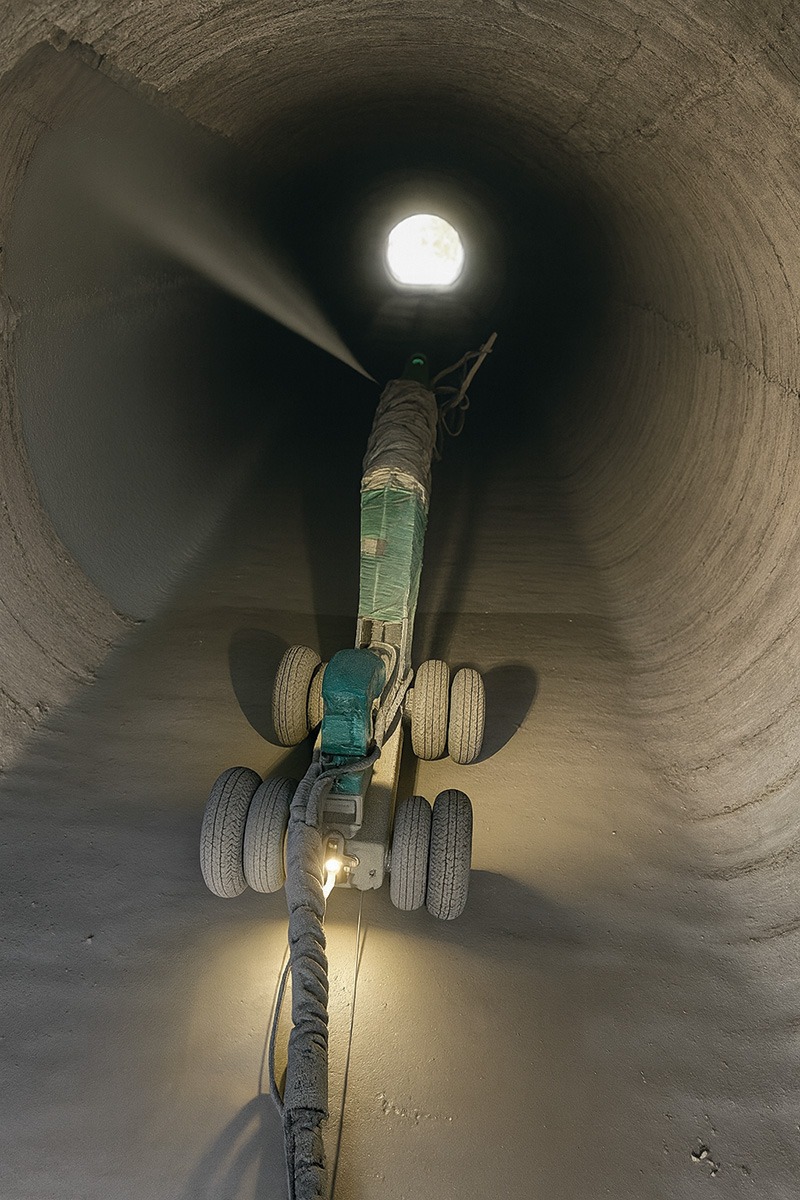
Then there is the automation angle robotic spray rigs designed for tunnels, bridges, and massive flatwork. These systems promise laser-controlled spray paths, consistent film thickness, and no coffee breaks. If that takes some of the “installer skill” variable out of the mix, it could be a real game-changer. Imagine perfectly applied, uniform polyurea on a 2-km (1.2-mile) tunnel wall no overspray, no misses, no rework.
In short, polyurea’s future is not just about better products; it is about smarter application and more sustainable chemistry. Technology is catching up to performance, and that is when materials stop being “coatings” and start being high-performing systems.
Training, safety, and understanding the contractor’s perspective
Let’s not forget: polyurea is a high-skill install product. It requires heated hoses, plural-component spray rigs, and proper PPE. Crews need training, not just in application, but in troubleshooting because when the gun clogs or pressures drift, it needs to be known before 200 L (44 gal) of resin is wasted.
Contractors the author has worked with appreciate the productivity—one crew can cover thousands of square feet in a day—but they also know there is a learning curve. Polyurea is not a “pick it up on Monday, install by Friday” trade; it is an investment for the contractor, designer, and building owner. The good crews keep daily work records to track product parameters, weather conditions, and preparation, and they follow the manufacturer’s installation guide like the gospel, because it ensures that what is sprayed in the field actually matches what is written on paper. When it comes to warranty programs, polyurea is not a “set it and forget it” kind of system; it is a “prove it and document it” one. Always ask the manufacturer about their specific warranty length and coverage details because not all programs are created equal. The good ones back both the material and the installation, but only when the work follows the manufacturer’s written instructions. This is where third-party insurance inspectors come in; they are not just clipboard carriers, they are the warranty’s best friend. Having them onsite to review prep, mixing, and application steps keeps everyone honest and ensures the installation stands up to scrutiny years down the road, not just until the next rainstorm.
What is next: From waterproofing to resiliency strategy
So where does this leave us? Polyurea has already proven itself in fast-track construction and heavy-duty infrastructure. The next phase is integration into resiliency strategies.
- Flood-resistant basements in residential high-rises
- Transit systems protected from water ingress
- Podium decks designed not just for waterproofing, but for long-term durability under green roofs and public spaces
As Canada continues grappling with climate change, municipalities, insurers, and asset managers will be asking harder questions: not just “how do we keep water out?” but “how to keep this asset running for 50-100 years without any major intervention?” Polyurea waterproofing is positioned to be part of
that answer.
Conclusion: Past the buzzwords
At this point, there are enough waterproofing failures to know one thing: water has a sense of humour and it is usually at our expense. It does not care about spec numbers, fancy power points, or how many pre-construction meetings were held. It just finds the first weak point and pours itself a coffee.
Polyurea does not stop water from being water, but it sure gives it a run for its money. When it is done right with proper prep, skilled hands, and solid QA/QC, it is like putting body armour on the concrete. When it is rushed, though, it might as well be waterproofing with optimism and duct tape.
The good news? The industry is catching on. It is seeing better training, smarter rigs, and chemists creating better resins that are tougher, greener, and and completely free of VOCs so they are safer for crews and the planet. From bridges to basements, to water parks, polyurea has evolved from an “interesting alternative” to “why was this waterproofing not used years ago?”
Therefore, next time someone calls it “just another coating,” pour yourself a bad coffee, smile, and tell them this: polyurea does not just waterproof—it changes the game. And unlike some of those hotel brews, it holds up under pressure.
References
- Read the initial article on polyurea.
Author

Rockford Boyer, B. Arch. Sc., MBSc, BSS, is an experienced building science leader at Elastochem with more than 20 years of expertise in sustainable building design. He holds an undergraduate degree in civil engineering and architecture and a master’s in building science. He is also a member of Passive House Canada and the Ontario Building Envelope Council (OBEC). He is also a part-time professor at Sheridan College, teaching in the architectural technology program and sharing his knowledge and expertise with future generations of architects and designers.
Sign up for our weekly newsletter
Construction Canada weekly newsletters give the latest AEC industry news for those who build, design, engineer, specify, renovate or operate in the built environment.
Related Products & Services
Read the Latest Issue