A blueprint for B.C.’s climate-resilient mid-sized cities emerges
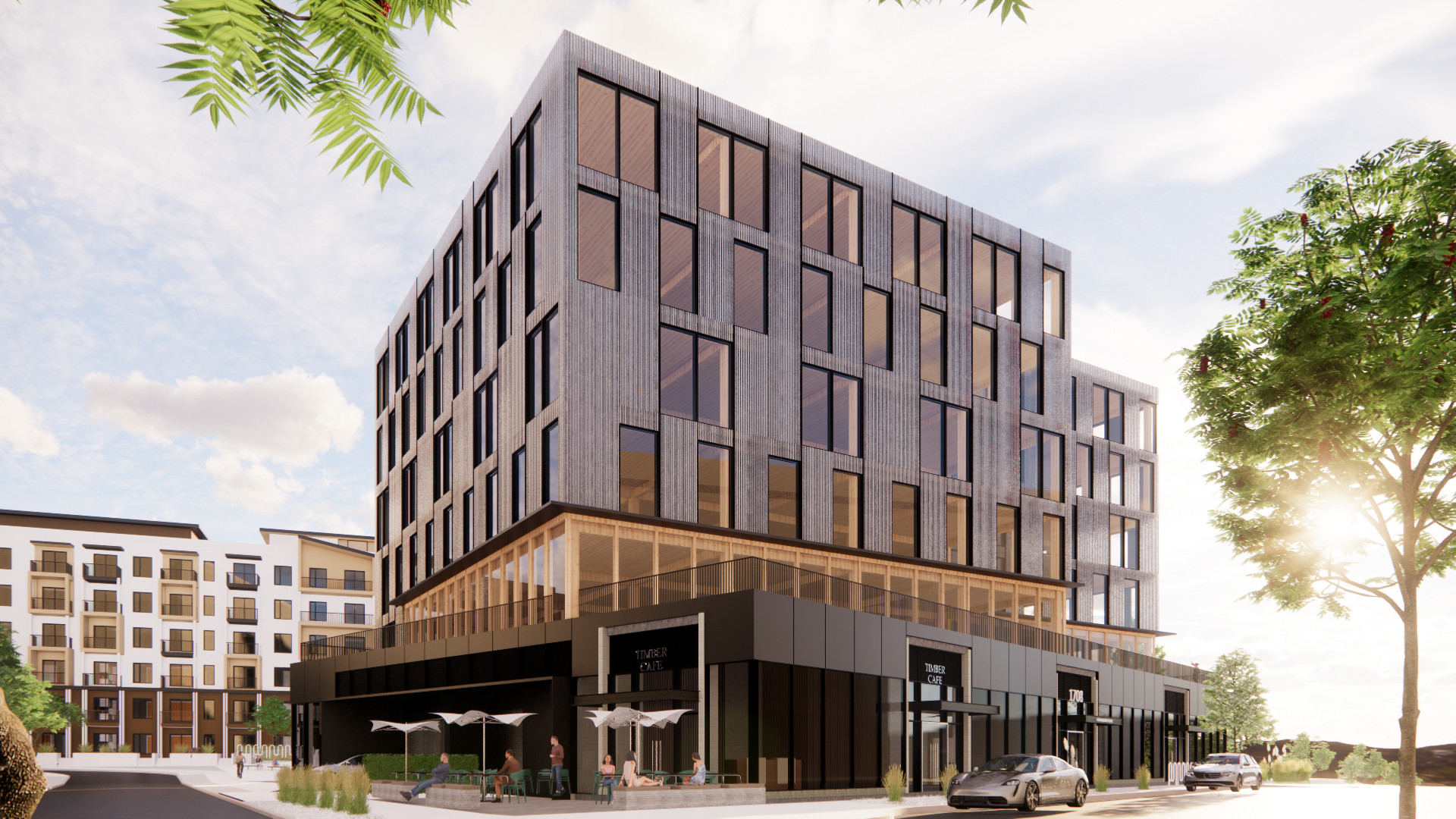
An exciting mass timber development proposed across from Penticton Regional Hospital could set the tone for how British Columbia’s mid-sized cities grow in a more climate-resilient way.
Nexus, a six-storey post-and-beam mass timber project, is the first phase in a seven-phase, 12-building master plan community designed to bring 1,500 new homes, retail, and offices to Penticton’s Innovation District. If realized, Nexus would serve as proof of concept for sustainable, mixed-use mass timber buildings that can be cost-effective, locally built, and replicable across B.C.
Construction Canada spoke with Lauren Macaulay, business unit director, architecture and urbanism, CanWest, Arcadis, and Rocky Sethi, managing director, Stryke Group, about this groundbreaking project.
How is the design team approaching lateral load resistance in a six-storey, post-and-beam mass timber structure?
To address the lateral load resistance, the design team has taken a two-core strategy that works best with the building’s geometry. Nexus has a “winged” floorplate, so we located the primary core in the widest portion of the plan to pick up the majority of the lateral load for that half of the building. A secondary stair core is positioned toward the winged area and designed as a structural and functional element.
The lateral system and core strategy were designed to be robust yet highly flexible, allowing the client to respond to both code and market conditions without fundamentally reworking the building. For example, the lateral cores could be delivered in concrete, cross-laminated timber (CLT), or steel.
How could sourcing timber and trades from local areas impact regional development compared to using materials and labour from larger cities?
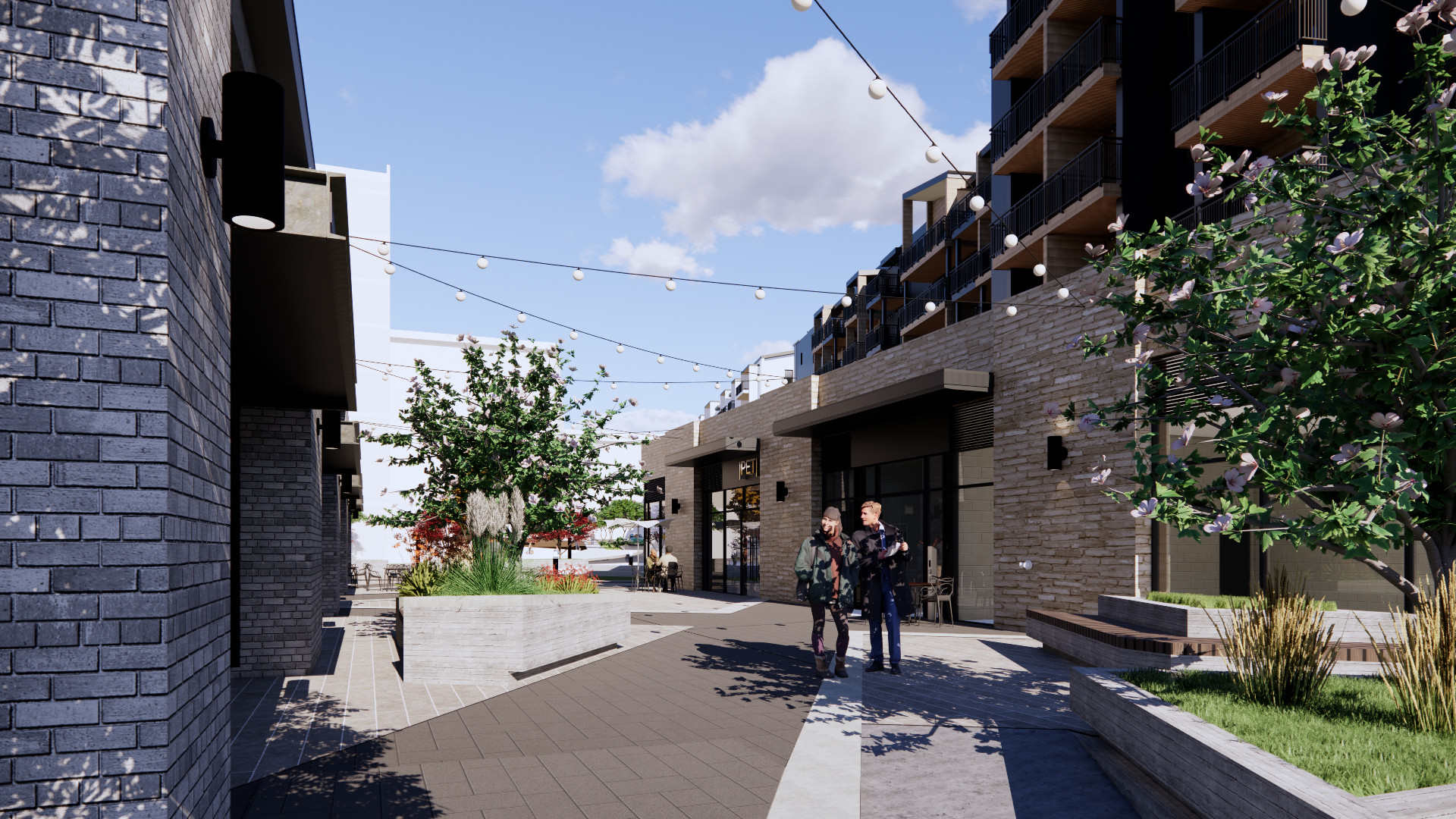
In British Columbia, generally, and in Penticton specifically, wood is already an integral part of the economic and cultural fabric. The region has a strong forestry and milling history, and Penticton was home to some of the earliest CLT and prefabricated timber innovations in the province. That context makes mass timber a natural fit.
What biophilic strategies are used to improve user well-being and connect people to the landscape of Penticton?
This was accomplished in several different ways. First, the design team’s priorities were to keep as much of the wood structure exposed as possible in occupied spaces. Working with code officials, we explored alternative solutions that allowed beams and CLT soffits to remain unencapsulated in office areas.
Second, window-to-wall ratios are carefully calibrated to maintain energy performance and mitigate overlook into adjacent homes, while still providing generous daylight for office users. Additionally, the project features a large outdoor terrace adjacent to the daycare, a publicly accessible plaza at grade level, and a rooftop amenity space for office tenants.
How can lessons from Nexus help create a standard and scalable design for mid-rise mass timber buildings in B.C.’s mid-sized cities?
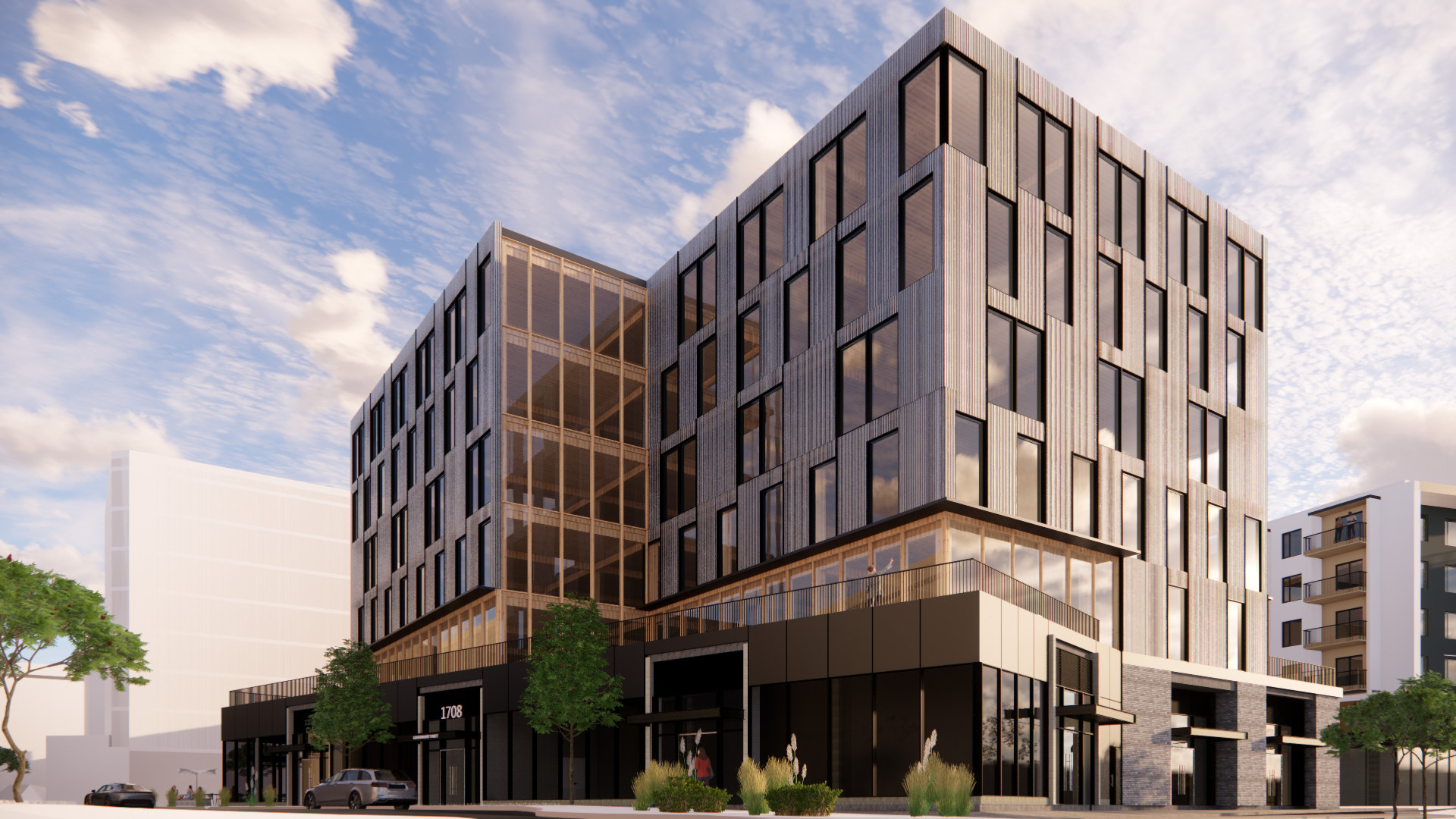
Nexus has been designed with great deliberation as a replicable case study. On the design side, we designed with the intent to use mass timber, rather than retrofitting it into a conventional concrete or steel scheme.
Once the project enters the construction phase, it will help local contractors gain experience with the unique challenges of mass timber construction. These include scheduling deliveries so panels are erected the same day, protecting wood from weather, adjusting critical paths based on material processing, and planning crane use on tight sites.
Read more about the project here.
Sign up for our weekly newsletter
Construction Canada weekly newsletters give the latest AEC industry news for those who build, design, engineer, specify, renovate or operate in the built environment.
Read the Latest Issue

- CSC Hamilton-Niagara: Engineer’s View of Lime-Mortared Masonry with International Expert
- Message from the president | Message de la présidente: CSC First Quarter Update
- CSC Hamilton-Niagara Fun Night: Bowling at Parkway Social
- Oktoberfest 2026 – Vancouver Chapter CSC Trade Fair
- CSC Calgary October Meeting
Demo-Casts